Coinbase and Fannie Mae Launch Crypto-Backed Mortgages
Source: CoinDesk
Coinbase has partnered with Fannie Mae-approved mortgage firm Better Home & Finance to let crypto holders pledge Bitcoin or USDC as down payment collateral when buying a home. The mortgage is structured as a conforming loan backed by Fannie Mae, carrying the same protections as traditional mortgages. Borrowers transfer their digital assets from Coinbase to a custody wallet with Better while retaining full ownership — no taxable sale event, no margin calls, no liquidation risk from price movements alone.
The numbers behind the opportunity are striking. Some 41% of American families fail to buy a home because they can't scrape together a cash down payment, even when they have money sitting in other assets. With an average down payment of around $40,000 on a $400,000 property, crypto holders have been caught in a trap: sell assets and trigger capital gains taxes, or stay out of the housing market entirely. This program breaks that deadlock. Rates will run 0.5 to 1.5 percentage points above a standard 30-year mortgage depending on borrower profile — a reasonable premium for a product that didn't exist before today.
This is institutional crypto adoption in its most tangible form yet. It isn't a derivatives product or an ETF — it's letting people use their crypto holdings to buy a house. Fannie Mae's involvement means the product has real regulatory legitimacy, and if demand matches the expectations of Better founder Vishal Garg (who says the firm could have funded $40 billion more in consumer demand over the past few years had this existed earlier), the ripple effects on Bitcoin and USDC demand could be substantial.
MARA Sells $1.1 Billion in Bitcoin to Buy Back Debt at a Discount
Source: CoinDesk
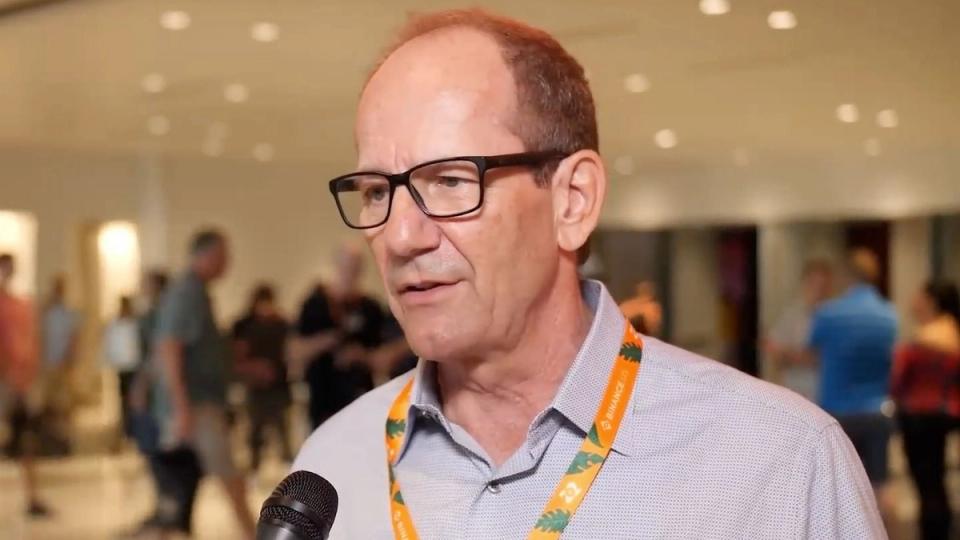
MARA Holdings sold 15,133 BTC for approximately $1.1 billion between March 4 and March 25, using the proceeds to repurchase roughly $1.0 billion of its 0.00% convertible senior notes at roughly 9% below par. The transactions cover $367.5 million of 2030 notes bought for $322.9 million and $633.4 million of 2031 notes bought for $589.9 million. The discounted buybacks generate approximately $88.1 million in value and reduce total convertible debt from around $3.3 billion to $2.3 billion — a 30% cut. MARA stock jumped 10% in premarket trading on the news.
The strategic rationale is straightforward: MARA accumulated bitcoin aggressively when prices were higher, and now holds 38,689 BTC following the sale. With the stock no longer trading at a meaningful premium to its underlying BTC holdings, issuing new shares to buy more bitcoin would dilute existing shareholders without adding net asset value. Instead, CEO Fred Thiel chose to reduce the dilution risk baked into those convertible notes — the instruments that, if converted to equity, would flood the market with new shares. By retiring them at a discount, MARA locks in an immediate gain while cleaning up a capital structure that was starting to concern investors.
The move signals a broader shift across Bitcoin mining and treasury companies. The era of "accumulate at any price" is giving way to balance sheet discipline. For traders, MARA's decisive restructuring demonstrates that management is thinking beyond short-term BTC price momentum — and the market's 10% approval rating in premarket suggests that approach is resonating.
Saylor's Strategy Now Controls 76% of All Corporate Bitcoin — and Nobody Else Is Buying

Source: CoinDesk / CryptoQuant
According to CryptoQuant data published today, Michael Saylor's Strategy purchased roughly 45,000 BTC over the past 30 days — its fastest accumulation pace since April 2025. Every other treasury company combined bought approximately 1,000 BTC in the same period. That's a 99% collapse from a peak of 69,000 BTC per month across the sector in August 2025. Strategy now holds roughly 76% of all bitcoin owned by corporate treasury companies, a concentration level that few predicted when the digital asset treasury company (DATCO) trend was in full swing last summer.
The mechanics of why this happened are damning for the broader DATCO thesis. These companies worked when their equity traded at a significant premium to their underlying BTC holdings — that premium enabled accretive share issuance to buy more bitcoin, creating a flywheel. As BTC fell from north of $110,000 to below $70,000, net asset values compressed, premiums evaporated, and the flywheel reversed. Companies like Metaplanet and Nakamoto Holdings bought aggressively near the cycle top with average costs above $107,000 per BTC. At current prices, they're deep underwater. Share issuance is now dilutive, not accretive, so they've stopped.
Strategy, however, kept buying — and protected itself by building a $1.44 billion cash reserve in December to cover 24 months of dividend and interest obligations. Saylor's firm has turned the DATCO trade into a one-company monopoly. Whether that concentration is a strength or a systemic risk for Bitcoin depends entirely on Strategy's ability to service its debt through the current bear phase. The data makes one thing clear: the wave of corporate bitcoin adoption that was supposed to broaden BTC's institutional base has, for now, narrowed to a single balance sheet.
Brazil Signs Law Directing Seized Crypto Toward Public Security

Source: CoinDesk
Brazilian President Luiz Inácio Lula da Silva signed Law No. 15.358 into effect on March 25, creating a legal framework for confiscated cryptoassets to fund public security operations. Under the law, crypto seized from criminal organizations — groups like the PCC and Comando Vermelho — can be directed toward police equipment, intelligence operations, and officer training before a final conviction is obtained, provided a judge approves the provisional use. The law also dramatically expands judicial authority to freeze, block, or seize digital assets during investigations, including suspending access to exchanges, wallets, and online platforms.
The legislation introduces several provisions that will concern privacy-focused crypto users. Using encrypted messaging apps or privacy tools to conceal criminal activity is now classified as an aggravating factor, increasing potential sentences. Convicted individuals permanently lose access to both the formal financial system and crypto infrastructure. The law enables international cooperation for asset recovery, and creates a national criminal database integrating the financial structures of known criminal groups. Brazil is treating seized cryptocurrency not as a state reserve asset (an idea floated by some crypto advocates) but as a war chest for law enforcement — a practically oriented, if blunt, approach.
This is a significant regulatory development for the world's fifth-largest country and one of Latin America's biggest crypto markets. Brazil's move signals a maturing regulatory posture: rather than banning crypto or ignoring it, authorities are building legal infrastructure to use it as a tool in existing enforcement frameworks. For legitimate crypto users in Brazil, the near-term impact is minimal — but the expanded judicial reach over exchanges and wallets is worth monitoring.
Bitcoin Breaks Below $70K as Oil Tops $100 and Equities Drop

Source: CoinDesk / Sean Benesh on Unsplash
Bitcoin slipped to $69,400 on Thursday, down 2.6% from midnight UTC, as a confluence of macro pressures triggered a broad risk-off selloff across crypto, equities, and gold. The catalyst was a breakdown in Iran-U.S. ceasefire negotiations, which pushed crude oil back above $100 per barrel. Nasdaq 100 futures fell around 1%, gold dropped 1.8%, and crypto derivatives markets moved decisively bearish: futures open interest fell 3.5% to $108 billion, funding rates turned negative, and traders increased short positioning in BTC as it broke the $70,000 support level. Altcoins fared worse, with the CoinDesk DeFi Index down 3.9% and AI tokens like FET falling as much as 7.7%.
Equities mirrored the pressure. The S&P 500 fell to 6,535, down 0.86% on the session, while Tesla, Microsoft, Amazon, and Meta all traded lower in premarket. "Tariff inflation" data released this morning complicated the Federal Reserve's rate path, reinforcing investor caution ahead of quarter-end portfolio rebalancing. An all-stock merger between Equitable Holdings and Corbridge Financial — valued at roughly $22 billion — provided the session's one positive corporate story, with both stocks rising roughly 2%.
Bitcoin has now traded in a tight range for nearly 50 days despite multiple attempts to break to the upside. Today's derivatives data tells the story clearly: ETH puts are more expensive than BTC's across all tenors on Deribit, signaling that short-term traders expect Ethereum to underperform if selling accelerates further. With oil geopolitics and tariff data both pointing the wrong direction, the path of least resistance for crypto through the end of Q1 looks choppy.
137 Swiss SPAR Stores Now Accept Crypto Payments via DFX Swiss

DFX Swiss x DFINITY partnership brings crypto payments to 137 SPAR stores in Switzerland. (DFX Swiss)
DFX Swiss, in partnership with DFINITY and Open Crypto Pay, has rolled out cryptocurrency payments at 137 SPAR supermarket locations across Switzerland. Shoppers can now pay at checkout using ICP, Bitcoin, Cardano (ADA), and other supported tokens by scanning a QR code. The integration converts crypto to Swiss Francs at the point of sale, meaning merchants receive fiat while customers spend their digital assets directly.
This is one of the most tangible examples of real-world crypto adoption in 2026. Switzerland has long been a leader in crypto regulation and infrastructure, but having a major grocery chain accept digital assets at the register is a different level of mainstream integration. For the Internet Computer (ICP) ecosystem specifically, this represents a concrete use case beyond DeFi and NFTs: people buying groceries with ICP tokens.
The broader significance is about proof of concept. If 137 SPAR stores in Switzerland can process crypto payments smoothly, the model is replicable across Europe and beyond. DFX Swiss handles the payment infrastructure, Open Crypto Pay provides the checkout integration, and the blockchain networks handle settlement. It is the kind of boring, functional adoption that actually moves the needle for long-term crypto utility.