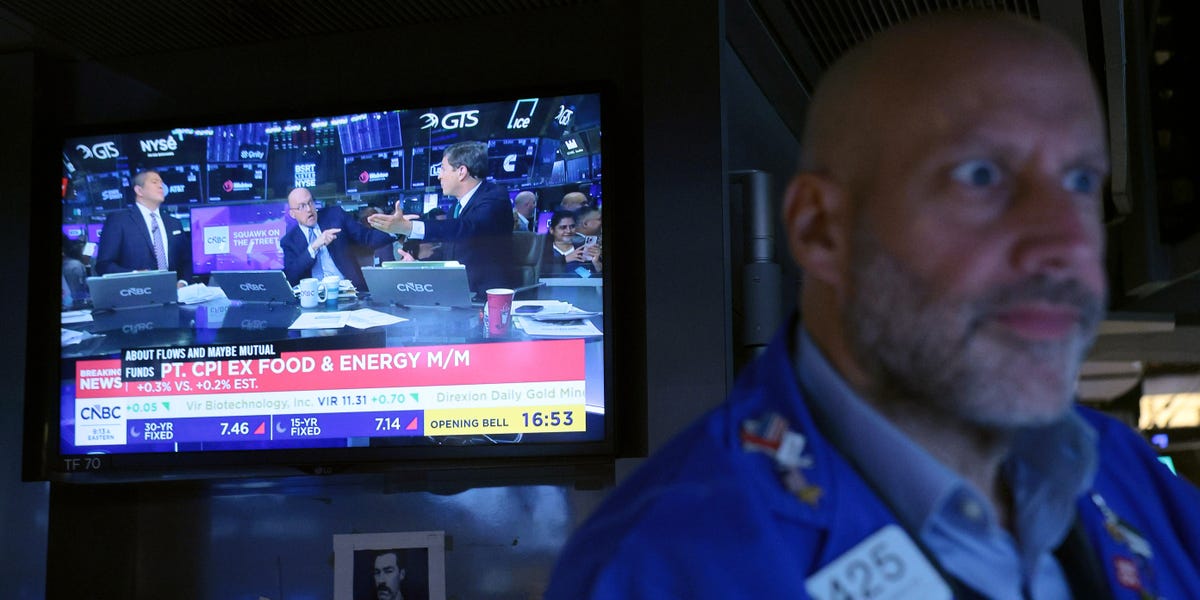
David Sacks Steps Down as White House Crypto Czar

Source: CNBC
David Sacks has officially transitioned out of his role as White House AI and Crypto Czar after roughly 130 days as a special government employee. He is moving to co-chair the President's Council of Advisors on Science and Technology (PCAST) alongside Michael Kratsios, where he will advise on AI, semiconductors, quantum computing, and nuclear power.
Sacks was a vocal proponent of making the U.S. the "crypto capital of the world" and helped push through the stablecoin-focused GENIUS Act. His departure, however, leaves several major initiatives unfinished — most notably the Clarity Act, which aims to define regulatory boundaries for digital assets, and the proposed Strategic Bitcoin Reserve. Analysts see the move as policy continuity rather than retreat: Sacks retains influence from an advisory perch without day-to-day operational duties.
Market reaction was muted. BTC held above key support despite the headline, suggesting the market had already priced in a transition. The real question is whether the next occupant of the crypto czar seat carries the same weight in Silicon Valley circles.
White House Clears Crypto for $12 Trillion 401(k) Market

Source: CryptoTimes
The Office of Information and Regulatory Affairs (OIRA) completed its review on March 24, clearing the way for the Department of Labor to publish a proposed rule allowing crypto exposure in 401(k) retirement accounts. The proposal updates ERISA guidance so plan sponsors can offer alternative investments — including cryptocurrency and private equity — inside workplace retirement plans.
The numbers are staggering: roughly $12 trillion in 401(k) assets could potentially flow into alternative investments. If approved, this would represent the largest new capital pool to open for crypto since spot Bitcoin ETFs launched. Early estimates suggest demand could mirror the ETF launch surge, though regulatory guardrails around custody and disclosure will be strict.
There is a notable caveat: nearly 48% of surveyed retirement investors oppose the idea, with only 34% in support. The public comment period will be contentious. But the structural opportunity is clear — even a 1-2% allocation from the 401(k) market would dwarf total ETF inflows to date.
Bitcoin ETFs See $171M Outflow — Largest in Three Weeks

Source: CoinDesk
U.S. spot Bitcoin ETFs recorded a $171 million net outflow on March 26 — the largest single-day redemption in three weeks. BlackRock's IBIT led the selling with roughly $42 million in outflows, followed by Bitwise at $33 million. BTC dropped below $69,000 and briefly tested $67,000-$68,000 as Treasury yields climbed and geopolitical uncertainty from the Iran situation weighed on risk appetite.
The Fear & Greed Index sits at 13 — Extreme Fear. Funding rates turned negative and open interest dipped, signaling short-term capitulation. Without the consistent institutional bid that characterized the 2025 rally, the market is exposed to retail-driven selloffs.
However, cumulative 2026 ETF inflows remain deeply positive at over $2.5 billion gross in March alone. On-chain data shows whale accumulation continuing and exchange outflows rising — suggesting underlying conviction despite the headline outflow. This looks more like a tactical de-risk than a structural exit.
Tether Hires KPMG for Historic First Big Four Audit

Source: Decrypt
Tether has selected KPMG to conduct a full audit of its $185 billion USDT reserves and hired PwC to prepare its internal systems for U.S. expansion. This is the first time in Tether's history since launching in 2014 that a Big Four accounting firm has been engaged for a comprehensive audit — a major shift from the monthly attestations currently published by BDO Italia.
KPMG's engagement will review asset composition, debt exposure, risk management, and internal controls. The move aligns with growing regulatory pressure under the GENIUS Act and positions the world's largest stablecoin for deeper institutional use cases including tokenized assets and real-world asset (RWA) settlement. Tether is also preparing to launch a U.S.-compliant stablecoin called USAT.
For the broader market, this is a net positive. The $185 billion USDT ecosystem underpins most crypto trading liquidity. A clean Big Four audit would ease long-standing skepticism about Tether's reserves and could unlock new institutional partnerships. If you trade crypto, you depend on USDT whether you hold it or not — this audit matters.
GameStop Reveals $368M Bitcoin Covered-Call Options Strategy

Source: CoinDesk
An SEC filing revealed that GameStop pledged nearly all of its 4,709 BTC to Coinbase as collateral for an over-the-counter covered-call options strategy. The strike prices range from $105,000 to $110,000 per coin with maturities extending through today — March 27, 2026. The receivables linked to the pledged bitcoin were worth $368.3 million at fiscal year-end.
The strategy is straightforward: GameStop collects upfront option premiums while retaining economic exposure to BTC below the strikes. If Bitcoin stays under $105K-$110K at expiry (which it has), the contracts expire worthless and GameStop keeps the premium income. The filing also reported a $59.7 million unrealized loss on the underlying BTC position and a $2.3 million unrealized gain from the options themselves.
This is corporate treasury creativity at its most sophisticated. Rather than just holding BTC on a balance sheet, GameStop is generating yield on its crypto position — a strategy that institutional traders have used for decades in equities. One important wrinkle: because Coinbase has rehypothecation rights on the pledged coins, GameStop had to remove all 4,709 BTC from its balance sheet as direct assets. That is a meaningful accounting impact and changes how the market should evaluate their BTC exposure.
Market Impact: Winners, Losers & Key Levels
Bitcoin (BTC): Down 3.3% to $68,500, testing critical $67,000-$68,500 support. Resistance at $70,000-$71,000. BTC dominance at ~56%. The $14 billion options expiry today is adding extra volatility — watch for a weekend squeeze or breakdown.
Ethereum (ETH): Down 4.8% to $2,058, underperforming BTC. The $1,900 level is the line in the sand. ETH puts are more expensive than BTC across all tenors on Deribit — the market expects ETH to lead any further downside.
Gold (XAU/USD): Rebounding to $4,431 after yesterday's 3.26% crash. Haven demand is returning as equities sell off. Watch $4,370 support and $4,500 resistance. The geopolitical premium keeps a floor under gold despite rising real yields.
Equities: Nasdaq plunged 521 points (-2.38%) into official correction territory. S&P 500 down 114 points (-1.74%). Dow off 469 points. NVIDIA, Apple, Microsoft, and Tesla all bleeding red. Higher-for-longer rate narrative is back as the Fed holds at 3.5-3.75% with only one cut projected for 2026.
Oil: Brent at $108, WTI at $94.48. Trump extended the Iran strike deadline to April 6. Baker Hughes Rig Count at 17:00 UTC. The Brent-WTI spread at $12.45 reflects the Hormuz shipping premium.
Today's winners: Stablecoin ecosystem (Tether transparency push), policy-focused names, gold on safe-haven flows.
Today's losers: High-beta altcoins, leveraged miners, tech mega-caps.
Weekend Watchlist
Bullish catalysts to watch: 401(k) rule advancing to public comment, Tether audit progress, any corporate treasury BTC buys, Iran ceasefire progress.
Bearish risks: Further oil spike above $110, Treasury yield surge toward 4.5%, weekend ETF outflow data, BTC losing $66,400 support.
Top projects to watch from the top 50: ETH L2 activity (Arbitrum, Optimism), SOL ecosystem after 5.5% slide, TRX on Anchorage custody boost, TAO holding above $300 after last week's Jensen Huang rally.