
Bitcoin Slammed to $65,112 as Houthis Open New War Front
Bitcoin opened Monday with its sharpest single-session dip in weeks, sliding to $65,112 in early Asian trading before recovering to $67,402. The catalyst was a simultaneous escalation on multiple fronts in the Middle East conflict now entering its fifth week. Iran-backed Houthi forces opened a new theater of operations beyond the direct U.S.-Israel-Iran confrontation, and additional American ground troops arrived in the region, amplifying fears of a broader ground campaign.
The Wall Street Journal reported President Trump is weighing a military operation to remove enriched uranium from Iran, though no decision has been reached. Iran also struck two aluminum production facilities in the region, sending the metal up 6% in a single session. Brent crude rose another 2.5% to around $115 per barrel — now up roughly 90% year-to-date — and Asian equities sold off hard: South Korea's benchmark fell 3.2%, Japan's Nikkei dropped 3.4%. The $65,112 low matters technically. That's the first time in weeks that Bitcoin's floor moved lower rather than higher on an escalation, breaking a five-week pattern of higher lows from $64,000 through $70,596. Ethereum recovered 2% to $2,044, Solana added 0.9%, and XRP gained 1.4%, though all four remain in the red week-on-week. Trading volumes surged on major exchanges like Bybit, which also offers gold and stock CFDs via its TradFi suite for traders looking to express macro views across oil, indices, and precious metals.
The broader concern isn't just geopolitics — it's the inflation feedback loop. Oil at $115 and aluminum spiking on direct attacks to production infrastructure means the inflationary impact is now spreading beyond energy into industrial supply chains. That complicates the Fed's position significantly and pushes the rate cut timeline further out, which is bad news for risk assets across the board.

Source: CoinDesk
Ethereum Foundation Makes Its Largest-Ever Staking Deposit: $42 Million
The Ethereum Foundation staked more than 20,470 ETH on Monday morning — roughly $42 million at current prices — in what Arkham Intelligence described as the largest single staking batch the foundation has ever made. The transfers were split into uniform chunks of approximately 2,047 ETH each and deposited directly into the Beacon Chain. This continues a strategy the foundation outlined in February, when it announced plans to stake 70,000 ETH total and use the resulting yield to fund operations, research, and ecosystem grants rather than drawing down its treasury.
The foundation will earn approximately 2.7% yield on the staked ETH — down from 3.4% earlier this year as more validators have entered the network and diluted per-validator rewards. At that yield, the $42 million deposit generates roughly $1.1 million per year in passive income, which is meaningful runway when you consider the foundation still holds about 147,400 ETH (approximately $303 million) in treasury. The full 70,000 ETH staking target, when complete, would generate around $5.1 million annually at current rates.
The move is significant beyond the raw numbers. For years, critics questioned why the Ethereum Foundation held such a large ETH treasury without putting it to work. This staking rollout is an answer — and it signals that the foundation is becoming more financially self-sufficient, reducing dependence on asset sales to fund development. It also adds approximately 20,000 ETH worth of buy-and-hold pressure to the staking queue, which reduces liquid circulating supply.

Source: CoinDesk / Getty Images
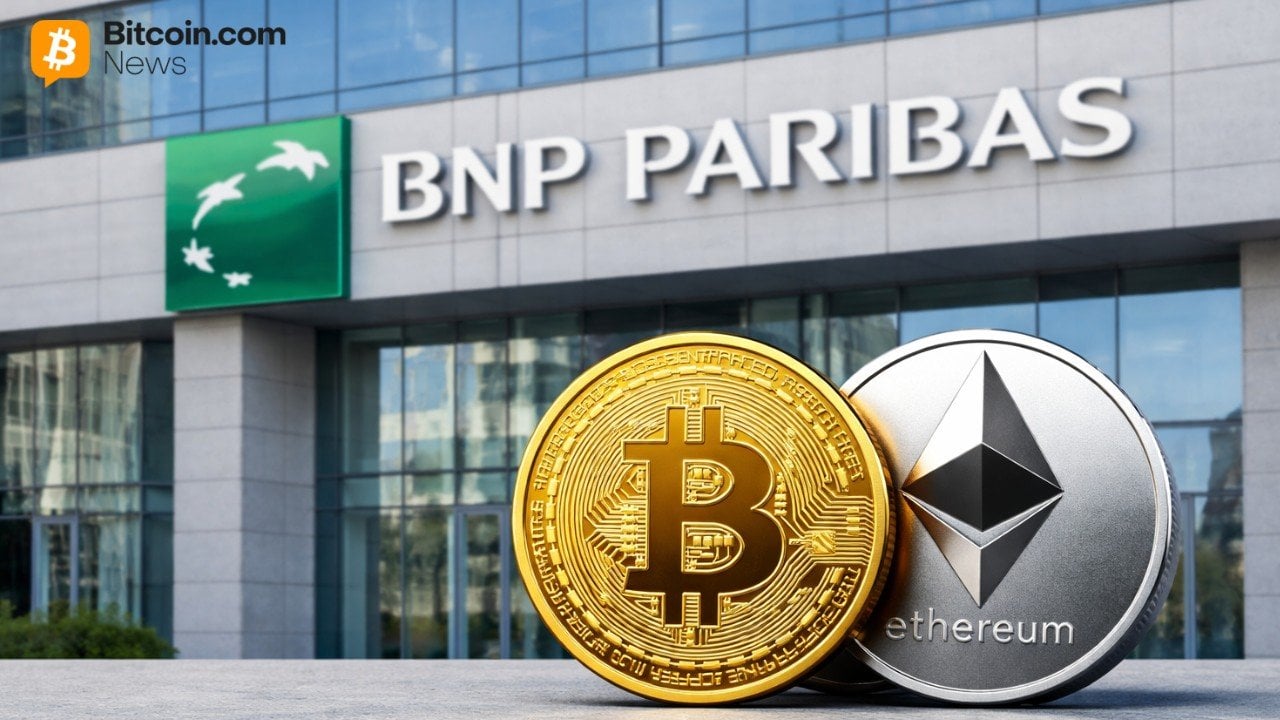
BNP Paribas Goes Live Today with Six Bitcoin and Ethereum ETNs for Retail
Starting today, March 30, BNP Paribas — France's largest bank and one of Europe's biggest financial institutions — began offering six exchange-traded notes (ETNs) tied to Bitcoin and Ethereum performance to retail and private banking clients in France. The products are accessible through standard securities accounts under MiFID II rules, meaning clients get crypto exposure without needing to purchase, custody, or manage the underlying digital assets directly. The rollout covers individual clients, entrepreneurial accounts, Hello bank! users, and private banking customers, with a phased expansion to wealth management clients in other markets planned for later in 2026.
This isn't just an ETN launch — it's part of a much broader institutional pivot by BNP Paribas into blockchain infrastructure. The bank is simultaneously piloting a tokenized money market fund share class on the public Ethereum network, and it's backing the 12-bank Qivalis consortium that's targeting a euro-backed stablecoin launch in the second half of 2026. On the institutional side, BNP has been building out digital asset custody and settlement through partnerships with Metaco and Fireblocks, and has participated in wholesale central bank digital currency trials across multiple jurisdictions.
When one of Europe's most systemically important banks launches regulated crypto products on the same day it's piloting tokenized money market funds and building toward a euro stablecoin, that's not a trend — that's a structural shift. The "TradFi is coming to crypto" narrative has been building for years, but 2026 is when it's showing up in actual product availability at the retail level.
Source: Bitcoin.com News
FTX's $2.2 Billion Creditor Distribution Lands Tomorrow
The FTX Recovery Trust is scheduled to distribute $2.2 billion to creditors on March 31 — tomorrow — marking the fourth major payout round from the collapsed exchange's bankruptcy estate. Creditors with claims above $50,000 are eligible, with the record date having been February 14. This is part of what has become one of the most methodical and surprisingly successful creditor recovery processes in crypto history, with FTX having already distributed billions across three previous rounds while pursuing clawback suits against counterparties to recover additional assets.
The timing is notable. The distribution hits Tuesday, the same week that U.S. nonfarm payrolls are due Friday (a key macro data point for Fed policy expectations) and while crypto markets are navigating the Middle East conflict and its inflationary spillover. The $2.2 billion flowing back to creditors could have multiple effects: some former FTX customers may reinvest in crypto markets, adding buy pressure, while others who've been waiting years for repayment may cash out entirely. The net effect is hard to predict but it's a meaningful capital event. Preferred equity holders are getting their first-ever payments later in the year, with an April 30 record date for the May 29 distribution.
For context on what this represents: when FTX collapsed in November 2022, the prevailing expectation was that creditors would receive pennies on the dollar. The estate has now distributed enough to repay most customer claims at par plus interest, something almost no one predicted three years ago. That's a meaningful data point for how crypto bankruptcy law has matured.
Source: CoinDesk
Hyperliquid's "Decentralized" Exchange Has a Tokyo Problem
New research from Glassnode published today reveals a structural inequality baked into Hyperliquid, the DeFi perpetuals exchange that has emerged as one of crypto's most liquid decentralized trading venues. All 24 of Hyperliquid's validators are clustered in a single Amazon Web Services region: ap-northeast-1 in Tokyo. That geographic concentration means traders physically close to AWS Tokyo can reach the protocol's matching layer in 2-3 milliseconds. European traders face delays exceeding 200 milliseconds — a 100x disadvantage on a platform handling over $4 billion in daily perpetuals volume.
Glassnode's Hyperlatency tool measures the gap precisely. From AWS Tokyo, the median order-to-fill round trip is 884 milliseconds, with just 5ms of network transit and the rest server-side processing. From Ashburn, Virginia, the total rises to roughly 1,079 milliseconds — a 200ms edge for Tokyo-based desks. On a time-ordered matching engine, that 200ms translates directly to queue priority, tighter spreads, and better fill probability on every single trade. Tokyo is essentially becoming crypto's version of Mahwah, New Jersey — the co-location hub where Wall Street's high-frequency traders cluster around NYSE infrastructure.
The irony is sharp: Hyperliquid is built on decentralization principles — open access, permissionless trading, no central authority to remove or censor participants. But speed asymmetry is a form of structural inequality that decentralization doesn't solve. The research has already prompted debate in the Hyperliquid community about whether validator distribution should be formalized as a protocol-level requirement. No equivalent to MiFID II-style latency equalization rules exists in DeFi yet — and this research makes clear that might matter.

Source: CoinDesk / Glassnode