CLARITY Act: Senate Sets Late-April Markup as May Deadline Looms

Source: CryptoSlate
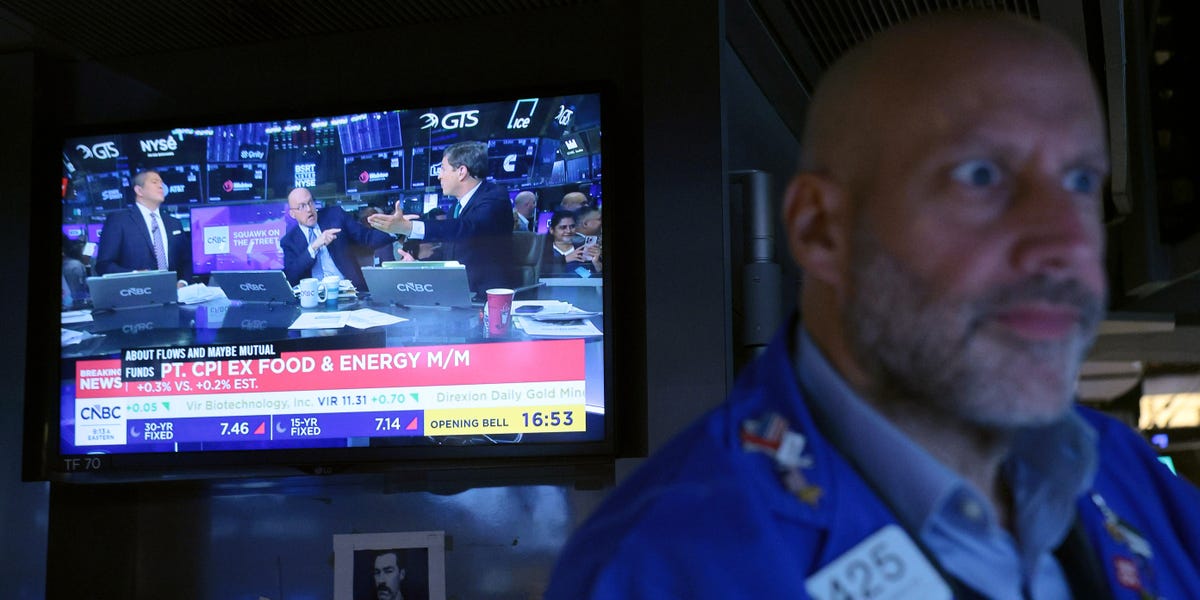
The US Senate Banking Committee has confirmed a late-April markup for the Digital Asset Market CLARITY Act, with Senator Bernie Moreno issuing a stark warning: miss the May floor vote window and serious crypto legislation could slip past the 2026 midterms entirely. Easter recess runs through April 13, meaning the compressed timeline leaves almost no margin for further delays.
The sticking point that killed the January markup has reached a resolution in principle. Senators Thom Tillis and Angela Alsobrooks struck a deal on stablecoin yield that Senator Cynthia Lummis described as "99% resolved." The framework bars passive yield on held stablecoins but permits activity-based rewards tied to payments, transfers, and wallet use. Alsobrooks put it plainly: the compromise leaves both sides "just a little bit unhappy," which is generally how functional legislation works. Open items still include community bank deregulation, ethics provisions for crypto-linked officials, and DeFi treatment before the markup text can be finalized.
The stakes are real. The House already passed CLARITY 294-134 in July 2025, the GENIUS Act became law the same month, and the White House established the Strategic Bitcoin Reserve by executive order in March 2025. What remains is comprehensive market structure legislation that would define which digital assets are securities versus commodities. Missing the May window means navigating midterm politics in the second half of 2026, a much harder environment for bipartisan crypto legislation. Trading volumes on exchanges like Bybit surged on the news as traders positioned ahead of potential regulatory clarity.
Magic Eden Wallet Enters Export-Only Mode Today

Source: CoinLive
As of today, April 1, Magic Eden's multi-chain crypto wallet has stopped processing transactions and entered export-only mode. Users now have exactly 30 days before the full shutdown on May 1, 2026, when the app will be removed from stores entirely. Anyone holding assets in the Magic Eden wallet needs to export their private keys or seed phrases and migrate to an alternative wallet before the hard deadline.
This is a strategic retreat to Solana. Magic Eden built its reputation as the dominant Solana NFT marketplace before expanding to Bitcoin Ordinals and EVM chains. The cross-chain expansion stretched resources without delivering the growth to justify it. The wallet deprecation is the clearest signal yet that the company is doubling down on its core competency rather than chasing multi-chain fragmentation. The ME token has a current market cap of $37.9 million, and the forced migration creates measurable short-term headwinds as users focus on securing keys rather than trading.
The counter-move is an expanded ME token buyback program in 2026, funded by revenues from new entertainment products including Swaps, Lucky Buy, and Packs. Whether that internal demand can offset the liquidity disruption from the wallet shutdown will be worth watching through April. If you hold ME tokens or NFTs in the Magic Eden wallet, the clock is ticking.
Axios npm Package Backdoored in Major Supply Chain Attack

Source: Elastic Security Labs
On March 30, an attacker compromised the GitHub and npm accounts of jasonsaayman, the lead maintainer of axios, and published two backdoored versions: [email protected] (tagged latest) and [email protected] (tagged legacy). Axios is one of the most depended-upon JavaScript HTTP client libraries in existence with approximately 100 million weekly downloads. For a brief window, a default npm install axios resolved to a backdoored package.
Elastic Security Labs, which discovered the compromise through automated supply-chain monitoring, published a detailed analysis today revealing the sophistication of the attack. The malicious versions injected a new dependency, [email protected], whose postinstall hook silently deployed a cross-platform Remote Access Trojan targeting macOS, Windows, and Linux simultaneously. The RAT is written in PowerShell for Windows, C++ for macOS, and Python for Linux, all sharing an identical C2 protocol and beacon cadence. The dropper then performed anti-forensic cleanup by deleting itself and swapping its package.json with a clean copy, erasing evidence of the postinstall trigger from node_modules.
Both malicious versions have been removed from npm. If your CI/CD pipeline or application ran npm install axios between March 30 and March 31, treat the host as potentially compromised. Check for unexpected outbound connections and review your node_modules directory. The crypto and Web3 development community is particularly exposed here given how heavily JavaScript-based tooling underpins wallet infrastructure and DeFi frontends.
Midnight (NIGHT) Surges 20% as Cardano Privacy Chain Goes Live
Source: CoinPedia
Midnight, the Cardano-based privacy blockchain, launched its federated mainnet (codenamed "Kukolu") and the NIGHT token responded with a 20% intraday spike to $0.04844. The chain uses zero-knowledge proofs for programmable privacy and a dual-token model where DUST handles transaction fees while NIGHT serves as the governance and staking token. The mainnet launch is the first milestone in a roadmap that targets cross-chain interoperability later this year.
What made the move notable beyond price was the derivatives activity. Volume jumped 100% to $244.25 million, while open interest climbed 27% to $60.65 million. Short liquidations hit $129,150 versus just $12,400 in long liquidations, meaning bears who faded the mainnet hype got run over. The pattern follows the classic crypto playbook: large short interest builds ahead of a catalytic event, the event fires, shorts cover, and momentum compounds the initial move.
Technically, the breakout from a descending triangle is holding post-launch, MACD has a bullish crossover, and RSI has pushed above 50. The key question now is whether the mainnet can attract real dApp development before the speculative momentum fades. Privacy-focused blockchains have historically struggled to convert launch hype into sustained usage, but regulatory pressure on on-chain surveillance could make Midnight's timing genuinely favorable.
Crypto Market Rallies 1.5% as ALGO Leads Gainers with 19% Surge

Source: CoinGabbar
The global crypto market opened Q2 with a 1.5% bounce, pushing total capitalization to $2.42 trillion on $116.5 billion in 24-hour volume. Bitcoin holds at $68,044 (+1%), Ethereum at $2,100 (+2.66%), and BTC dominance sits at 56.3%. The Crypto Fear and Greed Index remains at an extreme 8/100, a level that historically has preceded strong medium-term recoveries even when short-term sentiment stays depressed.
Algorand is the standout today, up 18.89% to $0.098 on $88.53 million in trading volume. The move has no single clean catalyst, but fits into the broader narrative around Algorand's 2026 roadmap: US expansion, institutional partnerships via the Quantoz-Visa real-time settlement integration, and an accelerator program backed by AI security firm AlmanaxAI. The Algorand Foundation's bet on tokenized real-world assets and enterprise blockchain infrastructure is gradually attracting attention as the broader market looks for undervalued layer-1 exposure below $0.10. SKALE (SKL) also printed a 23.67% gain ahead of today's scheduled 66 million token unlock for the Foundation and validators.
The overall picture for Q2 opening day: a market that is deeply fearful but not breaking. BTC's $1.36 trillion market cap, Ethereum's continued strength, and the CLARITY Act timeline all point toward a regulatory environment that is clarifying rather than deteriorating. The biggest risk remains macro, with US jobs data and ISM Manufacturing printing today and any surprise to the downside capable of re-pressuring risk assets across the board.