1. Iran ceasefire announced: oil collapses 17% in its biggest single-day crash since COVID

Source: Reuters / Getty Images
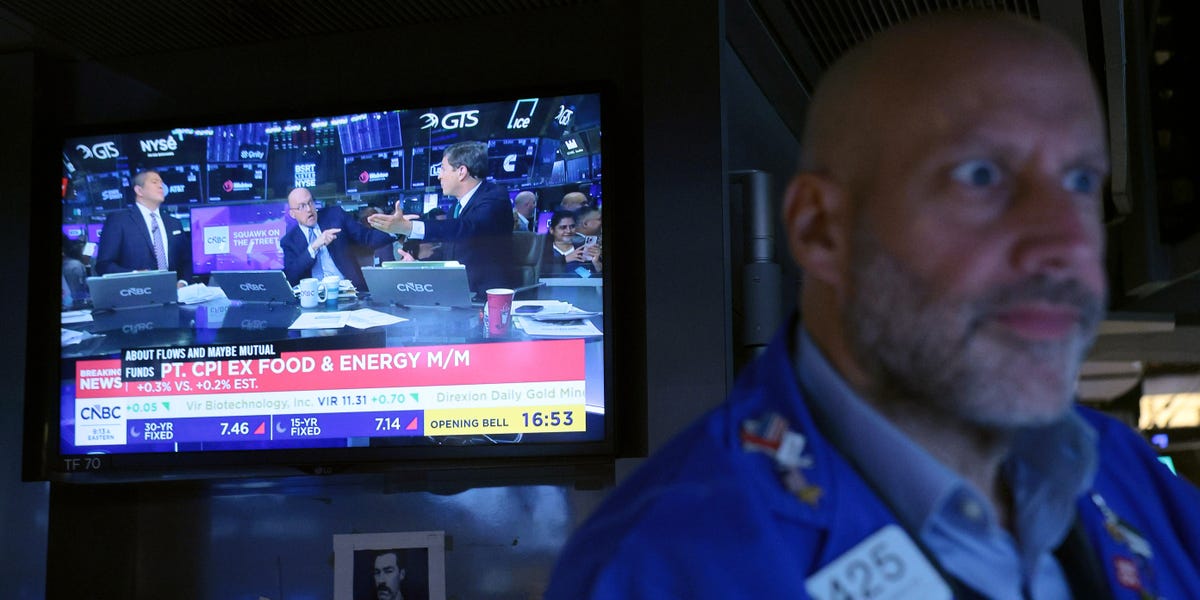
In the most consequential geopolitical development since the conflict began 40 days ago, the United States and Iran agreed to a two-week ceasefire on Wednesday morning, brokered by Pakistan and contingent on Iran's "complete, immediate, and safe opening" of the Strait of Hormuz. The announcement landed before European markets opened and triggered an instant repricing across every asset class. WTI crude collapsed from above $112 to $94.80 - a 16.8% single-session drop, the largest since April 2020 at the height of the COVID demand collapse.
The ceasefire terms are fragile by design. The U.S. halts military strikes for 14 days while Iran agrees to facilitate tanker passage through Hormuz. Roughly 800 vessels remain backlogged in the Gulf, with an estimated 10-15 passing per day - nowhere near the 20 million barrels per day that flowed through the strait before the conflict began. Al Jazeera and CNN both reported isolated military incidents in Iran, the UAE, and Kuwait within hours of the announcement, underscoring how provisional this window is. Diplomatic talks with Witkoff, Kushner, and Vance are scheduled in Islamabad on Friday.
The market interpretation is a rational one: the ceasefire removes the worst-case scenario from the pricing table without fully resolving the underlying dispute. Oil at $95 still prices a significant geopolitical premium over the pre-conflict range of $68-$75. But the elimination of the "Hormuz fully closed" tail risk is worth the $17 discount the market applied in real time. Airlines, cruise operators, and energy-intensive industrials surged immediately on the news.
2. Bitcoin surges above $71,900 as crypto market cap returns to $2.52 trillion

Source: CoinDesk
Bitcoin opened at $71,926, up 4.5% from Tuesday's close near $68,859, marking its highest print since March 26. The ceasefire acted as a relief valve for a market that had been grinding lower under a 48-day extreme-fear streak. CoinDesk noted that the rally is genuine but cautious, with analysts warning that "animal spirits may not return just yet" ahead of Friday's CPI print. The structure of the move matters: this was not short-covering chaos but a measured re-rating as inflation risk came off the table alongside oil.
Ethereum outperformed BTC, gaining 6.3% to $2,255 - its highest level since March 18. XRP and Solana each added more than 5% in 24 hours. Total crypto market cap reached $2.52 trillion with $123 billion in 24-hour volume. CryptoQuant data noted that accumulator wallets - addresses that only receive and never spend BTC - continued increasing holdings even during the flat period of the war, a signal that patient institutional capital was positioning for exactly this kind of relief catalyst.
The honest read here is that Bitcoin is tracking macro risk appetite more than any crypto-native fundamental right now. The same oil shock that drove the 48-day fear streak is the same shock that just reversed. If the ceasefire holds through the Islamabad talks on Friday, the $70,000 psychological level becomes a floor rather than a ceiling. If it breaks down and oil spikes again, the relief rally gives most of this back. The Friday CPI print - which lands at 8:30 a.m. ET - is the next pivotal moment.
3. Gold rallies to $4,820 on dollar weakness and persistent safe-haven demand

Source: Wikimedia Commons
Gold reached $4,820/oz, gaining over 3% on the session in what looks superficially contradictory: the same ceasefire that crushed oil also lifted gold. The divergence makes sense when you unpack the dollar. With oil collapsing and inflation expectations resetting lower, the market repriced rate-cut odds sharply higher - and a weaker-for-longer Fed is structurally bullish for gold regardless of geopolitical temperature.
Gold's year-to-date high of $5,597 still looms in the background. The 2026 bull case for gold was never purely about Iran: it was central bank accumulation, dollar reserve diversification, and real-yield compression. The Iran conflict added a war-risk premium on top of that structural bid. With the conflict premium partially deflating, the structural bid remains intact. Forecasters who have projected $7,000 gold by year-end are not revising down on a two-week ceasefire; they are watching whether the Fed actually cuts rates and whether central bank buying continues.
The technical picture for gold is stronger than it looks. A 3% move on a geopolitical de-escalation day - when you might expect safe-haven metals to sell off hard - tells you the underlying bid is sticky. Central banks are not selling. Currency reserve managers are not reallocating. Gold above $4,800 with oil below $100 is actually a cleaner bull case than gold above $4,700 with oil at $112, because the inflation-driven rate pressure is no longer arguing against the metal.
4. S&P 500 surges 2.55% as Fed rate-cut odds nearly triple to 43%
Source: Wikimedia Commons
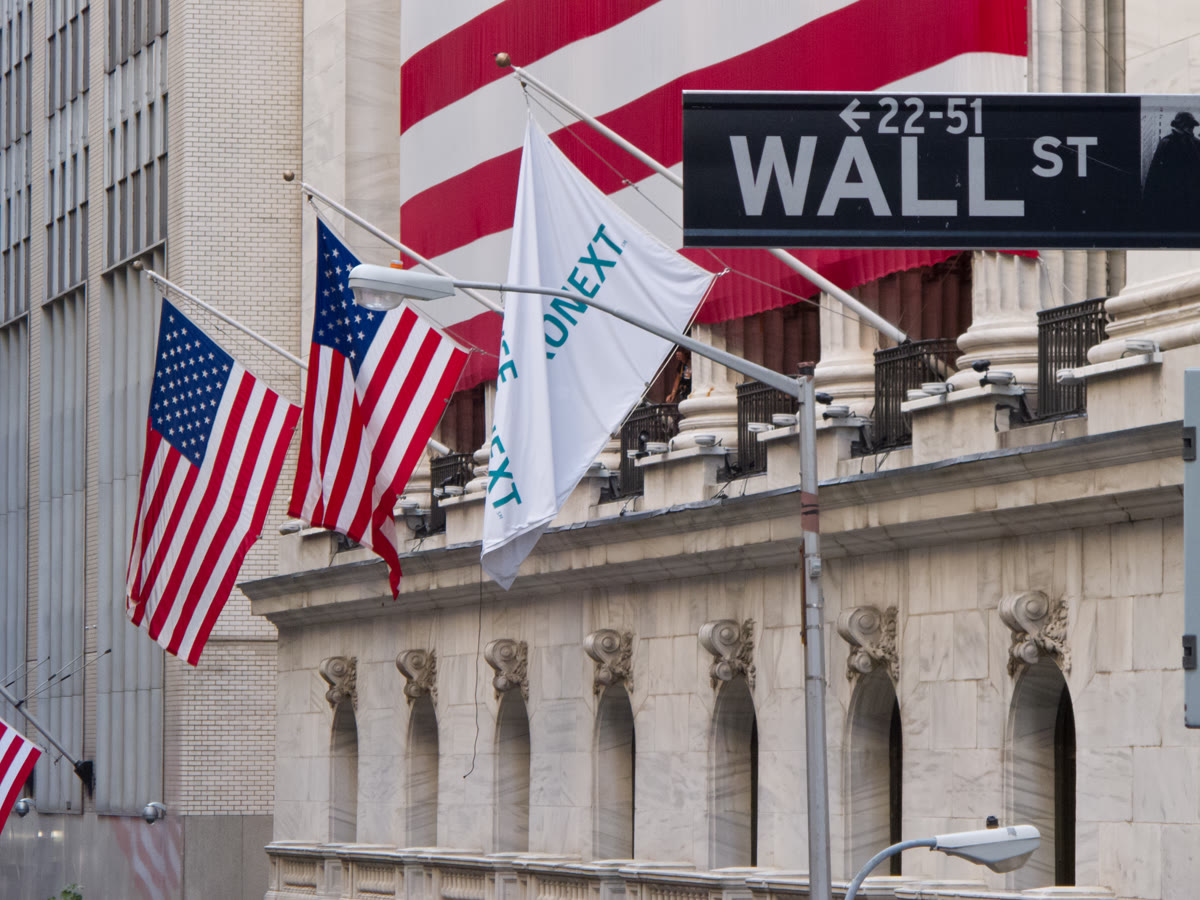
The S&P 500 gained 2.55% to around 6,780, with the Dow up 2.93% and the Nasdaq jumping 3.5% as the ceasefire reset inflation expectations and reopened the case for Fed easing in 2026. The single most important macro number of the session was not an equity price but a probability: Fed rate-cut odds by December jumped from 14% to 43% in a matter of hours. That repricing alone justifies the equity move.
Nvidia, Tesla, AMD, and Micron each gained between 4% and 10% in early trading - names that had been hammered by the dual pressures of high inflation and rising energy costs. Wells Fargo, which formally abandoned its forecast for any 2026 rate cut as recently as April 6, now faces the embarrassing position of revising that call back. The market is moving faster than research notes can be published. The Russell 2000 only edged up 0.17%, which is worth noting: the rally is concentrated in large-cap growth and technology, not in small-cap domestics that would benefit more from rate cuts. That divergence suggests investors are buying the relief trade selectively.
Bank earnings season opens Friday with JPMorgan, Wells Fargo, and Citi reporting pre-market - right alongside the March CPI print. If the CPI comes in below the 3.3% consensus estimate (which is now more plausible given that oil's collapse happened in early April rather than in March), bank CEOs will face an entirely different macro backdrop in their guidance calls than they were preparing for a week ago. The April 8 session has reshuffled the deck heading into the most data-dense 48 hours of Q2.
5. SEC sends "Reg Crypto" framework to White House; CLARITY Act markup set for April 13

Source: The Coin Republic
The Securities and Exchange Commission formally submitted its "Regulation Crypto Assets" framework - known informally as "Reg Crypto" - to the Office of Information and Regulatory Affairs for White House review. The submission marks the transition from SEC internal deliberation to the formal inter-agency rulemaking process. A startup exemption allowing early-stage crypto projects to raise funds with limited requirements is central to the proposal, giving the framework a notably constructive tone compared to the enforcement-first posture of recent years.
Separately, the CLARITY Act - the market structure legislation that would define which crypto assets are securities vs. commodities and which regulator gets jurisdiction - has a markup hearing scheduled in the Senate for April 13. The Senate and White House have reportedly reached agreement on stablecoin legislation as well, with passage expected within weeks following the FDIC's proposal released Tuesday. The legislative pipeline is moving faster in Q2 2026 than at any point in U.S. crypto history.
Morgan Stanley's Bitcoin ETF also launched today, adding another institutional product to a market that has now absorbed the full suite of spot Bitcoin ETFs from BlackRock, Fidelity, and major wirehouses. The Morgan Stanley launch matters less for its immediate volume than for what it signals: the distribution channel for Bitcoin exposure is expanding into wealth management in a way that was impossible 18 months ago. The regulatory and institutional infrastructure is being built in parallel, and both are accelerating.
6. Oil at $95 changes the macro calculus: what the ceasefire means for inflation and rates

Source: Wikimedia Commons
Before the ceasefire, KKR had raised its 2026 U.S. headline CPI forecast to 3.8% - well above the 3.0% consensus - overwhelmingly driven by energy pass-through costs. With oil now at $95, that forecast needs a substantial revision. The math is not simple: March CPI (printing Friday) will still reflect the oil shock because crude averaged above $110 through most of March. The first month where energy deflation can show up in headline CPI is April, with the data arriving in mid-May.
That timing creates an unusual sequence. Friday's CPI print is likely to show elevated inflation driven by an oil shock that has already partially reversed. The Fed will be in the uncomfortable position of evaluating March data through April's lens. FOMC members have been explicit that they need sustained evidence of cooling inflation before cutting rates. A 3.3%+ March CPI print that the market already knows is backward-looking will test whether the Fed can communicate nuance without triggering another round of volatility.
The bigger picture: oil at $95 is still not cheap. Pre-conflict WTI traded at $68-$75. The ceasefire has removed the war premium but not the underlying geopolitical uncertainty premium. Gasoline at the pump won't fall overnight. The ISM Services Prices index hit 70.7 last month - a 14-year high - and won't reset in a single session. The disinflation story is real, but it will take two to three months of CPI data to confirm. The 43% rate-cut probability is the market pricing a scenario, not a guarantee.
Bottom line
April 8 delivered the macro reset that markets had been waiting 40 days for. The ceasefire is fragile, the oil decline is partial, and the CPI print on Friday will test whether the relief rally has legs. But the directional shift is unambiguous: the worst inflation scenario is off the table, the worst geopolitical scenario is off the table, and risk assets are repricing accordingly.
For crypto specifically, the path now depends on whether the macro tailwind holds through Friday's data and the Islamabad diplomatic talks. Bitcoin at $71,900 is not yet in breakout mode - it is in relief-rally mode. The difference matters. Breakout mode requires a genuine shift in sentiment and positioning; relief rallies reverse quickly if the catalyst fails. The next 72 hours will determine which one this is.