1. Intel's $100 Billion April Surge -- 53% in Nine Sessions on Three Independent Catalysts
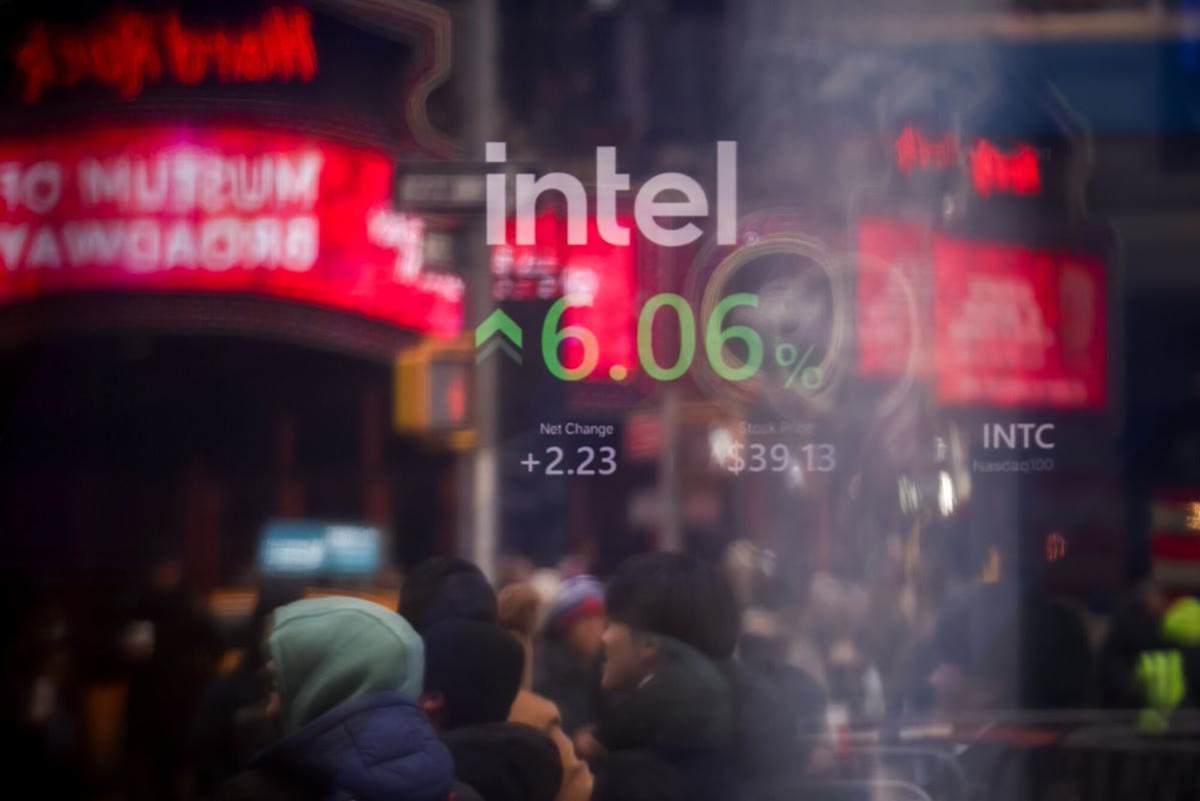
Intel became the S&P's hottest April stock after a nine-day, 53% surge that added over $100 billion in market cap -- the largest similar-period gain since the company's 1971 IPO, per Bloomberg. Shares rose 3.1% today to $64.31. Three catalysts drove the move: a $14.2 billion deal to repurchase half of its Ireland fabrication plant from Apollo Global Management (concrete Foundry validation), a chip supply agreement for Elon Musk's Terafab project covering Tesla, SpaceX, and xAI, and a Google commitment to use future Intel Xeon processors in its data centers.
- Intel at $64.31, +3.1% today -- nine-day gain of 53%, adding $100B+ in market cap
- Apollo Ireland deal ($14.2B): Intel repurchases Foundry plant stake; clearest Foundry progress in two years
- Terafab partnership: Chips for Tesla, SpaceX, and xAI -- direct AI infrastructure exposure
- Google Xeon deal: Data center commitment gives sustained high-volume demand for AI compute
- $100B added in nine sessions -- the market is pricing a credible Intel turnaround, not a momentum trade
- Three independent catalysts -- Foundry, AI infrastructure, and enterprise cloud all firing together
- AI chip rivalry widens -- Intel is now a third credible option alongside TSMC and AMD for AI workloads
- S&P index tailwind -- Intel's weighting gain offset session-wide selling in rate-sensitive names
2. Bitcoin Faces $20M/Hour Selling Wall Above $70K -- ETH More Resilient
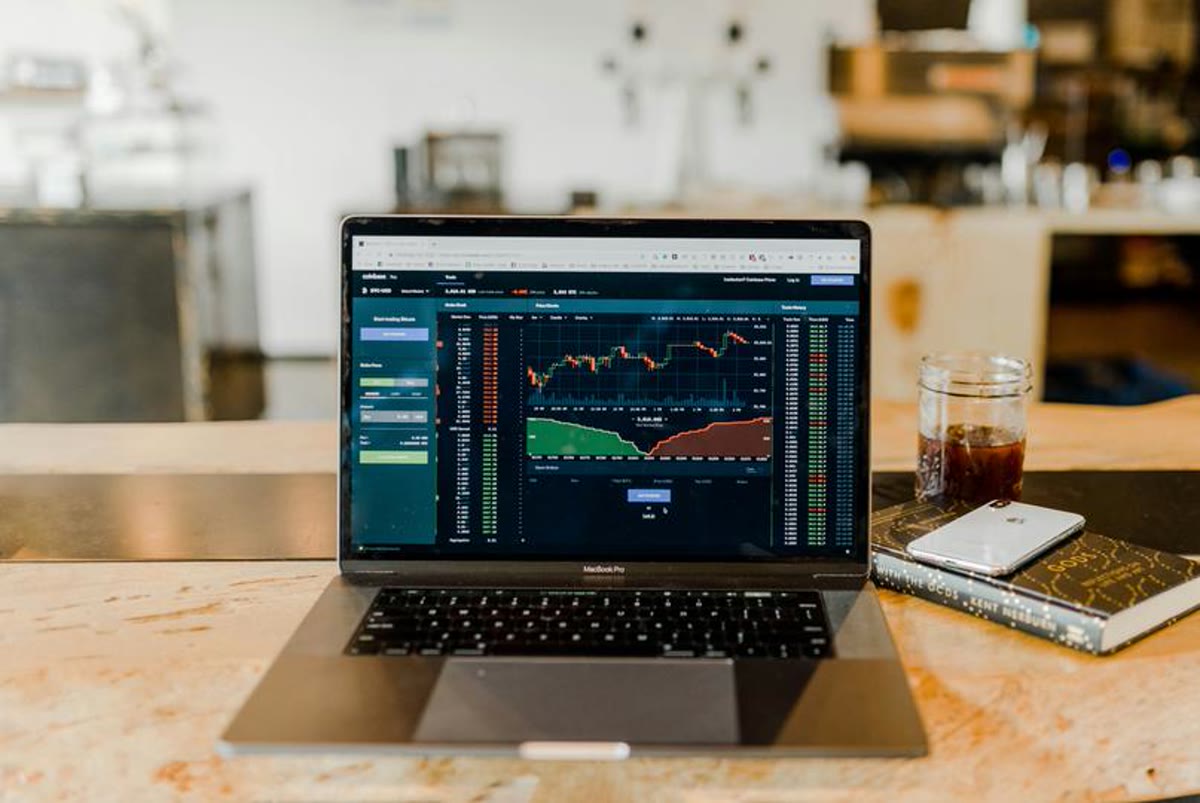
CoinDesk: Bitcoin absorbs over $20 million in hourly selling whenever it approaches the $70K-$71K zone -- a distribution pattern in place since February.
CoinDesk analysis published Monday flags Bitcoin absorbing over $20 million in hourly selling whenever it approaches $70,000-$71,000 -- a distribution pattern that has capped recoveries since February. BTC opened at $70,741, dipped to $70,872 as blockade news hit risk assets, then recovered to $71,962 by afternoon as equities reversed losses. ETH mirrored the move: opened at $2,191, dipped to $2,186, and recovered to $2,191 by the 16:00 UTC mark.
One crypto-specific wrinkle from the Hormuz blockade: CENTCOM's stated intent to intercept vessels paying Iran's IRGC USDT toll is the first US military operation directly targeting a crypto payment system. Markets are still pricing the full implications of that precedent. For the BTC weekly technical picture into earnings week, see our April 12 weekly recap.
- BTC at $71,962, -1.4% -- recovered from morning lows; $20M/hr distribution wall still caps upside at $71K-$72K
- ETH at $2,191, flat -- more resilient than BTC today; $2,000 remains the structural support floor
- $70,000 held as support -- no capitulation; measured profit-taking, not panic exits
- IRGC USDT toll targeted -- precedent-setting: US military now explicitly targeting crypto payment infrastructure
3. JPMorgan Q1 Preview -- $5.42 EPS, $48.2B Revenue, 6:45 AM ET Tuesday
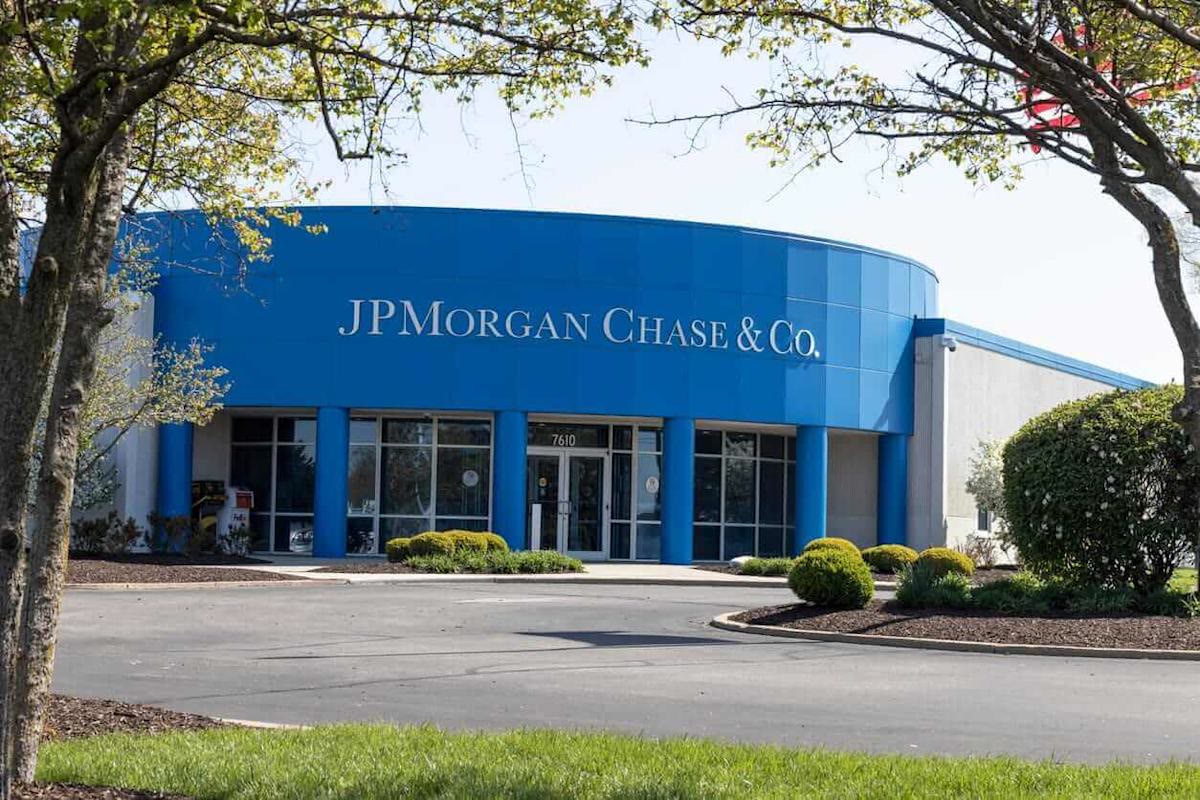
JPMorgan reports Q1 2026 results at 6:45 AM ET Tuesday -- the first major bank earnings of a quarter dominated by Hormuz volatility and energy-driven inflation.
JPMorgan Chase opens Q1 2026 earnings season at 6:45 AM ET Tuesday. Consensus calls for revenue of $48.2 billion (+6.4% year over year), EPS of $5.42 (+6.9% YoY), and net interest income of $25.6 billion (+10.1%). Q1 was exceptional for trading desks: Hormuz-driven volatility in oil, fixed income, FX, and equities boosted revenues across all business lines. Investment banking fees are seen up in the mid-to-high teens YoY as dealmaking recovered. JPM has beaten estimates in four consecutive quarters.
The number that will move markets most is not in the model: CEO Jamie Dimon's read on the Q2 outlook now that a ceasefire has been replaced by a blockade. Watch for loan loss provision guidance, energy-sector credit quality language, and any revision to the 2026 NII outlook under elevated oil conditions. Bank of America follows the same morning alongside March Retail Sales (consensus +0.3% MoM) -- a double-catalyst session for consumer spending and credit reads.
- JPMorgan at 6:45 AM ET Tuesday -- revenue $48.2B, EPS $5.42, NII $25.6B all expected; four-quarter beat streak in play
- Trading revenues the standout -- Hormuz volatility boosted every fixed income, commodity, and FX desk in Q1
- Dimon's Q2 blockade commentary is the real signal -- provision guidance and consumer stress language will set the tone for bank stocks
- Retail Sales also Tuesday (+0.3% MoM consensus) -- a miss alongside any bank stress would amplify risk-off across the full session
4. S&P 500 Reverses Morning Drop to Close Flat -- Investors Bet on Iran Resolution
US equities absorbed the blockade shock and came back. The S&P 500 opened down 0.9% to 6,756 on the blockade news but reversed through the session to close near 6,824 (+0.1%), according to Bloomberg live data. Intel's outsized session gain powered the index higher, offsetting broad declines in rate-sensitive and consumer names. The Dow underperformed, dragged by Goldman Sachs (-2.3%). Verizon (-3.6%), Salesforce (-3.4%), and Nike (-3.1%) were the biggest S&P laggards.
The reversal preserves a critical technical picture: Friday's 6,817 close was the best weekly close since November 2025. A flat Monday after a blockade announcement keeps the recovery thesis intact heading into bank earnings. Iran's Monday signal that it may reconsider uranium enrichment limits as a path to ending the war gave buyers a reason to step in.
- S&P at 6,824, +0.1% -- full reversal of the morning -0.9% drop; the November recovery thesis held
- 6,700 is the line in the sand -- a close below would signal the ceasefire-rally is failing outright
- Iran enrichment concession signal lifted sentiment -- any credible diplomatic step can send S&P toward 7,000
- Treasury yields rising -- a secondary headwind for growth and rate-sensitive names alongside oil inflation risk
5. Hormuz Blockade -- The Crypto Payment Angle

CENTCOM is intercepting vessels paying Iran's IRGC USDT toll -- the first US military operation directly targeting a stablecoin payment rail.
The morning analysis covered the Hormuz blockade and oil price action in full -- see the April 13 morning post for the trading levels. The roundup-relevant angle: CENTCOM is now explicitly intercepting vessels paying Iran's IRGC USDT toll. This is the first US military operation directly targeting a stablecoin payment rail and creates a regulatory precedent the crypto industry will be watching closely.
WTI settled at $103.45 (+8.3%) after peaking near $105.62 at the open. Chinese COSCO tankers and Indian state refiners are most exposed since they have been the primary users of the IRGC's crypto toll system. Iran condemned the blockade as "illegal piracy" but offered no specifics on retaliation.
- First military action against a crypto payment rail -- the USDT-toll interdiction sets new regulatory precedent
- 800-vessel Hormuz backlog persists -- supply normalization timeline extended further
- Chinese and Indian state refiners most exposed -- direct US Navy interdiction risk for non-compliant tankers
6. Gold at $4,718 -- Safe-Haven Flows Diverge from Bitcoin Again
Gold fell 1.0% to $4,718 today -- a contained decline given the risk-off backdrop and oil's 8% surge. The gold-to-bitcoin divergence that characterized last week's trading continues: XAU absorbs institutional safe-haven demand while BTC trades as a risk asset. Gold fell 1.0% from Friday's close; BTC fell 1.4% over the same window. Central bank physical demand continues to underpin the price floor near $4,700.
- XAU at $4,718, -1.0% -- modest decline despite oil shock; central bank demand underpins the floor
- Gold-to-BTC divergence widens -- institutional safe-haven capital routes to XAU during active conflict
- $4,700 is key support · $4,765 resistance -- a hold keeps the bull structure intact toward $4,800