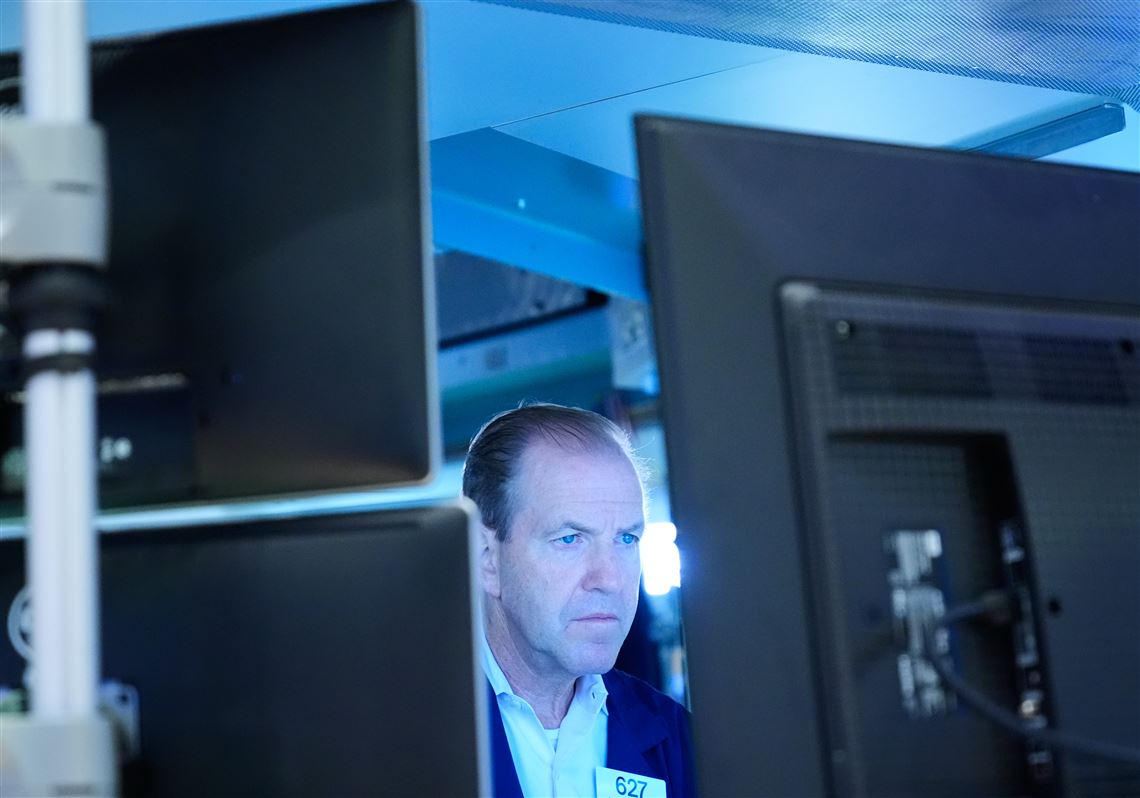
The relief rally never made it past the opening bell. The Micron-fueled surge we covered in this morning's morning analysis evaporated as the cash session wore on, and the index that was meant to lead the bounce instead booked its fourth straight loss. The Nasdaq Composite fell 0.46 percent to 25,358.60, the S&P 500 finished essentially flat at 7,357.49, and only the old-economy Dow Jones Industrial Average held green, up 0.14 percent to 51,920.62. Two things broke the morning's optimism: an unwelcome twist on the very memory story that lifted Micron, and a hot inflation print that landed exactly as we warned it might.
The Close: Breadth Splits the Tape
This was a split-personality session. The headline indexes barely moved, but underneath them the rotation was sharp. Money rolled out of the crowded Magnificent Seven and richly valued technology names and into health care, financials and industrials, which is why the Dow could grind higher while the tech-heavy Nasdaq sagged for a fourth day. Energy was the day's weakest corner as crude stayed pinned near multi-month lows, and communication services lagged alongside tech. The flat S&P close masks how much churn happened beneath the surface: the index is now caught between a defensive bid and a steady leak out of the very names that led the entire bull run.
- Nasdaq fell 0.46% to 25,358.60, a fourth straight decline
- The S&P 500 finished flat at 7,357.49, down about 0.01%
- The Dow rose 0.14% to 51,920.62 on a defensive rotation
- Leaders: health care, financials, industrials; laggards: tech, energy, communication services
- The flat index masks a sharp rotation out of the Magnificent Seven
Story of the Day: Apple and Microsoft Pass the Memory Bill
Here is the irony of the week. Micron's blowout guidance, the report that sent futures flying overnight, works precisely because memory prices are soaring. By the cash open, investors had reframed that same surge as a cost problem for everyone who buys chips. Apple announced price increases on the iPhone and Microsoft raised pricing on the Xbox, both citing higher memory and component costs, and the read-through was immediate: if the two largest consumer-hardware franchises are raising prices to protect margins, the memory boom that is a tailwind for Micron is a headwind for demand everywhere downstream. Apple's slide overshadowed Micron's booming earnings, dragging the Mag7 lower and pulling the Nasdaq down with it. The one bright spot was Qualcomm, whose strong results and guidance held up, but it was not enough to offset the megacaps. As CNBC framed it, a drop in Apple was enough to sink the tape even on a day Micron proved the AI-memory cycle is very much alive.
- Apple raised iPhone prices and Microsoft raised Xbox pricing on higher memory costs
- The same memory surge that lifted Micron became a cost headwind downstream
- Apple's drop overshadowed Micron's blowout, dragging the Mag7 lower
- Qualcomm was the bright spot, but could not offset the megacaps
- The selloff in chips is now in its second day
The PCE Verdict: Hot Enough to Sting
The morning flagged the PCE report as the hurdle that could override any relief, and it did. Core PCE, the Federal Reserve's preferred inflation gauge, rose to 3.40 percent year over year in May from 3.30 percent, a hotter reading that points the wrong way for a market hoping for rate cuts. It lands on top of new Chair Kevin Warsh's June 17 hold at 3.50 to 3.75 percent and a set of projections that had already nudged the inflation outlook higher. The print does exactly what the morning's bearish scenario described: it revives the higher-for-longer narrative that bites hardest on the long-duration technology names already under pressure, mechanically trimming the present value of their distant earnings. A cooler number could have let the chip rebound broaden out. Instead, sticky inflation handed the sellers another reason.
- Core PCE rose to 3.40% year over year in May, up from 3.30%
- The hot print revives the higher-for-longer rate narrative
- It sits on top of the Fed's June 17 hold at 3.50 to 3.75 percent
- Long-duration tech names feel it most as discount rates stay elevated
- A cool number could have broadened the chip rebound; instead it stalled

Crypto Check: Bitcoin Cracks $60,000 Again
Digital assets bore the brunt of the risk-off turn. Bitcoin slid back below $60,000 to about $59,245, off roughly 6 percent on the day and probing its lowest level in about 20 months, after the morning had it holding near $61,700. The second day of a semiconductor and AI selloff pulled investors out of anything classed as risk, and Bitcoin sits squarely in that bucket. Ethereum eased to about $1,563 from this morning's $1,653, again lagging the majors. As Rio Times notes, the move tracked the chip rout rather than any crypto-specific catalyst, a reminder that in a genuine risk-off impulse the majors still trade as high-beta equities. The reference zone to watch is the $58,000 to $60,000 band: holding it keeps the structure merely bruised, while a clean break lower would extend the week's downtrend.
- Bitcoin slid below $60,000 to about $59,245, near a 20-month low
- Off roughly 6% on the day as the chip rout spread to risk assets
- Ethereum eased to about $1,563, lagging the majors
- The move tracked the equity selloff, not a crypto-specific catalyst
- Reference zone: the $58,000 to $60,000 band
After-Hours and Overnight Watch
The havens told the other half of the story. Gold reclaimed $4,000, climbing to about $4,028 as the equity and crypto wobble revived safe-haven demand, a clean reversal of this morning's sub-4,000 reading. WTI crude steadied near $70.50, edging up off an intraday low of $69.65 but still holding close to its lowest since late February as US-Iran progress keeps tanker traffic flowing through the Strait of Hormuz. Heading into Friday, three things matter. First, whether the chip selloff stretches to a third session or stabilizes now that Micron and Qualcomm have both shown the demand is real. Second, how the market digests Apple's and Microsoft's pricing power, a margin positive but a potential drag on unit demand. Third, quarter-end positioning, with June 30 rebalancing flows able to exaggerate moves in thin late-June liquidity. Bullish trigger for equities: tech stabilizing and breadth broadening back out. Bearish trigger: a third down day in chips that drags the S&P out of its holding pattern.
- Gold reclaimed $4,000, near $4,028 on revived safe-haven demand
- WTI steadied near $70.50, off a $69.65 low but near February lows
- Watch whether the chip selloff extends to a third session
- The read-through from Apple and Microsoft pricing power on demand
- Quarter-end rebalancing into June 30 can exaggerate thin-liquidity moves
ThriveInMarkets publishes market commentary for general information only and does not provide personal investment advice. Prices are live or last-close levels as labeled and move quickly; levels cited are technical reference points, not instructions to buy or sell any asset.