Iran Escalates: Over 100 Strikes on Israel and US Targets
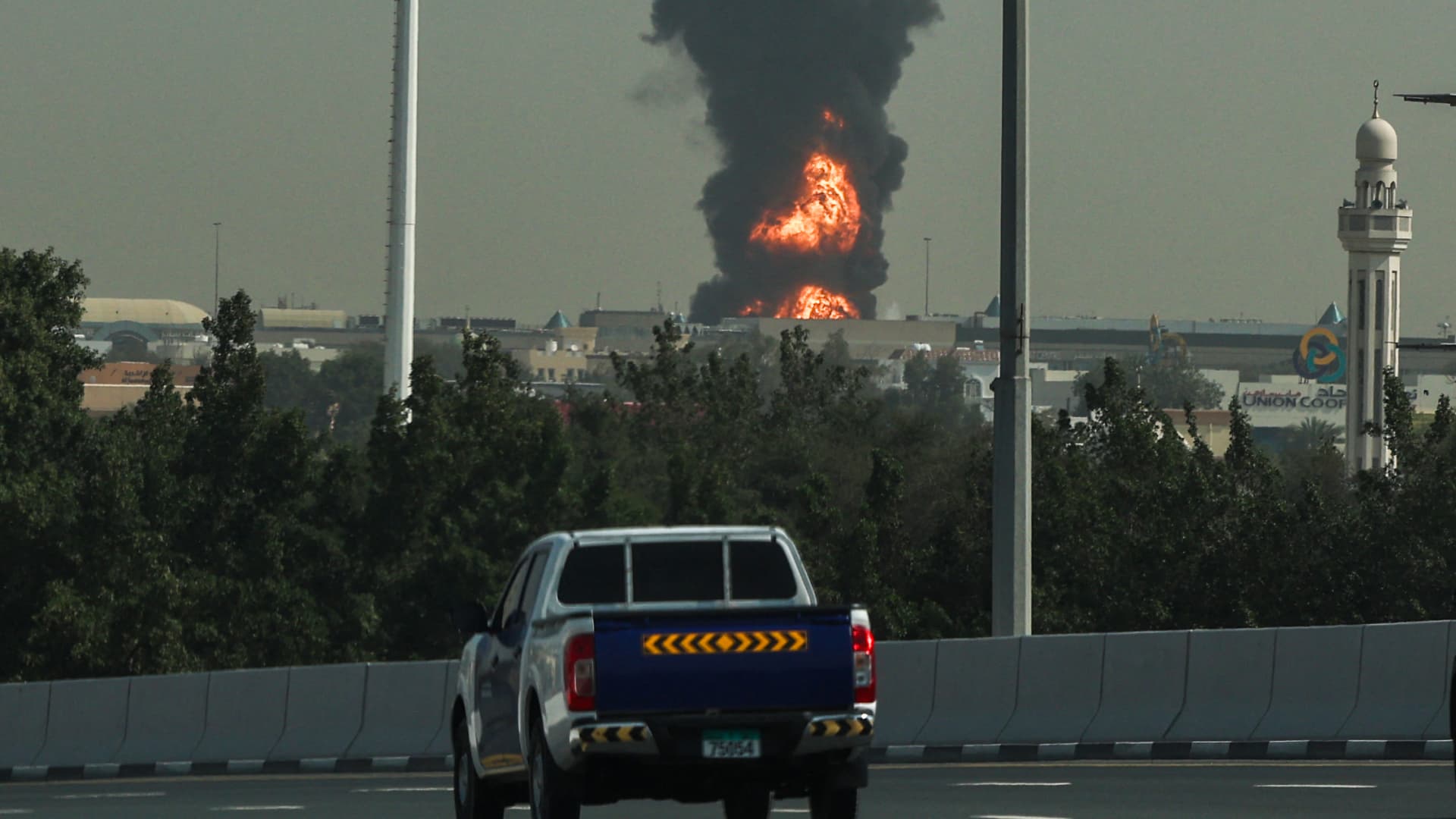
Iran's Islamic Revolutionary Guard Corps launched a coordinated missile and drone offensive overnight, claiming strikes on more than 100 military and security targets inside Israel in retaliation for the killing of security chief Ali Larijani. Two people were killed near Tel Aviv during Iranian missile strikes. The IRGC also fired several explosive drones at the US embassy in Baghdad, with booms reported near the compound. Tehran additionally fired a projectile near an Australian airbase in the UAE — no injuries reported.
This is a genuine escalation, not a continuation of background noise. Larijani — head of Iran's Supreme National Security Council — was killed in Israeli airstrikes on Tuesday, along with his son and top aide. The scale of the overnight retaliation signals Tehran has moved beyond the calibrated strikes of the first two weeks of this conflict. BMI/Fitch Solutions warned of "a messy escalation" with Iran potentially reactivating Houthi forces if its direct strike capability degrades.
President Trump has so far failed to bring any allied nations into the coalition. Saudi Arabia is hosting an emergency meeting of Arab and Muslim foreign ministers in Riyadh today to discuss the conflict.
PPI: The Inflation Data That Feeds the Fed
February PPI drops at 12:30 UTC (8:30 AM ET) — the most important data point before this afternoon's Fed decision. This release was delayed six days due to the US government shutdown, making it the first fresh producer inflation read since January's hot print.
The Producer Price Index measures changes in the prices producers receive for their goods and services — it is a leading indicator of consumer inflation (CPI). When producers charge more, those costs get passed to consumers. Core PPI strips out food and energy, which together make up roughly 40% of the headline, giving a cleaner signal on structural price pressures.
Key Numbers to Watch
- PPI m/m Forecast: 0.3% | Previous: 0.5% (January 2026)
- Core PPI m/m Forecast: 0.3% | Previous: 0.8% (January surge)
- PPI y/y Previous: 2.9%
- Core PPI y/y Previous: 3.6%
- Release: 12:30 UTC — Bureau of Labor Statistics
Scenarios
Hot (above 0.3% m/m or Core PPI y/y stays above 3.5%): Signals oil-driven cost increases are bleeding into producer margins at scale. Hawkish Fed read. USD up, BTC and Gold down initially. Cements the case for a more hawkish dot plot at 18:00 UTC. This scenario is elevated given Brent above $100 for three consecutive weeks.
Cool (below 0.3% m/m, especially Core): Disinflationary trend intact despite the oil shock — producers have not yet fully passed through energy costs. Bullish for risk assets, dovish Fed signal. BTC and Gold rally into the FOMC decision.
In-line at 0.3%: Watch core PPI y/y closely. A drop from 3.6% toward 3.0% would still be dovish on the trend. Markets react to the year-over-year trajectory more than the monthly print here.
The overnight Iran escalation raises the stakes on a hot PPI print considerably. Higher oil costs flowing through to producer prices, combined with an escalating war, would give the Fed a genuine stagflation signal — exactly the worst-case scenario Powell has been deflecting for months.
FOMC: Rate Hold Certain, Dot Plot Is the Story
The Fed holds rates at 3.50% to 3.75% at 18:00 UTC. That is fully priced in. The decision itself is a non-event. What matters is the updated Summary of Economic Projections and the dot plot — the first of 2026 — followed by Powell's press conference at 18:30 UTC.
Futures currently price one cut at most in 2026, likely not until September or October. Key questions for today:
- Does the median dot show one cut in 2026 or two?
- How does the Fed characterize the Iran oil shock — transitory disruption or structural inflation risk?
- Any language shift on the balance of risks between employment and inflation?
This is Powell's penultimate meeting as Fed chair. Kevin Warsh's nomination to succeed him in May is stalled in Senate committee over an unrelated DOJ matter. Markets may discount Powell's forward guidance slightly, knowing the next chair could reprice the entire rate path.
Bitcoin: Holding Ground in Fear Territory
BTC is at $74,029, flat over 24 hours. Fear & Greed sits at 26 (Fear) — price holding above $74K despite deeply negative sentiment is a divergence worth tracking. It suggests strong underlying demand, but also that any negative catalyst (hot PPI, hawkish dot plot, fresh Iran shock) could unlock a fast flush.
Key Levels:
- Support: $72,000, then $70,000 (psychological and structural)
- Resistance: $75,000 (rejection zone from Tuesday), then $78,000–$80,000
Bias: Neutral with downside risk until PPI prints. A cool PPI and a steady dot plot could drive a breakout through $75K. A hot PPI and hawkish Fed puts $72K support under immediate pressure. Today is not the day to add size ahead of the data stack.
Gold (XAUUSD): Anchored Above $5,000
Gold is trading around $5,022, consolidating in the $4,996–$5,053 range for the third consecutive session. The overnight Iran escalation strengthens the safe-haven bid, and the geopolitical backdrop gives gold structural support that purely risk-correlated assets do not have.
Key Levels:
- Support: $4,996, then $4,950
- Resistance: $5,053, then $5,100
Bias: Cautiously bullish. Gold has a dual tailwind today — hot PPI drives inflation-hedge demand, cool PPI weakens the dollar and lifts the price. The main downside risk is a USD spike on a hawkish dot plot cracking the $5,000 support level. A close below $5,000 for the first time in weeks would flip short-term technicals bearish.
Oil: Escalation Puts a Floor Under $100
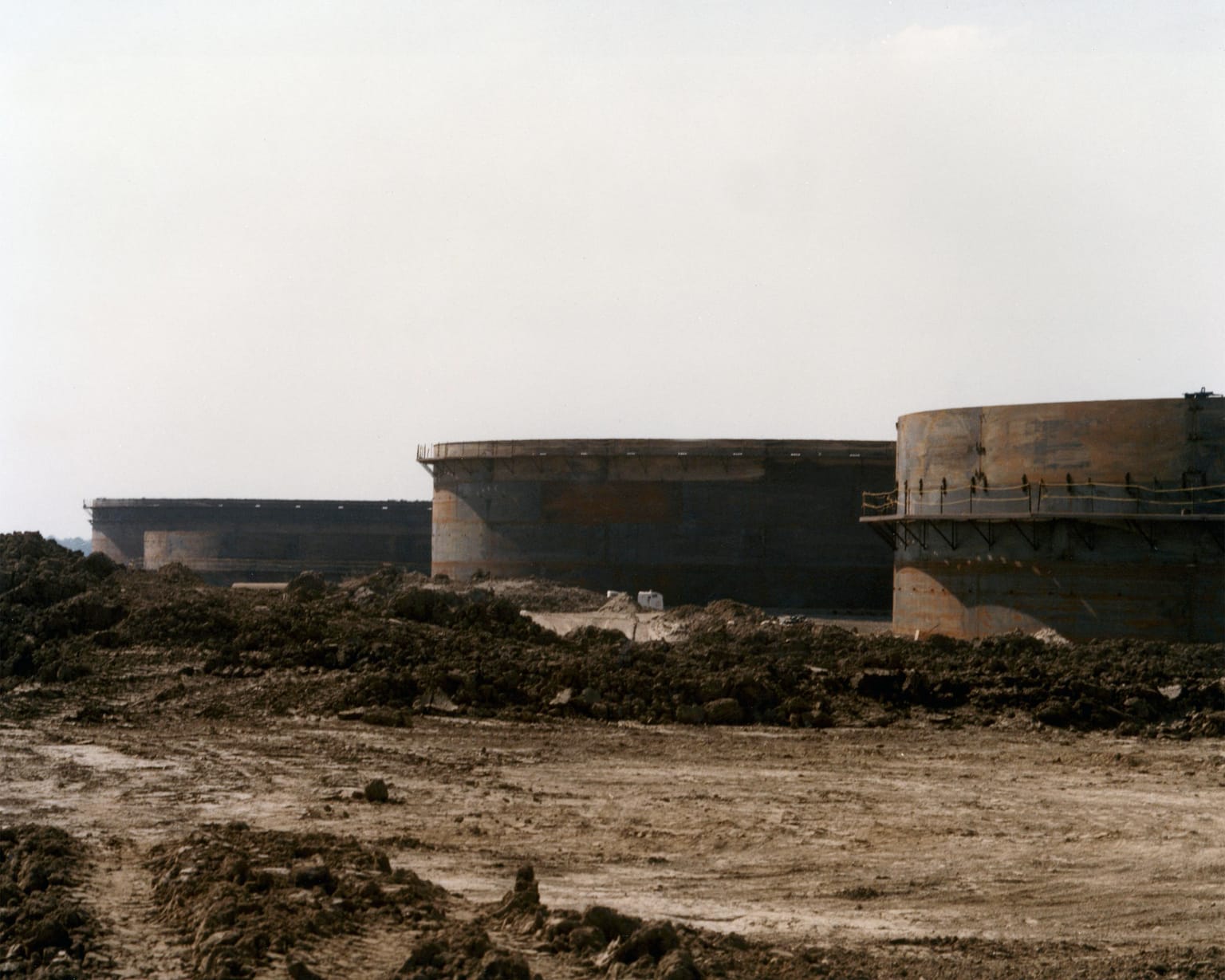
Brent crude is near $102, with the overnight strikes adding fresh upward pressure after two sessions of consolidation. The Hormuz blockade has reduced tanker traffic to just 21 vessels since Feb. 28, versus 100+ per day before the conflict. Iran's attacks on UAE energy infrastructure this week — the Fujairah drone strike and the gas field fire — keep supply disruption fears elevated. Any Houthi reactivation, flagged by BMI as a credible risk, would push Brent back toward $110.
What to Watch Today
- 12:30 UTC — February PPI + Core PPI. The critical pre-Fed inflation read. A hot print changes everything downstream.
- 18:00 UTC — FOMC rate decision + updated dot plot. One or two cuts in 2026? The dot plot is the market mover.
- 18:30 UTC — Powell press conference. His characterization of the Iran oil shock and forward rate guidance will drive the close.
- Iran developments. Any new escalation after overnight strikes — Houthi reactivation, Hormuz incidents, nuclear site attacks — will spike oil and compress risk assets immediately.
- BTC $75,000. Clean close above breaks the rejection zone. Failure here on bad macro data is a short signal.
- Gold $5,000. First close below this level would flip short-term technicals bearish despite the structural safe-haven bid.
Bottom line: Three catalysts in one session. The overnight Iran strikes are new, material information — this is not yesterday's story reprinted. Trade small into 12:30 UTC, digest the PPI number, then reassess before the Fed. Do not add size ahead of Powell's presser at 18:30 UTC. The range today could be extreme in either direction.