Fear & Greed at 8: What Happens at Historical Extremes
The Crypto Fear & Greed Index opened Monday at 8 out of 100, its lowest print since November 2022 when FTX collapsed. To put that in context: a reading of 8 is not just "extreme fear" territory, it is the kind of number that has historically preceded multi-month recoveries. The index only touches single digits during genuine capitulation events. We had three of them in 2022. None since.
That does not mean the bottom is in today. Capitulation can be a process, not a moment. But traders who bought Bitcoin when the Fear & Greed Index last touched 10 (March 2020, the COVID crash) got their money back ten times over. The signal is worth tracking.
BTC is trading at $68,627, down 0.93% in the last 24 hours. Ethereum at $2,066, down 2.45%. The market has been walking down slowly since the weekend's Trump ultimatum rattled sentiment, but there has been no panic capitulation flush yet. Volume is thin and positioning is flat. The real test comes tonight when Trump's 48-hour deadline expires.
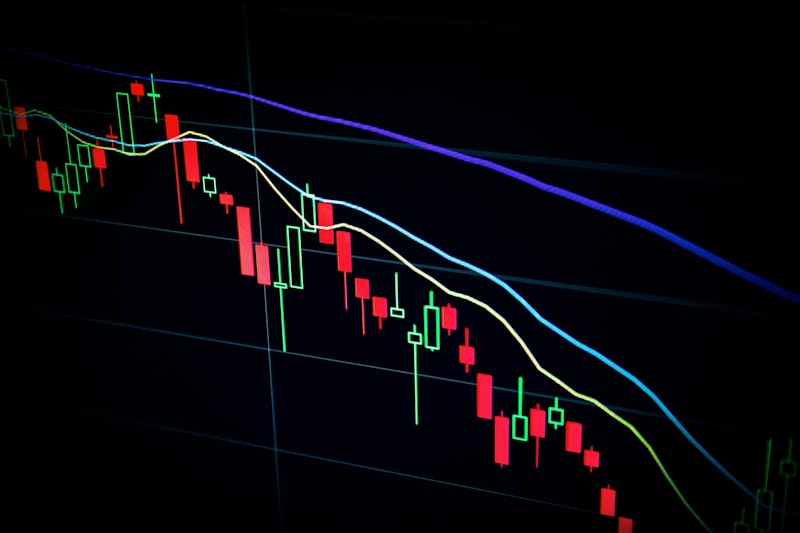
Markets in extreme fear as Trump's Iran ultimatum deadline falls tonight. (Unsplash)
BTC: Key Levels for Monday
Support: $67,500 (last week's low), then $65,000 psychological and structural. If the Iran deadline passes without strikes, expect relief buying back toward $71,000-$72,000. If strikes happen, $65K is the first serious test.
Resistance: $70,000 (psychological), then $72,500 (week's prior high). BTC needs a daily close above $71K to change the short-term structure back to bullish.
ETH is underperforming BTC again, which is a risk-off signal. The ETH/BTC ratio is at its lowest since late 2022. Altcoins broadly are getting hit harder than BTC, which is typical at sentiment extremes.
Mining economics: average production cost is ~$88,000 per BTC at current difficulty. Miners operating at a $19,000 loss per coin. Difficulty dropped 7.76% Saturday. Hashrate around 920 EH/s. This is why miner selling pressure continues to cap rallies.
Gold: Pullback or Opportunity?
Gold is trading at $4,491, pulling back from last week's high near $4,650. The move lower is partly a dollar bounce post-FOMC (where the Fed held rates and projected only one cut for all of 2026), partly war-premium digestion.
The technical picture remains bullish: RSI has turned upward from oversold, and the $4,575-$4,700 range is forecast to be the consolidation zone for today's session according to LiteFinance's daily analysis. A Morning Star pattern on the 4-hour chart signals potential upward reversal.
Key levels: Support at $4,400, resistance at $4,650 and $5,000 (the psychological level that briefly traded last week). If Trump strikes Iran's power infrastructure tonight, gold spikes. If Iran backs down and the Hormuz reopens, gold corrects sharply but the long-term structural bid from central banks, ETF inflows, and de-dollarization remains intact.
GLD (SPDR Gold Trust) is up roughly 73% since January 2025. The pullback from $5K is a buying opportunity for long-term holders, not a trend reversal.
Oil: The Deadline That Markets Cannot Ignore
Brent crude: $112.90 (+0.60%). WTI: $99.11 (+0.90%). Oil is heading for its fifth straight weekly gain.
Trump's ultimatum: reopen the Strait of Hormuz within 48 hours (deadline: late Monday UTC) or the US will strike Iran's power plants. Iran's response was escalation, not compliance, threatening retaliation against "financial entities that finance the US military budget." The IEA says it's ready to release emergency stockpiles "if necessary" but acknowledges the only real solution is reopening the strait.
Murban crude (UAE benchmark) spiked 18% to $146 today on regional supply panic. Saudi Arabia's Aramco CEO has pulled out of CERAWeek. Kuwait Petroleum's CEO is attending virtually from Kuwait.
Base case: oil stays elevated. The strait is not reopening today regardless of what Trump threatens. The binary is whether US strikes on Iranian power plants happen or not. If yes, $120-150 Brent is on the table. If no, some relief correction toward $100-105.
Macro & Fed: Stagflation Is the Word
The Fed held rates at its March meeting and cut its projected rate cuts for 2026 to just one. The combination of oil near $100 (inflation risk) and a slowing economy (growth risk) is the definition of stagflation. The Fed cannot cut without risking inflation; cannot hike without crushing an already weakening economy.
US gasoline prices are up 30%+ since March 1. Consumer confidence is eroding. The 10-year Treasury yield hit 4.39% last week, its highest close since last July. Markets are now pricing a non-trivial chance of a rate hike in 2026, something that seemed impossible three months ago.
The S&P 500 closed at approximately 6,377 Friday, its fourth consecutive weekly decline and below its 200-day moving average. Futures are pointing to a cautious open Monday, heavily dependent on any Iran development overnight.
Stocks & ETFs to Watch
- XLE (Energy Select Sector SPDR) — the only green sector in 2026. Direct beneficiary of $100 oil. Watch for further outperformance if the Iran situation escalates.
- ITA (iShares U.S. Aerospace & Defense) — defense spending is rising across NATO and Gulf allies. Up strongly YTD.
- GLD (SPDR Gold Trust) — held above $4,400 support into the weekend. The $4,350 zone is the first downside shelf; a break below it would weaken the geopolitical-premium structure that has been keeping gold bid. Above $4,400, the trend structure remains intact.
- QQQ (Nasdaq ETF) — below 200-DMA and in correction territory. Tech is getting crushed: higher rates + energy costs hurt margins. Avoid until macro clears.
- XLY (Consumer Discretionary) — gasoline at 30% above month-ago levels is a direct tax on consumer spending. Sector faces significant headwinds.
- VIX — currently elevated. A Monday close above 30 signals institutional panic and historically precedes capitulation flushes in risk assets. The single most-watched fear gauge this session.
- MSTR, COIN, CLSK — crypto-adjacent equities correlate tightly with BTC. At Fear & Greed 8, these names are trading at levels that have historically marked short-term extremes.
Economic Calendar: Today & This Week (All Times UTC)
- Monday, March 23 — No high-impact scheduled releases. The only catalyst is the Trump Iran ultimatum deadline (late Monday, approximately 20:00-23:00 UTC). All eyes on geopolitics, not data.
- Tuesday, March 24 — Flash PMIs (High Impact): Germany, Eurozone, UK, and US Manufacturing and Services PMI. A reading below 50 across the board would confirm recession risk and likely accelerate equity selling. This is the week's most important scheduled data point.
- Wednesday, March 25: Australian CPI, UK CPI. Inflation prints in an oil shock environment. Both are likely to surprise to the upside given energy costs.
- Thursday, March 26: US Q4 2025 GDP (final revision). Backward-looking, but any downward revision to sub-2% amplifies recession fears.
- Friday, March 27: UK Retail Sales. US Personal Income/Spending and PCE Deflator — the Fed's preferred inflation gauge. A hot PCE number is the worst-case scenario for rate expectations.
What to Watch Today
- Trump Iran deadline (late Monday UTC): This is the only thing that matters for today's price action. No compliance from Iran means the binary resolves to either US strikes or a de-escalation/extension. Markets will reprice sharply either way.
- BTC $67,500 support: If this level breaks on heavy volume, the next serious bid is at $65K. Watch the 4-hour close carefully.
- Asian equity open: Japan, Korea, Australia all opened lower on Monday. European open at 07:00 UTC will confirm or deny risk-off sentiment direction.
- VIX level: Elevated fear index + crypto Fear & Greed at 8 + geopolitical binary = potential for the week's largest single-session move in either direction.
- Oil open: Brent above $115 would signal markets pricing in strikes. Below $108 would signal relief/de-escalation bets.