1. Trump says Iran called wanting to deal -- WTI reverses Monday's blockade surge to $97
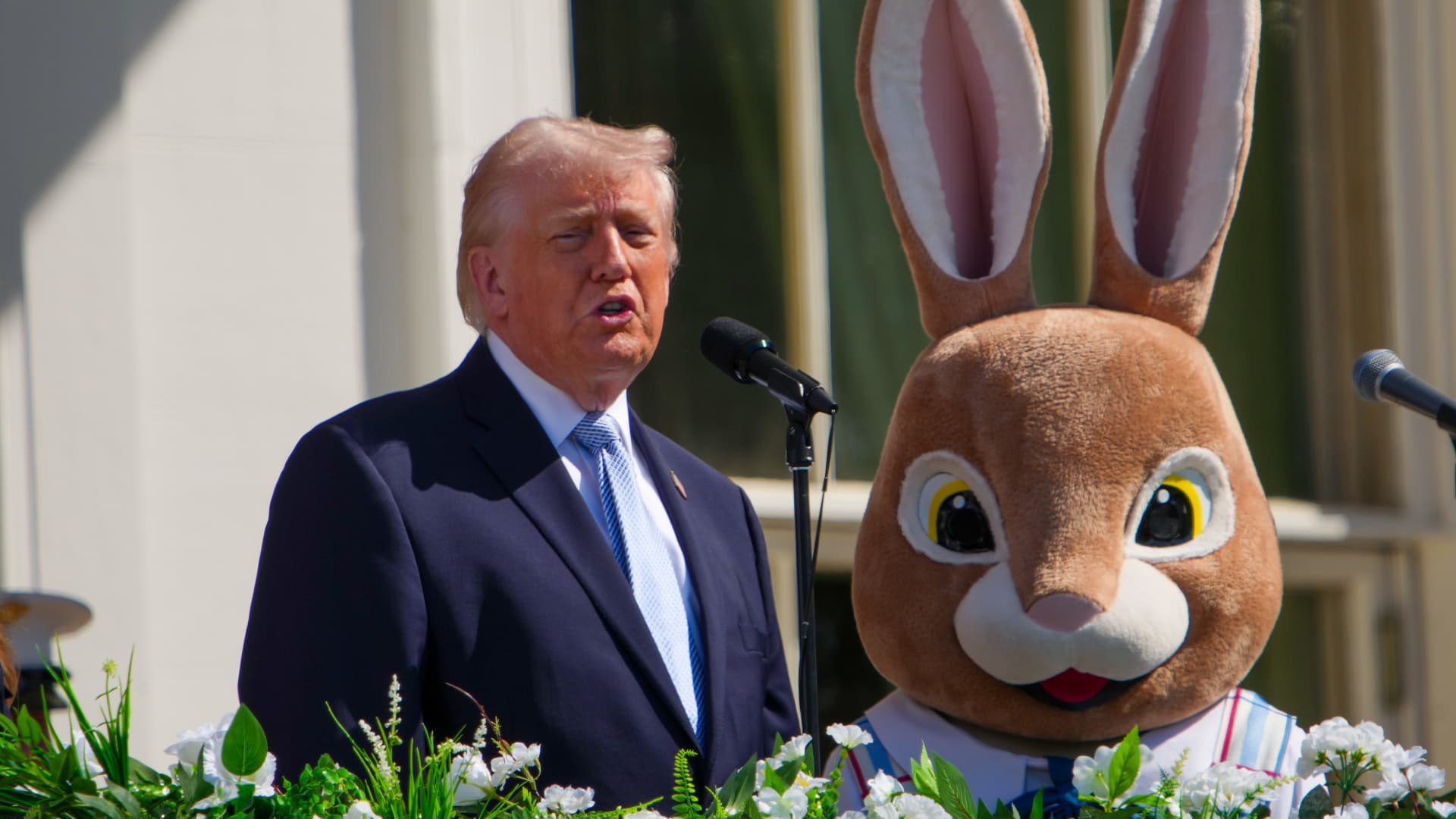
The Hormuz premium that sent WTI to $103.45 on Monday is evaporating. President Trump told reporters Monday evening that Iranian officials reached out to his administration wanting to make a deal, reviving peace-talk momentum less than 24 hours after the naval blockade began. WTI crude fell from Monday's close toward $97 in overnight and early Tuesday trading -- reversing roughly two-thirds of the blockade-driven surge.
Bloomberg's Tuesday morning market report describes the blockade as being read by markets as a pressure tool rather than a permanent escalation: a targeted measure to curb Iran's oil revenues while preserving a diplomatic off-ramp. Both sides are reported to be discussing the format for a new round of negotiations before the original two-week ceasefire window expires. For the full context on how the blockade was announced, see the April 13 morning analysis.
Key oil levels today:
- $103.45: Monday's blockade close -- the premium ceiling to watch if talks collapse.
- $97.00: Tuesday morning price -- two-thirds of Monday's surge already reversed.
- $95: First support if negotiations advance; below this the market prices a deal.
- $100: Psychological resistance -- a close above on bad news signals escalation resumes.
- WTI at $97, down 6.2% -- market pricing renewed talks as credible even without formal confirmation
- Trump's direct statement is actionable -- not rumor but a White House comment to press corps
- Oil volatility remains extreme -- every headline moves WTI 3-5% instantly; $90-$105 is the operating band
- Sector rotation flips -- XLE long yesterday is a drag today; airlines and cruise operators recovering
2. Bitcoin breaks $74,484 -- four-week high, $327M in short positions liquidated
Bitcoin broke the $73,000 resistance level overnight to hit $74,484 -- its highest price since before the Iran conflict escalated in late February, per Bloomberg. The breakout triggered a cascade of short-covering: CoinDesk data shows $430 million in total liquidations over a 12-hour window, of which $327 million were short positions. Traders heavily positioned against a $73,000 break became forced buyers as price moved cleanly through the level.
Ethereum surged in tandem, reaching $2,374 with a 7.5% 24-hour gain. ETH's relative strength signals breadth beyond BTC: DeFi and altcoin demand typically follows a BTC breakout rather than leading it, confirming this is genuine risk appetite rather than a narrow bitcoin-only squeeze. For context on Monday's $20M/hour selling wall that briefly capped BTC at $71,962, see the April 13 market roundup.
- BTC at $74,484, +5.2% -- four-week high; $73,000 was the ceiling and is now support
- $327M shorts liquidated -- forced buying amplified the move; price discovery is now cleaner above $73K
- ETH at $2,374, +7.5% -- broader crypto breadth confirms risk appetite rather than a BTC-specific squeeze
- $73,000 is now the line -- a close below resets the technical picture; hold it and $77,000-$78,000 opens
3. Institutional BTC accumulation -- ETF inflows $787M last week, MicroStrategy adds $330M
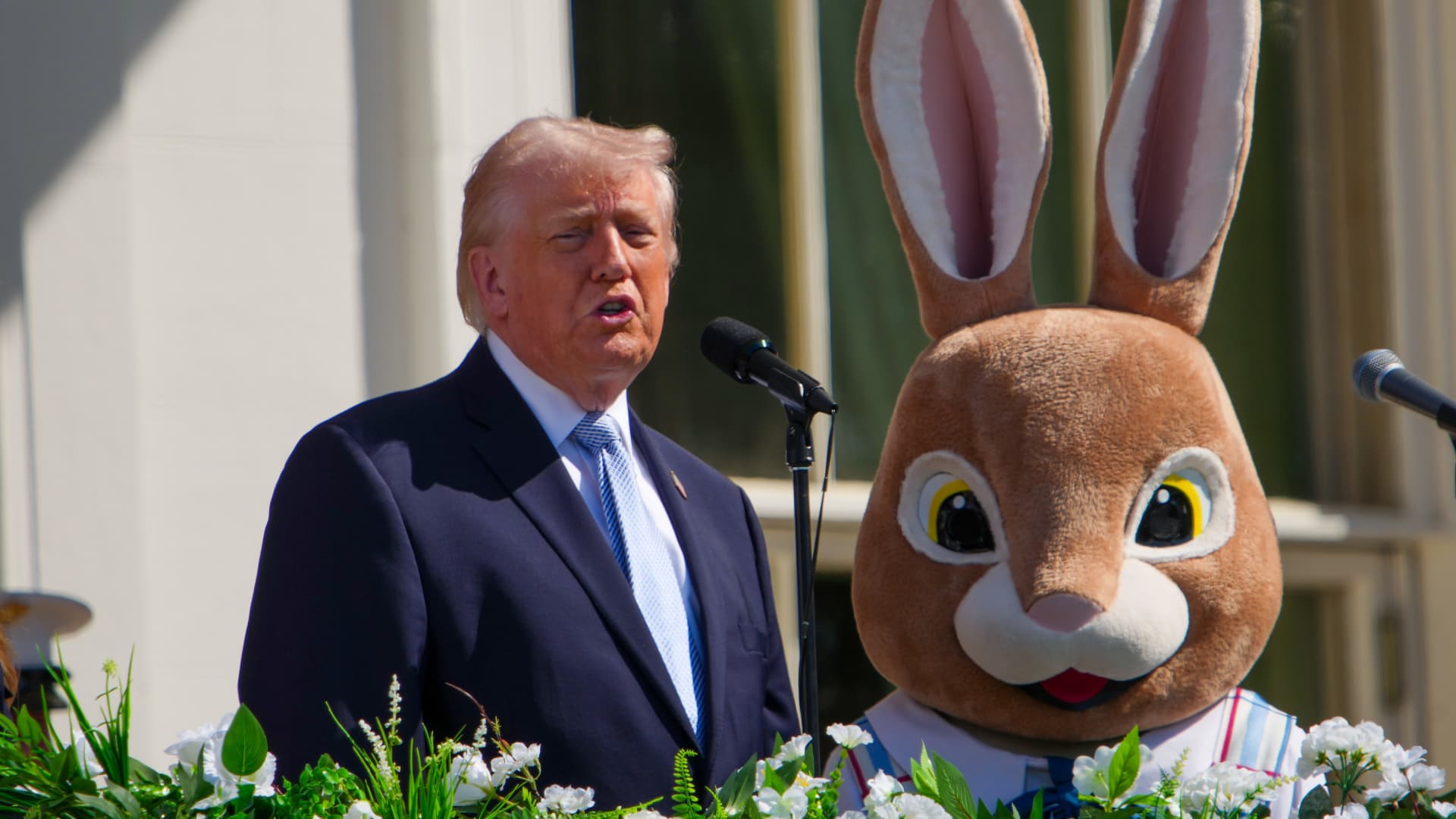
US spot Bitcoin ETFs recorded $787M in weekly net inflows -- their best week since early March -- as institutional capital repositioned ahead of the breakout above $73,000.
The BTC breakout has institutional backing that short-only traders underpriced. US spot Bitcoin ETFs recorded $787 million in net inflows last week -- the strongest weekly intake since early March -- per CoinDesk tracking data. That figure represents forward-looking capital positioning by desks that priced an undervalued geopolitical resolution scenario well before the Monday evening announcement.
MicroStrategy confirmed a $330 million Bitcoin purchase last week, lifting its treasury to 766,970 BTC. Three consecutive weeks of accumulation in the $68,000-$72,000 range establishes a visible institutional cost basis that acts as a floor reference. Combined, the ETF and MicroStrategy flows signal that the $74,000 breakout was earned, not manufactured by a thin-market squeeze.
- $787M weekly ETF inflows -- best since early March; institutional positioning preceded the retail narrative
- MicroStrategy at 766,970 BTC -- $330M purchase last week; cost basis floor visible at $68K-$72K
- Accumulation not speculation -- multi-week inflows validate the $73,000 breakout as structurally supported
- Next catalyst: Iran deal confirmation -- a formal ceasefire agreement would unlock the path toward $80,000
4. S&P 500 erases all Iran war losses at 6,886 -- MSCI World on eight-day winning streak
The S&P 500 closed Monday at 6,886.24 (+1.02%), crossing back above 6,878 -- the pre-war level from late February. Bloomberg called it the moment the index erased Iran war-driven losses as earnings season begins. The Nasdaq added 1.23% to 23,183.74; Oracle surged 13%, Palantir rose more than 3%. The MSCI All Country World Index is on an eight-consecutive-day winning streak -- the longest since September 2025.
S&P futures are little changed Tuesday morning per CNBC, suggesting the market is holding gains rather than chasing further ahead of the dual catalyst at midday. JPMorgan at 12:00 UTC and Retail Sales at 12:30 UTC will determine whether the S&P extends toward 7,000 or pulls back to test 6,800 support. A strong JPM beat with constructive Dimon commentary on Q2 is the bull scenario; a cautious outlook on consumer credit and energy-driven inflation is the bear scenario.
- S&P at 6,886 -- all Iran losses erased -- a psychological and technical inflection point for bulls
- 7,000 is the next target -- needs JPMorgan beat plus constructive Iran talk progress to close above
- 6,800 is support -- hold it or the recovery thesis weakens; watch the 12:00-13:00 UTC window
- Software names led Monday -- Oracle +13%, Palantir +3%; tech pricing both disinflationary oil drop and peak war risk
5. JPMorgan Q1 earnings at 12:00 UTC -- the most important number of the session
JPMorgan Chase releases Q1 2026 results at approximately 7:00 AM ET (12:00 UTC) today. Consensus calls for EPS of $5.46 (+7.7% year over year), revenue of $48.56 billion (+7.2% YoY), and net interest income of $25.6 billion (+10.1%). The bank has beaten consensus in four straight quarters and carries an Earnings ESP of +1.32%, making another beat the statistical base case.
Q1 was exceptional for trading desks. Hormuz-driven volatility in oil, FX, fixed income, and equities boosted markets revenues across every business line. Investment banking fees are expected in the mid-to-high teens growth range. The critical read will be CEO Jamie Dimon's Q2 commentary: loan loss provisions, consumer credit quality, and any 2026 NII guidance revision under elevated energy costs. Bank of America follows tomorrow (April 15) at the same hour with $0.99 EPS and $29.6B revenue expected.
- JPM reports at 12:00 UTC -- EPS $5.46, revenue $48.6B; fifth consecutive beat is the consensus expectation
- Trading revenues the standout -- Hormuz touched every asset class in Q1; markets revenue expected up mid-teens
- Dimon Q2 commentary is the real signal -- blockade, consumer stress, and NII trajectory under oil inflation are the phrases to watch
- Retail Sales at 12:30 UTC (+0.3% MoM consensus) -- a miss alongside any JPM caution amplifies risk-off across the full session
6. Gold at $4,766 -- safe-haven bid holds despite risk-on, Goldman raises target to $5,400
Gold moved to $4,766 (+1.0%) on Tuesday morning, recovering modestly from Monday's $4,718 close. The 1% gain on a day when oil drops 6% and equities hold flat confirms that the institutional safe-haven bid is stickier than the daily risk-on/risk-off overlay. Goldman Sachs raised its 2026 year-end gold target to $5,400 from $4,900 this week, citing sustained central bank purchases and dollar reserve diversification as structural drivers beyond the Iran risk premium.
The gold-to-bitcoin relationship is narrowing today: BTC up 5%, gold up 1%. On risk-on days BTC captures more upside; on risk-off days gold leads. Both instruments are in multi-month uptrends and serve different portfolio functions. The structural case for gold has not changed. For the detailed technical levels, see the April 9 morning analysis.
- XAU at $4,766, +1.0% -- rising even as oil falls; confirms the bid is structural, not purely an inflation hedge
- Goldman raises target to $5,400 -- central bank buying and dollar diversification cited as the structural floor
- $4,700 remains key support -- hold it and the bullish structure stays intact toward $5,000
- Gold-BTC divergence narrowing -- both in uptrends; BTC leads on risk-on, gold leads on risk-off