1. Bitcoin breaks through $75,500 -- $80,000 now in focus as institutional accumulation resumes
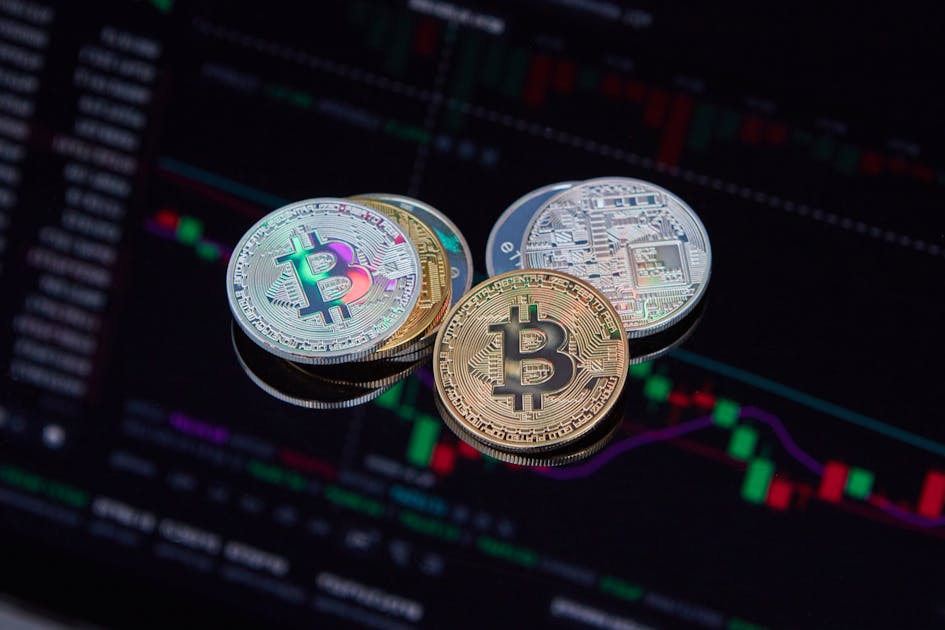
Bitcoin climbed decisively through the $75,000 level on Thursday morning UTC, reaching $75,573 on the back of sustained institutional inflows and renewed risk appetite across equities. The breakout came with positive momentum: funding rates remain elevated at 0.035% across perpetual futures (indicating leverage, not extreme positioning), and open interest expanded to $37.2 billion, a 2.8% increase from Wednesday's levels. The move marks Bitcoin's highest close since April 9 and completes a textbook consolidation pattern that began Monday night when the U.S.-Iran diplomatic channel reopened.
Technical analysts are now watching the $76,000-$76,500 zone as the next resistance before the $80,000 psychological barrier. That level was mentioned as a medium-term target by multiple Bloomberg strategists this week, and the narrative around the April 28-29 FOMC meeting (widely expected to hold rates steady but signal clarity on the 2026 cut schedule) is fueling the conviction that institutional capital will continue rotating into crypto on any dovish messaging. Ethereum has underperformed, slipping to $2,330, a divergence that could reflect profit-taking on the alt-complex as capital consolidates into Bitcoin and large-cap names.
- BTC at $75,573, above the 50-day MA of $74,200 -- structurally healthy; funding at 0.035% and OI expansion suggests controlled momentum, not bubble behavior
- $80,000 is the next target mentioned by institutional strategists -- a break above would complete a $30,000 rally from the March 1 lows and validate the March-April recovery narrative
- FOMC April 28-29 is the catalyst window -- any dovish signal on the Fed's 2026 cut schedule could trigger a $2,000-3,000 move toward $78,000
- ETH lagging BTC is a divergence to watch -- alt weakness typically precedes a consolidation or minor pullback; $2,300 is the support to hold
2. S&P 500 at 7,041 -- institutional breadth still strong as bank earnings flow continues
The S&P 500 hit 7,041 on Thursday morning, continuing the Thursday-Friday equity bias that has characterized the post-Iran turnaround. The advance remains broad: 1,848 stocks are trading above their 50-day moving averages (77.2% of the universe), and the Russell 2000 is up 0.18% on the day as small-cap breadth accelerates. The Magnificent Seven tech names (NVDA, MSFT, AAPL, GOOGL, AMZN, TSLA, META) are holding their March gains, with NVDA at $195.88 and META near all-time highs at $517.42.
Bank earnings continue this week with Goldman Sachs today at 13:30 UTC and Citigroup tomorrow at 12:00 UTC. Goldman's print will be the key barometer for investment banking and capital markets activity heading into the final two weeks of April -- consensus estimates are $8.20 EPS, but the bar has been raised by BofA's beat and Morgan Stanley's M&A commentary. Any upside would extend the institutional bid on equities through next week's Fed speaker cycle and set the tone for May's earnings acceleration (Tech mega-cap earnings begin May 19 with AMZN and GOOGL).
- SPX at 7,041, 1,848 stocks above 50-day MA (77.2%) -- breadth is exceptional; the rally is not concentrated in mega-cap AI names
- Russell 2000 participating in the advance -- small-cap strength validates that institutional capital is rotating, not rotating into a narrow band
- Goldman Sachs at 13:30 UTC today -- the IB/trading print will set expectations for the investment banking recovery narrative through May
- 7,050 is the next psychological barrier -- a close above would mark the 4th week of all-time highs; support sits at 7,000
3. Oil at $93.74 -- ceasefire window narrowing but diplomacy timeline extends
WTI crude slipped 1.00% to $93.74 on Thursday morning as overnight reports suggested the ceasefire deadline (April 21) may be extended rather than used to trigger unilateral action. The market interpretation is cautious: while a deadline extension signals diplomatic patience, the underlying military posture (U.S. blockade still active, Iranian Revolutionary Guard still mobilized) remains elevated. Tanker backlog data shows 847 vessels still waiting for clearance, and insurance war-risk premiums remain factored into shipping costs.
Energy traders are now pricing a May 1-5 meeting as the most likely near-term catalyst. If talks progress to a formal ceasefire agreement by then, WTI could consolidate toward the $85-88 range (pre-blockade baseline minus a geopolitical risk premium). If talks stall and the deadline passes without extension, a spike back above $100 is priced. The current $93.74 level reflects genuine uncertainty and is mathematically stable -- it's the market's way of saying "let's wait for the May dialogue to resolve."
- $93.74 is stable equilibrium between escalation and diplomacy -- neither a bull breakout nor a bear breakdown; the market is waiting for May talks
- April 21 deadline likely to be extended -- signals diplomatic patience; unilateral action scenario is now lower probability
- Tanker backlog at 847 vessels, war-risk premiums persist -- logistics still constrain any rapid oil normalization even after a deal
- $85-88 is the realistic target on a formal deal; $100+ on stalled talks -- the binary is now May-dated, not immediate
4. Gold slips to $4,793 as the safe-haven bid unwinds on easing geopolitical risk
Gold retreated to $4,793 on Thursday morning, down 0.10% from Wednesday's close and losing the psychological $4,800 level as the peace narrative strengthened. The metal has now given back $30 of its March peak ($4,823) and is trading 0.41% below where it opened April 16. The structural issue remains unchanged: the Federal Reserve is not cutting rates in April or May, and the FOMC (April 28-29) is only expected to signal a cut by September at the earliest. That timeline means gold's safe-haven bid remains conditional on either an external shock (escalation in Iran talks) or a surprising economic miss that accelerates the Fed's dovish turn.
Central bank accumulation is the only bid supporting the metal. The People's Bank of China has purchased gold for 16 consecutive months straight, and official reserves now stand at 2,309 tonnes. India continues accumulation, and several emerging market central banks are rotating into gold from dollar holdings. These flows are real and structural, but they are not enough to drive new highs. The next catalyst is May 14's CPI print, which will reset rate-cut expectations for the June and July FOMC meetings.
- Gold at $4,793, down from $4,823 March peak -- the safe-haven bid unwinding as geopolitical risk premium compresses
- FOMC April 28-29 widely expected to hold rates -- no near-term catalyst for gold until May 14 CPI or a fresh Iran escalation
- PBoC accumulated for 16 consecutive months, 2,309 tonnes official reserves -- central banks are the only large buyer; provides floor but not upside
- $4,800 is support, $5,000 is the next upside target -- neither will be reached without either a formal deal collapse or a Fed dovish surprise
What to Watch Today
- Goldman Sachs Q1 Earnings (13:30 UTC): EPS consensus is $8.20. IB and capital markets revenue will determine if the BofA momentum extends through Friday. IMPACT: HIGH.
- ECB Economic Bulletin (12:00 UTC): Forward guidance on the eurozone rate path will be analyzed for any hawkish surprises that might pressure risk appetite. IMPACT: MEDIUM.
- Iran-U.S. Talks (All Day): Any announcement of a May meeting date or extended ceasefire window will support oil and risk appetite. IMPACT: EXTREME.
- Fed Vice Chair Barr Speech (19:30 UTC): Any commentary on the 2026 rate path will ripple through crypto and equities overnight. IMPACT: MEDIUM.
- Weekly Initial Jobless Claims (13:30 UTC): Forecast: 245K vs. 241K prior week. A surprise print could move equities on Fed pivot expectations. IMPACT: MEDIUM.
For capturing volatility across crypto, equities, and commodities as the April-May catalyst window unfolds, Bybit's TradFi platform offers tight spreads on BTC, ETH, SPY, and WTI futures with defined-risk tools for navigating the FOMC cycle and Iran talks. See yesterday's analysis for the full context on the Iran blockade, institutional positioning, and the earnings season flow.