1. Tesla Q1 print: EPS beat, revenue miss, and the $25B capex guide that snapped the after-hours rally
Tesla's Q1 2026 earnings landed after the Wednesday close and the headline numbers split the tape. EPS came in at $0.41 versus $0.38 consensus, a three-cent beat driven by auto gross margin ex-credits at 19.2%, better than the Street model. Revenue was $22.39 billion against roughly $23 billion consensus, a 3.3% miss that was telegraphed by the 358,023 delivery print the prior week (about 7,600 units light). Capital expenditure for Q1 jumped 67% year on year to $2.49 billion, and the real pivot was the updated 2026 capex guide: full-year spend will top $25 billion, a $5 billion lift from the $20 billion Tesla called out last quarter.
The tape response told the story. TSLA initially traded up roughly 4% in extended trade on the EPS beat and the margin read, then gave all of it back on the capex line and closed the after-hours session flat-to-negative. The read is clean: the market will accept margin resilience and energy storage momentum but not a $5 billion guide-up on spend without a linked AI or Robotaxi milestone to anchor it. Auto revenue growth is still the Street's primary yardstick and the revenue miss made the capex escalation harder to underwrite. For the setup going into the print and the consensus band markets were handicapping, see yesterday's morning analysis.
- EPS $0.41 vs $0.38 consensus (+8% beat) -- auto GM ex-credits at 19.2%; the quality of the quarter is in the margin line
- Revenue $22.39B vs ~$23B (-3.3% miss) -- delivery shortfall of ~7,600 units flowed through; ASP did not fully offset
- 2026 capex guide raised to $25B+ from $20B -- the swing factor; market wanted an AI5 / Robotaxi milestone to anchor it
- AH tape faded +4% to flat -- margin beat insufficient vs the capex reset; watch open for the real cash-market reprice
2. Record rally capped: SPX 7,137.90 ATH close, Nasdaq 24,657 ATH, but ES futures -0.46% overnight
Wednesday delivered the cleanest record-day trade of the month. S&P 500 closed at 7,137.90 (+1.05%) for a fresh all-time high, clearing Friday's 7,126.06 ATH by roughly 12 points. Nasdaq Composite added 1.64% to close at 24,657.57, also a record. The rally was driven by Trump's late-Tuesday move to extend the Iran ceasefire indefinitely, which pulled the binary tail risk off the tape and re-engaged the dip-buyer cohort that had defended 7,000 on Monday's slide. Dow futures on the day tracked gains of roughly 280 points into the close, and rate-sensitive sectors led as the 10Y held 4.35%.
The overnight read has given some of that back. ES futures trade at 7,133.75 (-0.46%), Nasdaq futures are -0.39%, Dow futures -0.61%, and Russell 2000 futures -0.47%. Two factors are in the mix: Tesla's post-close capex fade spilling into broad-index sentiment, and the Iran / Hormuz tape reversing as Tehran seized commercial ships within hours of the ceasefire announcement. The 7,126 prior ATH is now the reference floor; a clean hold there keeps the dip-buyer playbook alive, a break below re-opens the 7,060 shelf from Tuesday. The structural bid is not gone, but the second consecutive gap-higher open that the setup called for is not lining up.
- SPX 7,137.90 +1.05% ATH close -- cleared Friday's 7,126 high on extended ceasefire risk-on
- ES futures 7,133.75 (-0.46%) overnight -- Tesla fade plus Iran ship seizures pulled the gap lower
- 7,126 is the new reference floor -- hold it and the uptrend stays intact; lose it and 7,060 opens up
- Dow futures -0.61%, Russell -0.47% -- pullback is broad rather than concentrated in tech
3. Iran ship seizures and the US blockade: the ceasefire did not end the war premium
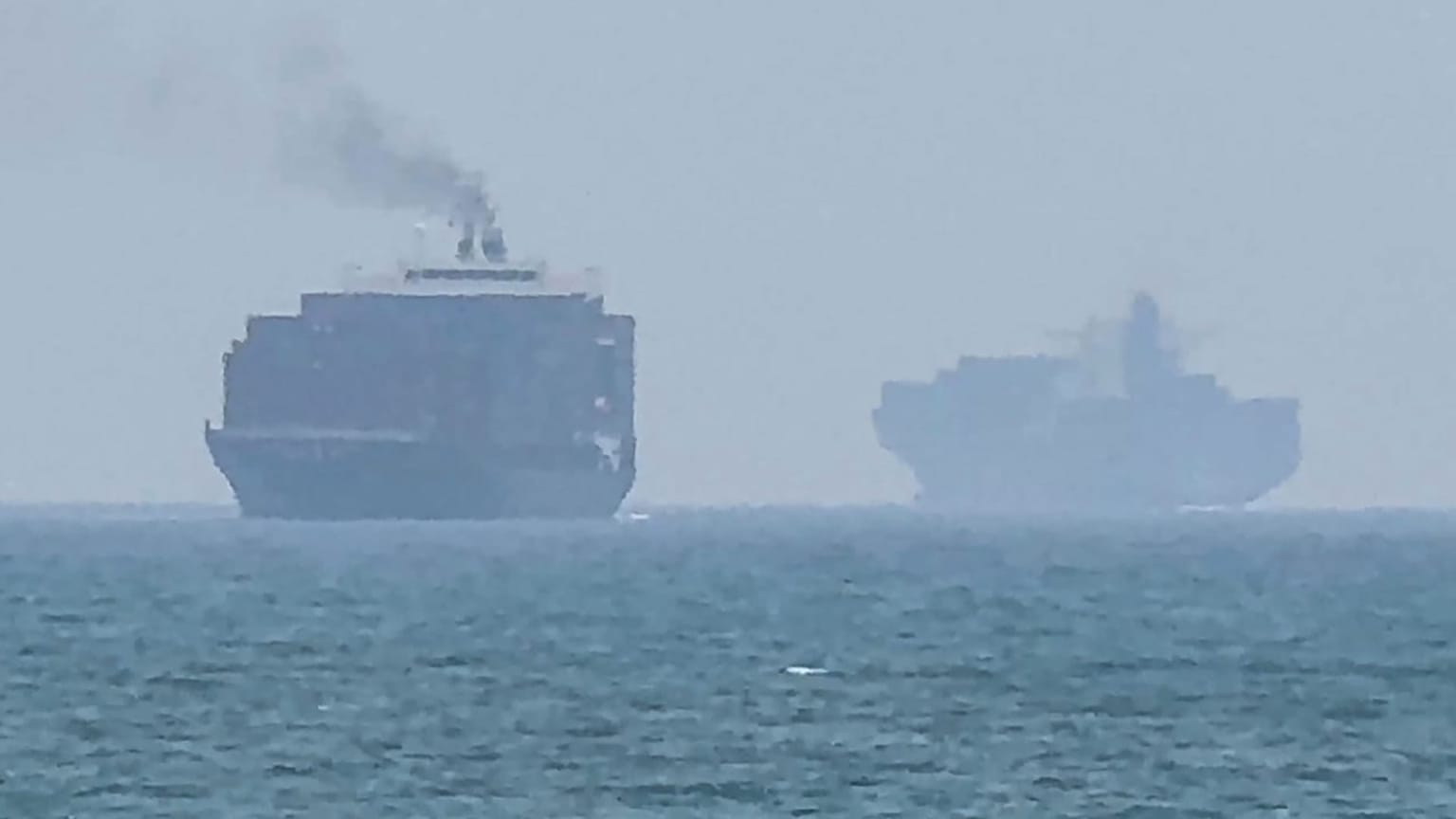
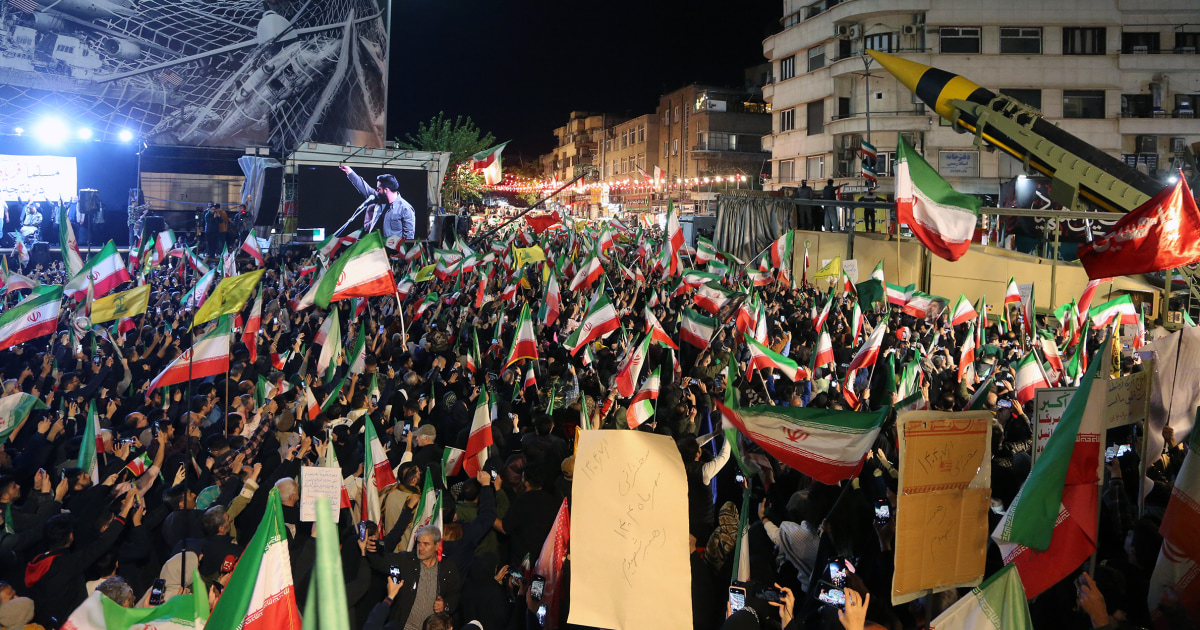
The hardest pivot overnight was in the Iran tape. Within hours of Trump extending the ceasefire indefinitely so Iranian leadership could assemble a "unified proposal," Iranian forces seized commercial ships in the Strait of Hormuz. The White House line, repeated by US CENTCOM, is that the seized vessels were not US or Israeli-flagged and that the extension remains operative. But CENTCOM also confirmed that the US naval blockade of Iranian ports has now turned back 31 ships, most of them oil tankers, and Tehran continues to call the blockade itself a violation of the ceasefire terms.
The market read: the binary is off the table but the operational tension is not. WTI crude pushed back to $93.09 (up roughly 1% on the day) and Brent is near $98 on the combination of ship seizures, the 31-tanker blockade count, and persistent Hormuz transit disruption. The Energy Department's underlying view still requires commercial tanker flow to normalize before oil breaks below $85, and the seizures push that normalization timeline further right. For the pre-extension context and how the binary set up, see Tuesday's analysis.
- Iran seized ships in Strait of Hormuz within hours of ceasefire extension; Tehran calls US blockade a violation
- US blockade has turned back 31 tankers -- operational tension elevated despite the political extension
- WTI $93.09 (+1%), Brent near $98 -- war premium did not deflate even with indefinite ceasefire on paper
- Sub-$85 WTI needs Hormuz normalization -- seizures push that timeline further into May
4. Warsh still boxed in: committee math at 12-12, Tillis blocker holds
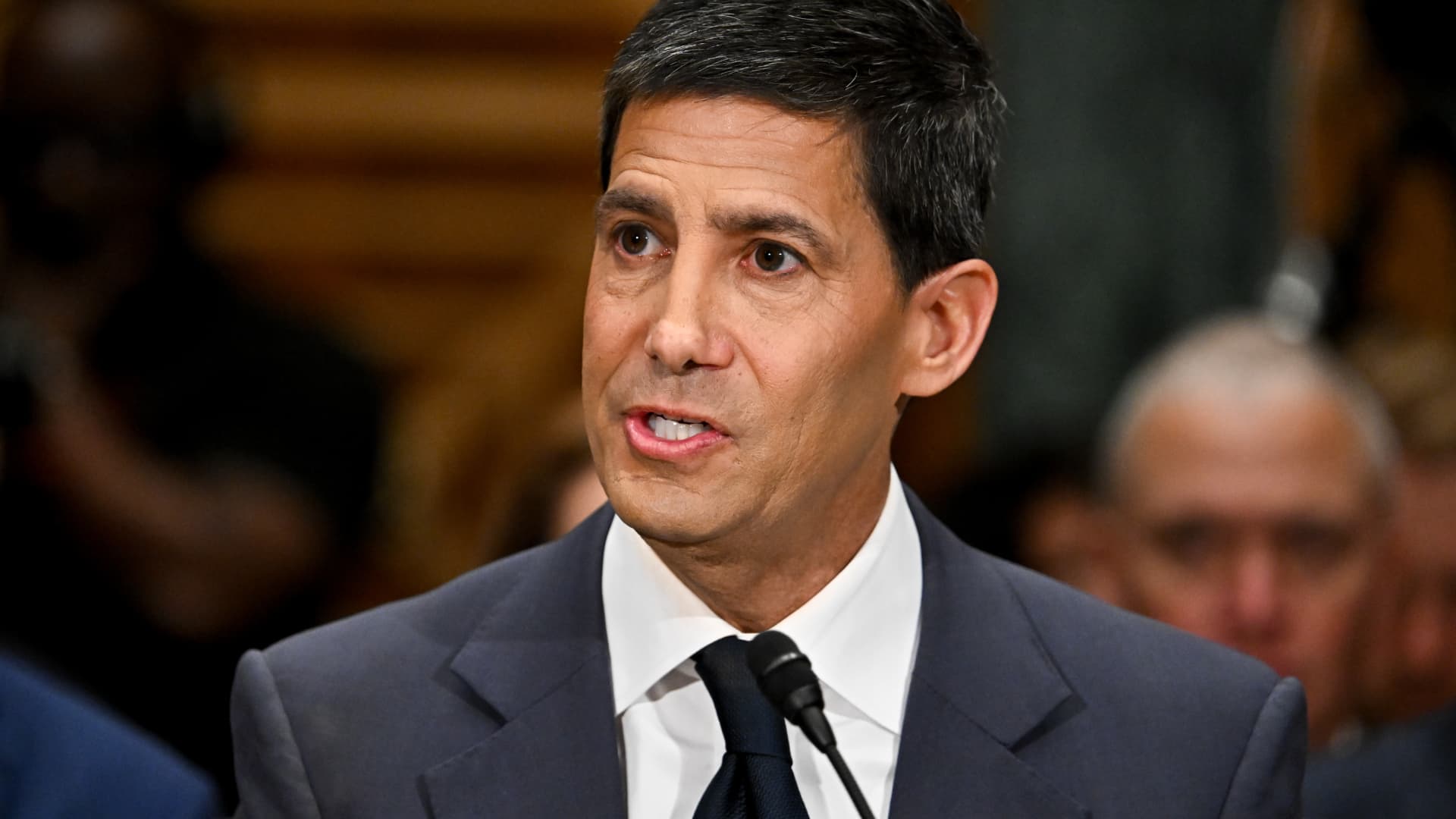
Kevin Warsh's Fed Chair nomination remains stuck at the Senate Banking Committee. The panel is 13 Republicans and 11 Democrats. With all Democrats opposed, Warsh needs every Republican, and Senator Thom Tillis has publicly reiterated he will not vote to advance while the DOJ investigation into Powell-era Fed headquarters renovations remains open. That creates a 12-12 committee tie, and under Senate rules a tie-vote nomination does not advance. Senator Hagerty's CNBC appearance Wednesday framed the procedural bind directly: unless the White House resolves the Tillis condition, there is no rulebook path to force the vote.
The rate-market implication: Jerome Powell still chairs the April 28-29 FOMC meeting next week, and that meeting is the real swing event, not the Warsh optics. The 2Y held near 3.82%, the 10Y held 4.35%, and the strip is pricing 86% hold for April with a 74% chance of the first cut landing at June. A dovish Powell presser next Wednesday is what prints the $5,000 gold test and drives BTC toward $80K. A hawkish surprise or a "hold the data pattern" message puts $4,650 gold and a BTC $75K retest back in play. Warsh matters for the September meeting, not this one.
- Committee math 12-12 -- Tillis blocks while DOJ probe is open; no rulebook workaround
- Powell chairs April 28-29 FOMC -- that is the swing event, not the Warsh nomination
- Rate strip: 86% hold April, 74% first cut June -- market is pricing the path, not the chair
- Dovish presser = $5K gold and $80K BTC; hawkish surprise = $4,650 gold and $75K BTC revisit
5. Crypto holds the ceasefire bid: BTC $78K, ETH $2,347, spot ETF flows still the floor
Bitcoin traded $78,017 overnight per CoinDesk's real-time feed, with the TradingView BTC/USD tape at $78,016 and a 24-hour change of -0.46%. CoinMarketCap clocks the same asset at $77,686 inside normal exchange dispersion, so the functional range is $77,600 to $78,000. Ethereum sits at $2,347 (-0.55%). The pullback from yesterday's Wednesday rally (which pushed BTC briefly above $78K on ceasefire relief) is shallow and mechanical, consistent with a modest overnight futures bid coming off rather than any structural break.
The floor mechanism is the same one that has dominated April: spot BTC ETF flows keep absorbing every dip at progressively shallower discounts. BTC has not had a daily close below $75,000 this month, and every test of $76K has been bought. The realistic range into the April 29 FOMC is $77K-$80K with a dovish tilt opening $82K and a hawkish surprise testing $75K. ETH remains relative-weak versus BTC because spot ETH ETF inflows have slowed since March, but the $2,300 shelf has held every test this month and BTC dominance remains elevated. See the Sunday weekend recap for the FOMC-week crypto setup.
- BTC $78,017 (-0.46%) -- functional $77.6K to $78K range; ETF bid has held every dip this month
- ETH $2,347 (-0.55%) -- $2,300 shelf still defended; lags BTC on slower spot ETH ETF flow
- No BTC close below $75K all April -- structural floor is flow-driven, not sentiment-driven
- FOMC range: $75K-$82K -- dovish opens $82K, hawkish retests $75K, base case stays $77K-$80K
6. What to watch today: weekly claims, existing home sales, and positioning into FOMC
- 12:30 UTC / 08:30 ET -- US weekly jobless claims and continuing claims: Last print was 218K initial. Any acceleration above 235K tilts dovish into next week's FOMC. IMPACT: MEDIUM.
- 14:00 UTC / 10:00 ET -- US existing home sales (March): Consensus 4.15M SAAR. Housing remains the Fed's cleanest disinflation channel; a miss here is dovish-friendly. IMPACT: MEDIUM.
- Intraday -- Iran Strait of Hormuz ship-seizure tape: Every new seizure headline moves WTI $1-$2 and S&P 20-40 bp. Tanker-tracking data is the dashboard. IMPACT: HIGH.
- Pre-market and open -- TSLA cash-market response to the Q1 print and $25B capex: The real price test is on US cash, not the extended-hours tape. IMPACT: HIGH for TSLA, MEDIUM for Nasdaq.
- Tuesday April 28 and Wednesday April 29 -- FOMC decision and Powell presser: 86% hold priced; dovish lean = $5,000 gold test and $80K+ BTC; hawkish lean = $4,650 gold retest and $75K BTC revisit. IMPACT: EXTREME.
- Tuesday May 12 -- April CPI release: Next inflation data point; March was 3.3% YoY. This print shapes the June meeting tone.
For positioning into the April 29 FOMC and the Tesla cash-market reprice, Bybit's TradFi platform offers tight spreads on BTC, ETH, TSLA, SPY, and WTI futures with defined-risk tools. For the Wednesday record-day context and how the ceasefire relief rally set up, see yesterday's morning analysis, and the Tuesday note on the Warsh hearing and the Tillis blocker for the rate-market setup heading into FOMC week.