1. Powell Stays on Fed Board: The Defining Surprise of the Week
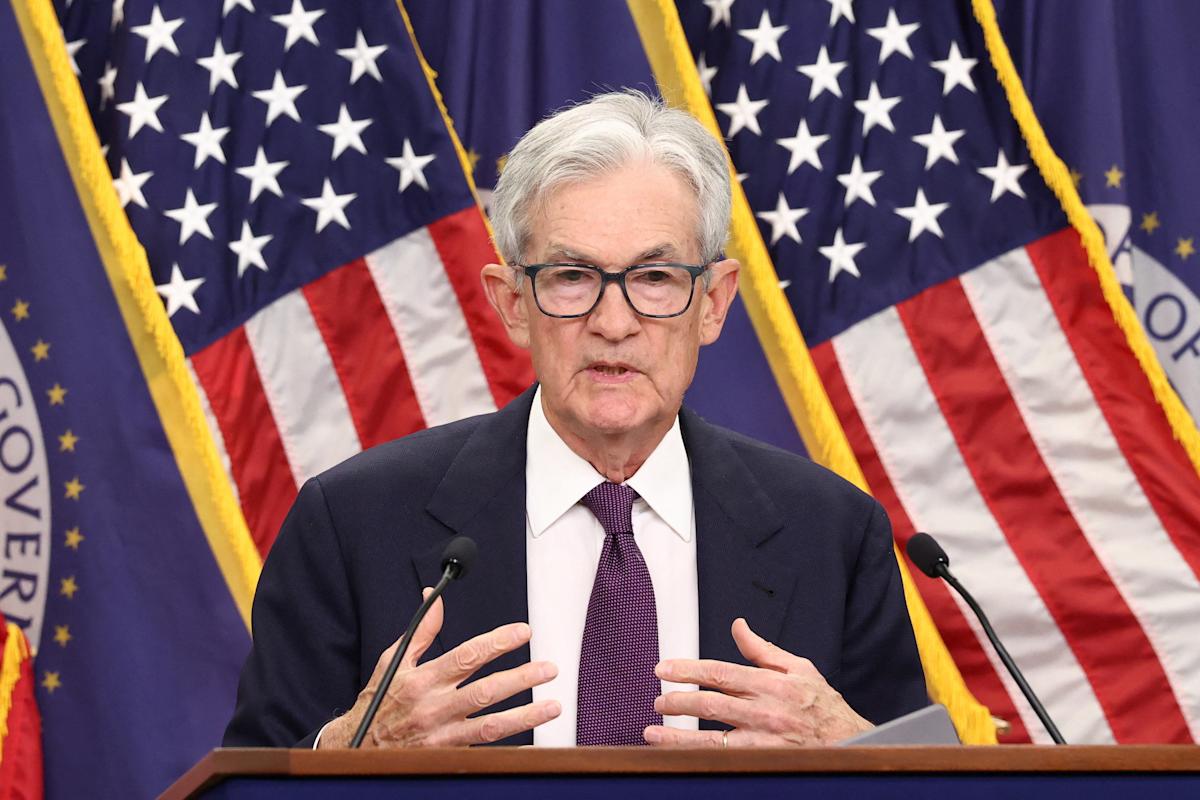
The headline out of yesterday's FOMC was not the rate decision. It was Jerome Powell announcing during his press conference that he will remain on the Federal Reserve Board of Governors after his chairmanship ends on May 15, citing what he called an "unprecedented" series of legal attacks on the institution. Powell said "I had long planned to be retiring," but "the things that have happened really in the last three months have, I think, left me no choice but to stay until I see them through." He becomes the first outgoing Fed chair to remain on the board since Marriner Eccles in 1948.
The market implication is structural: by holding his governor seat, Powell denies President Trump a majority on the seven-seat board. Trump's nominee Kevin Warsh is still stuck 12-12 in the Senate Banking Committee for the chair role, and the only path to a Trump-aligned voting majority required Powell to vacate his governor seat alongside his chair seat. He will not, until what he called the DOJ probe is "well and truly over with transparency and finality." The dollar held steady, gold pinned, and the long end of the curve grinded marginally lower in the press conference window as the institutional independence read landed.
- Powell remains on Fed Board after May 15: first outgoing chair to do so since Eccles in 1948
- Denies Trump a board majority: Warsh confirmation still 12-12 in committee, no path to voting control
- Cited "unprecedented" legal attacks on the institution; said he will not leave until DOJ probe ends
- Structural read: Fed independence headline delivered the strongest institutional signal of the cycle
2. FOMC Held 3.50-3.75%, but the 8-4 Vote Is the Story
The rate decision itself was a hold in the 3.50-3.75% target range, the third consecutive pause this year and the unanimous expectation. The dissent count was not. The committee split 8-4, the most dissent since 1992. Stephen Miran preferred a 25 bp cut. Beth Hammack, Neel Kashkari and Lorie Logan supported the hold but objected to the inclusion of an easing bias in the statement at this time. The split tells you exactly what the macro tape has been pricing: oil-driven inflation pass-through is now hawkish enough to fracture the consensus, even with the AI-capex wobble pulling the other way.
For the post-decision strip: CME FedWatch now prints meaningfully reduced odds of a June 17 cut versus the pre-meeting baseline, and the Sep/Oct combo is where the strip is repricing the cuts that were notionally lined up for summer. The framework from yesterday's FOMC Day 2 setup resolved on the dovish-leaning hold side for the statement, with the Powell tone landing closer to neutral than markets had pre-positioned for. The cut path has not been canceled. It has been pushed.
- Fed funds held at 3.50-3.75%, third consecutive pause; non-SEP cycle so no fresh dot plot
- 8-4 vote: most dissent since 1992; Miran wanted a cut, three others objected to the easing-bias language
- Strip repricing: June cut odds compressed, Sep/Oct now carrying more weight in the curve
- Read: oil-driven inflation pass-through fractured the consensus, but the cut path is delayed not canceled
3. Mag 7 Reaction: GOOGL +6%, AMZN +4%, META -6% on Capex
Four mega-cap tech names printed Q1 earnings in the 80-second window after the closing bell, and the tape sorted them quickly. Alphabet (GOOGL) was the cleanest beat: shares climbed as much as 6% in after-hours as the company beat on EPS and revenue and raised its 2026 AI infrastructure spending estimate. Amazon (AMZN) rose 4% on a Q1 revenue beat. Microsoft (MSFT) beat on EPS and revenue with Azure growth at 40% year-over-year, the headline Copilot read. Meta (META) was the disappointment: shares fell roughly 6% after-hours as the company raised its 2026 capital expenditure guidance to $125-$145 billion, well above analyst expectations and a clear sign that the AI-capex versus monetization concern that bled through the AI-infrastructure complex on Tuesday is not yet behind the tape.
The S&P 500 cash closed yesterday at 7,135.95 (-0.04%) after the FOMC binary. ES futures trade +0.4% overnight near 7,164 as the GOOGL/AMZN bid offsets the META drag. The capex theme is now the structural read: combined 2026 AI infrastructure commitments across the four names exceed $475 billion, the question is monetization and Apple is the next test after the close.
- GOOGL +6% AH on EPS/revenue beat plus raised AI capex estimate; cleanest of the four prints
- AMZN +4% on revenue beat; MSFT beat with Azure +40%; META -6% on $125-$145B capex guide
- S&P 500 cash 7,135.95 (-0.04%); ES futures +0.4% overnight on GOOGL/AMZN bid offsetting META drag
- Combined 2026 capex > $475B; AI monetization remains the variable, Apple after the close is the next test
4. WTI Rips to $109.95 as Hormuz Closure Stretches Into Week 9
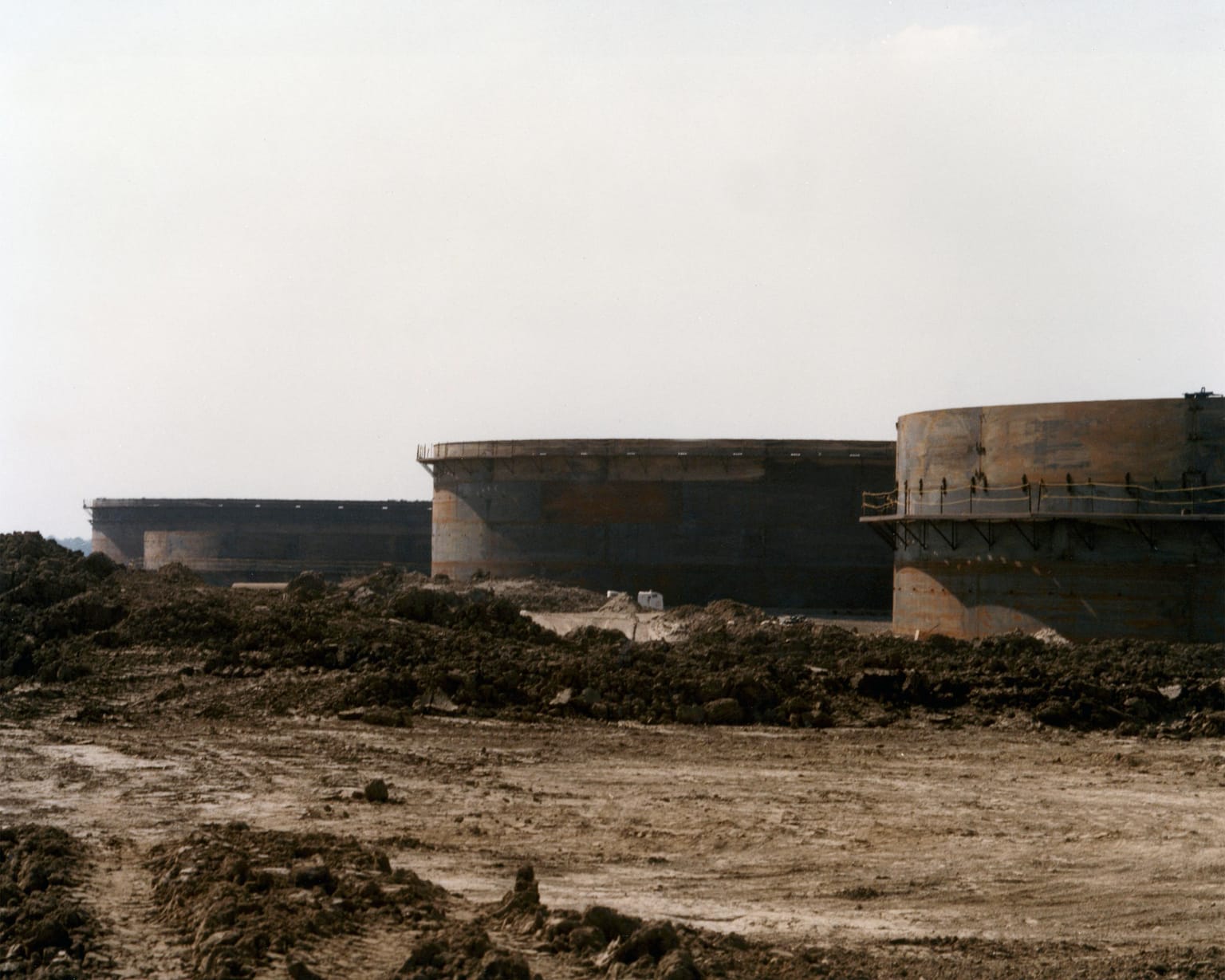
Crude is the structural shock that keeps lifting. WTI futures trade $109.95 (+2.88%) on the fourth straight session of gains, a fresh extension above the $107 reference and the highest print in the cycle. Brent is following higher with the front-month back near $116. The driver is unchanged: the Strait of Hormuz remains effectively closed, U.S. forces have directed at least 38 vessels to turn around or return to Iranian ports since the April 13 blockade began, and traffic is running at roughly 5% of pre-war averages. Per IEA framing the disruption remains the largest oil supply shock in history, larger than the 1970s.
The pass-through is intensifying. AAA national gasoline averages sit at multi-year highs, the Energy Select sector ETF (XLE) extended higher in yesterday's session and Exxon traded near $152.63 on the bid. Reference zones: $107 is now confirmed support after this week's break; $112-$115 is the next bullish extension if the strait stays closed; Brent through $120 is the cycle-extension marker. Invalidation for the spike remains a confirmed Iran-US thaw with a ceasefire and reopen on the same day, which the curve continues to fade. The structural Hormuz framework that landed Monday in our week-opening setup remains the operating frame.
- WTI $109.95 (+2.88%), fourth consecutive session of gains, fresh cycle high above $107
- Hormuz traffic ~5% of pre-war norm; week 9 of disruption, largest oil supply shock in history per IEA
- Inflation pass-through intensifying: AAA gas at multi-year highs, XLE bid, XOM ~$152
- Reference zones: $107 support, $112-$115 next extension, Brent through $120 confirms cycle extension
5. Q1 GDP and March PCE Land at 12:30 UTC, Apple After the Close
Today is the macro print of the week, with two releases dropping simultaneously at 12:30 UTC (8:30 ET). The Q1 2026 advance GDP estimate is consensus-anchored at roughly 2.1% annualized, up sharply from the 0.5% Q4 print. The March PCE deflator (the Fed's preferred inflation gauge, the first read post-FOMC) is expected to lift on energy pass-through: headline approximately +0.6% month-over-month, core PCE ex-food-and-energy approximately +0.3% with the year-over-year core estimate near 3.1%. The Employment Cost Index and weekly jobless claims drop in the same window. Four data points, one print.
Then after the close, Apple (AAPL) reports its fiscal Q2, with the conference call at 21:00 UTC (5pm ET). Analyst expectations cluster around $1.92 EPS on $109.45 billion of revenue (with a more conservative read at $1.68 EPS / $94.7 billion depending on source). The post-tariff iPhone unit read, Services growth and FY26 guidance are the three variables. Apple is the fifth Mag 7 print this week and the cleanest read on consumer hardware demand into a higher-rates-for-longer setting. Eli Lilly (LLY), Mastercard (MA), Caterpillar (CAT), Merck (MRK) and ConocoPhillips (COP) also report today across pre- and post-market windows. The ECB rate decision lands in the European session.
- 12:30 UTC stack: Q1 GDP advance (~2.1% est.), March PCE headline (~+0.6% MoM) + core (~+0.3%), ECI, claims
- Core PCE YoY ~3.1%: meaningfully above the 2% target, the post-FOMC inflation read is the rate-path variable
- Apple after the close: $1.92 EPS / $109.45B est., iPhone units + Services + FY26 guide as the three variables
- ECB decision in European session; LLY, MA, CAT, MRK, COP also report; broadest single data day of the quarter
6. Bitcoin Slips Below $76K, Gold Pinned at $4,547
Crypto is leaking on the Mag 7 capex disappointment and the META drag through the AI-adjacent complex. Bitcoin trades $75,469 (-0.26% 24h), slipping back into the lower half of the $75K-$80K April range that has held every test this month. The April daily-close floor at $75,000 remains the structural reference. ETH trades $2,246 (+0.72%), holding the $2,200 area as the structural pivot but lagging BTC on slower spot ETH ETF inflows. The two scenarios into today's macro stack remain clean: a soft GDP plus tame core PCE re-engages BTC at $77K-$80K and lifts ETH back through $2,300; a hot core PCE print tests $74K BTC and $2,200 ETH.
Gold is pinned. XAU/USD trades $4,547 (+0.02%), oscillating in the $4,540-$4,580 band with the same lever in place: WTI through $107 lifts breakeven inflation expectations, the dollar bids on safe-haven flow as the alternative to gold, and the 10-year nominal yield grinds higher, all of which compresses real yields against XAU. Reference zones: $4,500 remains the structural floor, the confluence of the March 12 swing low and the prior cycle breakout pivot; $4,700-$4,780 is the bullish re-engagement zone if the PCE print lands tame and the cut-path repositions through the curve. The structural buyer thesis (central bank reserve diversification, BRICS settlement, sovereign demand) remains intact in the H2 cycle.
- BTC $75,469 (-0.26%), lower half of $75K-$80K range; April daily-close floor at $75,000 still the line
- ETH $2,246 (+0.72%), $2,200 pivot holds; lags BTC on slower spot ETH ETF inflow
- Gold $4,547 (+0.02%), pinned in $4,540-$4,580 band; real-yield lever still compressing the metal
- PCE scenarios: tame print lifts BTC $77-80K and gold to $4,700-$4,780; hot print tests $74K and $4,500
7. What to Watch: 12:30 UTC Stack, Apple After Close, ECB and Friday ISM
The sequencing today is dense. 12:30 UTC: Q1 GDP advance, March PCE (headline + core), Employment Cost Index, weekly jobless claims, all in one window. European session: ECB rate decision and Lagarde press conference. 20:30 UTC onward: Apple Q2 earnings drop, conference call at 21:00 UTC. Friday May 1: ISM Manufacturing as the first post-FOMC sentiment read. The macro tape is now in the post-FOMC reaction phase, with the GDP/PCE/Apple combination defining whether the late-April record-high tape extends or rolls.
Key reference levels into the print: S&P 500 cash 7,135.95 close, ES futures 7,164 overnight; bullish continuation above 7,200, bearish trigger on close below 7,100. WTI $107 confirmed support, $112-$115 next extension. Gold $4,500 floor, $4,700-$4,780 bullish re-engagement. BTC $75,000 structural floor, $80,000 cycle resistance. ETH $2,200 pivot, $2,400 dovish re-engagement. For positioning across crypto, oil, equities and gold into this stack, Bybit's TradFi platform offers tight spreads on BTC, ETH, SPY and WTI futures with defined-risk tooling. See the full economic calendar for the rest of the week's catalyst stack and our market insights feed for the daily structural reads.
- S&P 500: 7,135.95 cash close, 7,164 ES futures; bullish above 7,200, bearish below 7,100
- WTI: $107 support, $112-$115 next extension if Hormuz stays closed; Brent through $120 confirms cycle
- Gold: $4,500 structural floor, $4,700-$4,780 dovish-PCE re-engagement zone
- BTC: $75,000 structural floor (April month not yet closed below), $80,000 cycle resistance
- ETH: $2,200 pivot, $2,400 dovish re-engagement, $2,100 bearish-extension trigger
Nothing in this analysis is investment advice or a personal recommendation. These are structural reference points and macro context for traders who already understand position sizing and risk management. The framework is the framework: levels for risk, scenario reads for direction, discipline to wait for both before acting.