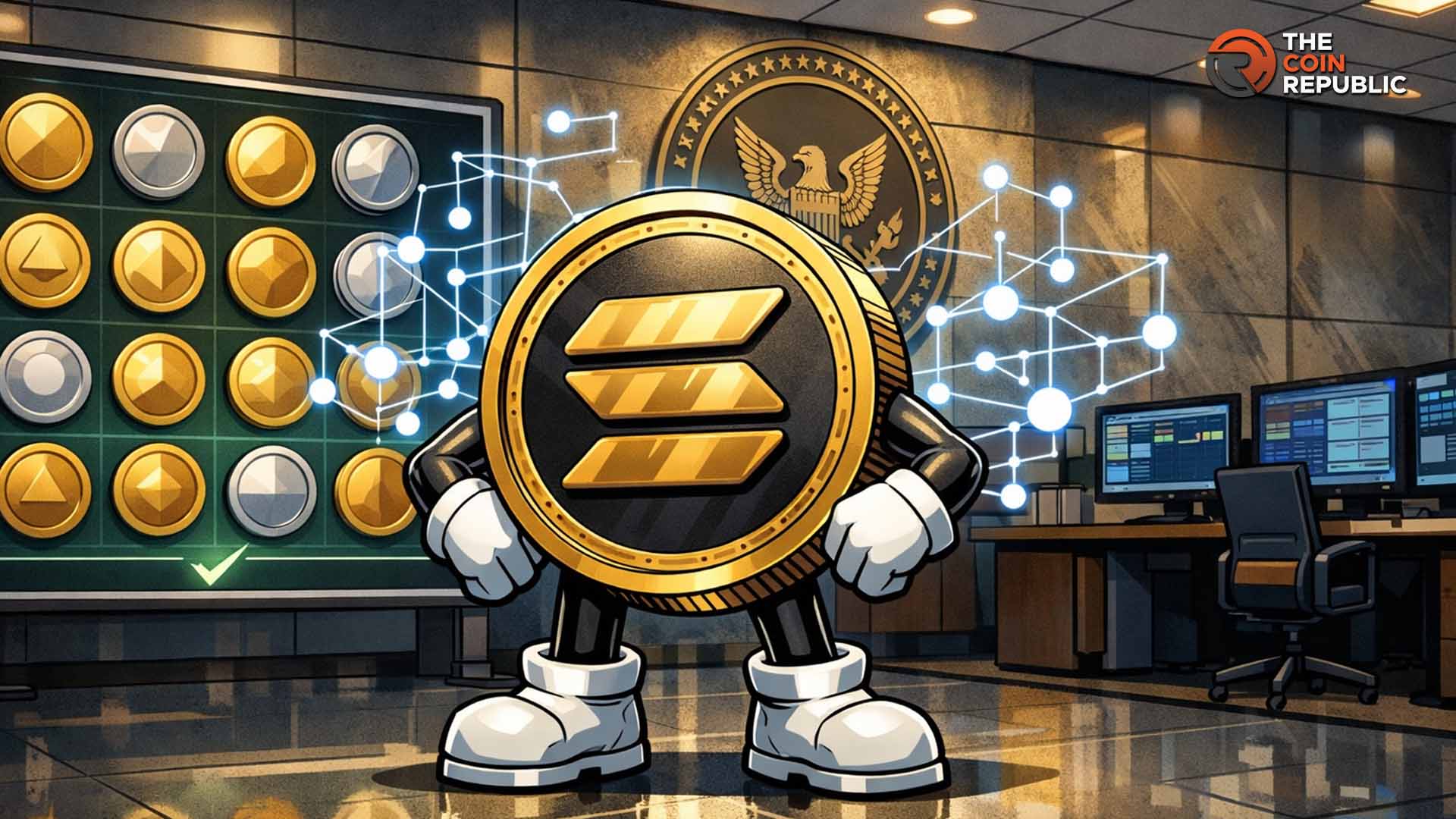
The Ruling That Changes Everything: SEC + CFTC Classify SOL as a Commodity
On March 17, 2026, the U.S. Securities and Exchange Commission and the Commodity Futures Trading Commission dropped a 68-page joint interpretive release that crypto has been waiting for since 2017. The verdict: 16 major digital assets — including Bitcoin, Ethereum, Solana, XRP, and Dogecoin — are digital commodities, not securities.
That sentence rewrites the rulebook for the entire industry.
For years, Solana operated under a cloud of legal ambiguity. The SEC's previous stance — enforcing through lawsuits rather than clear rules — left exchanges, institutional funds, and product issuers in a permanent state of legal limbo. Could you list SOL? Offer a derivative? Create a structured product? The answer was always "probably, but we could get sued." That era is over.
The classification formally moves oversight from the SEC (securities framework, enforcement-heavy) to the CFTC (commodities framework, derivatives-friendly). In practical terms, this means:
- Exchanges face sharply reduced enforcement risk for listing and trading SOL
- Institutional investors — pension funds, family offices, bank desks — now have legal clarity to allocate
- ETF issuers get a direct runway to approval; commodity-based ETFs are structurally simpler to approve than securities-based ones
- Staking and airdrop revenues no longer constitute securities transactions under the release's supplemental guidance
The document also clarified that the four primary forms of staking do not constitute investment contracts — a detail with massive implications for DeFi protocols and validator economics built on Solana's proof-of-stake architecture.
Where SOL Stands Right Now: Price & Market Position
Solana is currently trading at approximately $87, well below its all-time high but showing signs of stabilization around the critical $80 support zone. The network sits at #7 by market capitalization, a ranking that belies the depth of its technical and ecosystem development relative to most assets above it.
The price action tells a mixed story. SOL briefly spiked to $97 on the commodity ruling news before pulling back — a classic "buy the rumour, sell the news" reaction from traders who had positioned ahead of the release. The 200-day moving average has been rising since July 2025, confirming that the longer-term trend structure remains intact even as shorter-term price action consolidates.
Key levels for traders to monitor:
- $80 — major psychological & technical support; breakdown here opens $68
- $95–$100 — first significant resistance; the supply zone from the post-ruling spike
- $120 — the level most analysts cite as confirmation of a bullish trend resumption
The commodity ruling removes a structural ceiling from institutional positioning — but it doesn't override macro conditions. As long as broader risk-off sentiment persists (BTC at $70K, Fear & Greed at 11), SOL will likely grind sideways before breaking out. Patience, not panic, is the appropriate posture here.
Firedancer: The Technical Upgrade That Makes Solana Untouchable on Speed
Price aside, the most significant development in Solana's ecosystem in 2026 is Firedancer — an independent validator client built by Jump Crypto. If you're not familiar with why this matters, here's the short version: Solana previously had one validator client implementation. A single bug, single point of failure. Firedancer is a ground-up rewrite that adds a second, independent client to the network.
The practical implications are enormous:
- Network resilience increases dramatically — a bug in one client no longer threatens the whole network
- Firedancer has demonstrated 1 million TPS on testnet — a number that is not a typo
- 20% of validators have already adopted Firedancer, with adoption accelerating
- The upgrade addresses Solana's historical criticism around outages and centralized client dependency
Combined with Alpenglow — Solana's new consensus protocol that compresses block finality to just 150 milliseconds — the network is positioning itself as the fastest Layer 1 blockchain by a significant margin. For context, Ethereum's finality is measured in minutes, not milliseconds. Even optimistic rollups on Ethereum take 7-30 days for full settlement.
Firedancer + Alpenglow = a blockchain that is fast enough to power real-time financial infrastructure, not just crypto speculation.
Solana's technical upgrades and SEC commodity ruling are reshaping the investment landscape for SOL in 2026. (NFT Evening)
The Ecosystem: Real Money, Real Use Cases
Solana's fundamentals go well beyond trading. The ecosystem in 2026 reflects genuine institutional and commercial adoption:
Real-World Assets (RWA): Over $1.66 billion in real-world assets have been tokenized on Solana — government bonds, private credit, commodities, and real estate. This is not a hypothetical; it's live capital deployed on-chain.
Western Union: The remittance giant is building payment infrastructure on Solana. When a 170-year-old financial institution chooses your blockchain for its next-generation payments layer, that's a signal worth paying attention to.
DePIN (Decentralized Physical Infrastructure Networks): Solana has become the dominant chain for DePIN projects — networks that use token incentives to build physical infrastructure like wireless coverage, computing resources, and sensor networks. Helium's migration to Solana was an early marker; the ecosystem has grown substantially since.
Memecoin & Consumer Apps: Solana's low fees and high throughput make it the default home for consumer crypto — memecoins, gaming, social tokens. While critics dismiss this as speculation, the on-chain activity generates real fee revenue and developer attention that compounds over time.
SOL ETFs: Commodity Status Clears the Path
Multiple spot SOL ETF applications were filed in 2025 and remain pending review. The commodity classification changes the approval calculus significantly. Commodity-based ETFs (like gold ETFs or oil ETFs) operate under a different regulatory framework than securities-based products — one that the SEC has a long track record of approving.
The parallel with Bitcoin is instructive. BTC ETF applications were denied for years on the grounds of market manipulation risk. Once the commodity framework was clarified and futures markets matured, approvals followed quickly. Solana now has commodity status, mature derivatives markets, and institutional custody infrastructure. The ingredients for ETF approval are in place.
Standard Chartered has revised its end-2026 SOL price target to $250, citing the commodity designation as the primary structural catalyst. Other analysts range from $110 on the conservative end to $480 for bull-case scenarios. The wide range reflects genuine uncertainty about macro conditions and ETF approval timing — not skepticism about Solana's fundamentals.
What Traders Should Actually Do With This Information
The commodity ruling is not a signal to YOLO into SOL at current prices. It's a change in the structural risk profile that affects how you size, hold, and think about the asset.
Here's a practical framework:
- The $80 level is your line in the sand. It has held twice in 2026. A weekly close below it warrants reducing exposure, not adding.
- Watch ETF approval news. Each approval announcement will be a catalyst. The first approved spot SOL ETF will likely trigger a move of 20-40% in days.
- Firedancer milestones matter. As validator adoption crosses 30%, 40%, 50% — each milestone is a network resilience improvement that long-term holders should track.
- The macro environment still dominates short-term price action. A commodity ruling doesn't matter much when BTC is in Extreme Fear territory. Wait for macro conditions to stabilize before adding aggressively.
Solana in March 2026 is an "ugly chart, interesting fundamentals" setup. The regulatory overhang is gone. The technical upgrades are live. The institutional infrastructure is being built. The price hasn't caught up yet — but the conditions for it to do so are the strongest they've ever been.
The question isn't whether SOL is a good long-term hold. The question is whether your risk management is good enough to survive the drawdown while the narrative catches up with the fundamentals.