Trump's 48-Hour Ultimatum: "Hit and Obliterate"
Late Saturday, President Trump issued a 48-hour ultimatum to Iran: reopen the Strait of Hormuz to commercial shipping or the United States will "hit and obliterate" Iran's power plants, "starting with the biggest one first."
The threat represents a sharp reversal from Friday, when Trump said he was considering "winding down" the military operation. Going from de-escalation talk to threatening strikes on civilian power infrastructure in 24 hours caught markets completely off guard. The deadline falls on Monday evening UTC, meaning markets open the week staring down the barrel of a potential strike on Iran's energy grid.
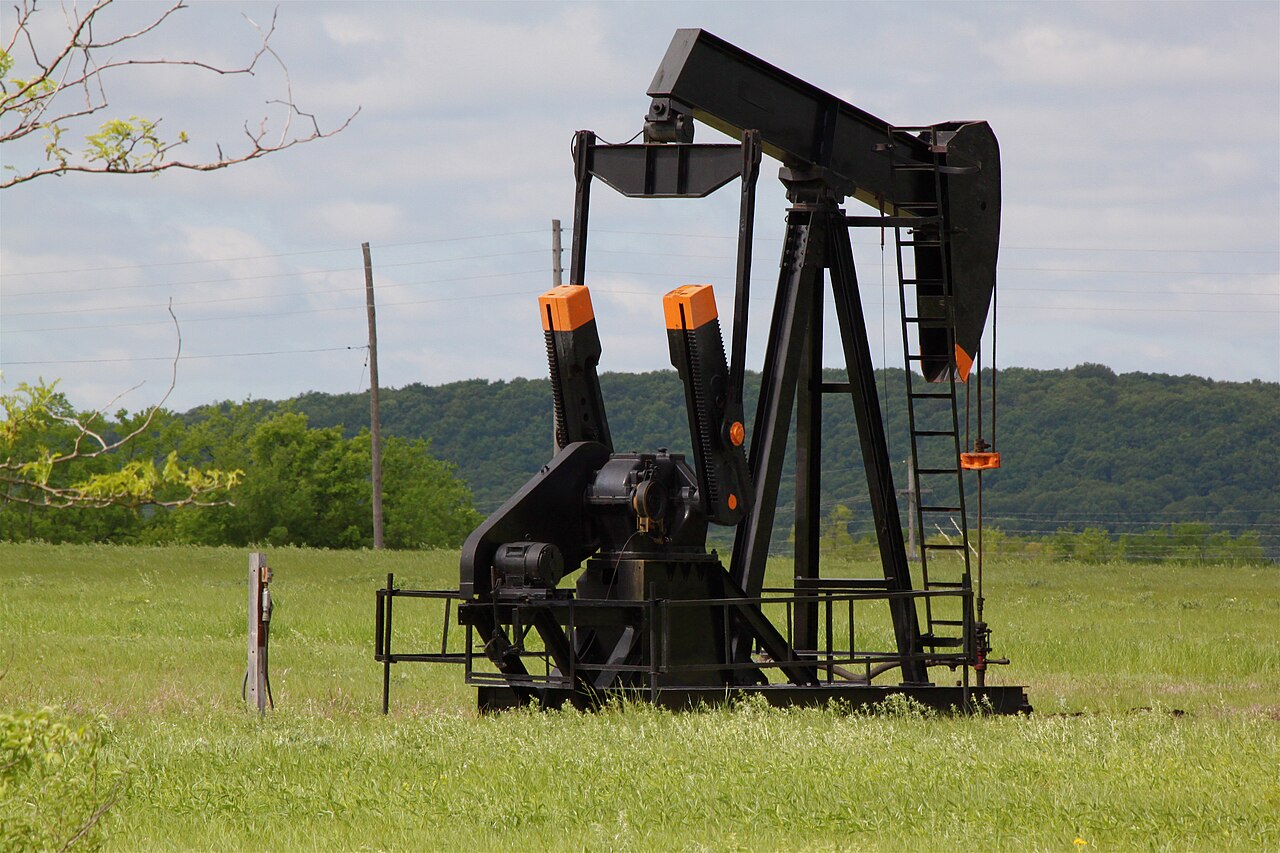
The Strait of Hormuz remains effectively closed to most commercial traffic. Roughly 20% of the world's oil and gas flows normally pass through the strait, and that disruption is now in its fourth week.
BTC Crashes: $299M Liquidated in 24 Hours
Bitcoin fell to $68,241 on Sunday morning, down 3.1% on the week and erasing all of last week's gains in a single weekend. The 24-hour sell-off triggered $299 million in total liquidations across 84,239 traders, according to CoinGlass data.
Long positions accounted for 85% of the damage. Bitcoin longs alone took $122 million in losses. Ether longs lost $95.7 million. The largest single liquidation was a $10 million BTC-USDT swap on OKX.
The one-sided liquidation ratio confirms how bullish the market had become heading into the weekend. BTC had strung together eight consecutive days of gains, pushing to $75,912 before the reversal. That rally now looks like it was built entirely on ceasefire speculation that evaporated with one Truth Social post.
Major altcoins dropped in lockstep: ETH fell 1.8% to $2,114, XRP lost 2.5% to $1.41, SOL dropped 2.1% to $88.55, and DOGE shed 2.7% to $0.092.
The Crypto Fear & Greed Index sits at 10, deep in "Extreme Fear" territory. For context, that is lower than last week's already extreme reading of 11 and approaching levels not seen since the FTX collapse.
Mining Crisis: $19,000 Loss Per BTC Produced
The economics of Bitcoin mining have turned brutal. According to Checkonchain's difficulty regression model, the average production cost was $88,000 per bitcoin as of mid-March. With BTC trading near $69,000, the average miner is operating at a 21% loss on every block produced, a gap of nearly $19,000 per coin.
The network is showing the stress. Mining difficulty dropped 7.76% on Saturday to 133.79 trillion, the second-largest negative adjustment of 2026 (behind February's 11.16% plunge during Winter Storm Fern). Difficulty is now nearly 10% below where it started the year and well below November 2025's all-time high near 155 trillion.
Hashrate has retreated to roughly 920 EH/s, down from the record 1 zetahash reached in 2025. Average block times stretched to 12 minutes and 36 seconds during the last epoch, well above the 10-minute target. Hashprice hovers around $33.30 per PH/s per day according to Luxor's Hashrate Index, near breakeven for most hardware and not far from the all-time low of $28 hit on February 23.
The Iran conflict feeds directly into this: oil above $100 pushes up electricity costs for mining operations, particularly the estimated 8-10% of global hashrate operating in energy markets sensitive to Middle Eastern supply. When miners cannot cover costs, they sell BTC to fund operations, adding supply pressure to an already fragile market.
Oil Approaching $100 as Hormuz Stays Shut
WTI crude is approaching $98 per barrel, with Brent pushing higher still. US gasoline prices have surged more than 30% since the start of March. The Strait of Hormuz closure is not a short-term event at this point. It is a structural supply disruption in its fourth week, and Trump's ultimatum only raises the stakes.
If the Monday deadline passes without compliance (and there is no indication Iran will comply), strikes on power plants would represent the first direct targeting of civilian energy infrastructure in the conflict. That escalation could push oil well past $100 WTI, potentially testing the $120-$150 range that Goldman Sachs flagged last week.
Gold Holds Ground at $4,503
Gold is trading at $4,503 per ounce, recovering slightly from Friday's pullback to $4,492 after the Fed disappointed doves with only one projected rate cut for 2026. The war premium is keeping gold supported even as the dollar strengthens. Central bank buying, geopolitical hedging, and de-dollarization flows remain structurally bullish. The $4,400 support zone held, and with the Iran situation escalating, gold could retest the $4,660 level reached on Thursday if strikes actually materialize.
S&P 500: Five Straight Weeks of Red?
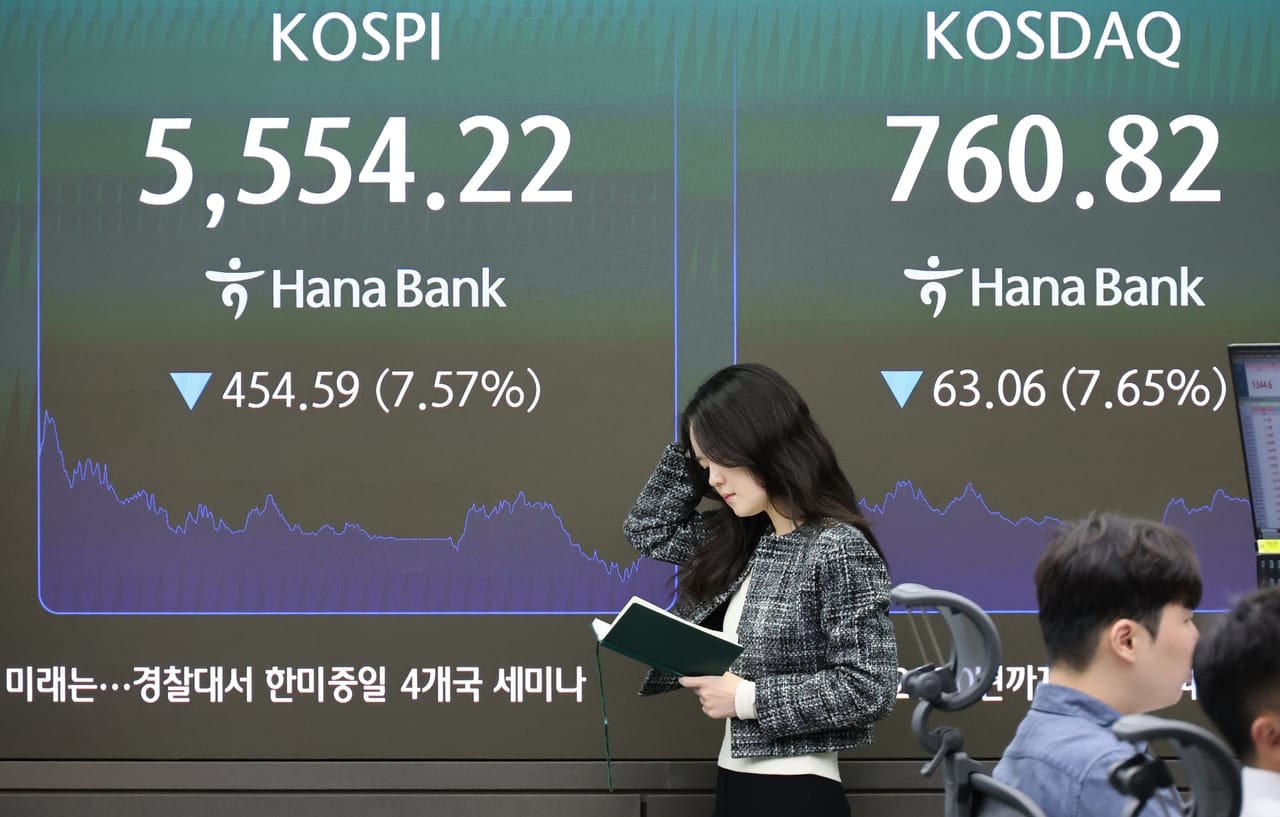
The S&P 500 closed Friday at approximately 6,377, marking a fourth consecutive weekly loss of about 2%. The Dow and Nasdaq both fell roughly 2% as well. The S&P broke below its 200-day moving average last week for the first time since October 2023, and that level has not been reclaimed.
The 10-year Treasury yield rose 11 basis points to 4.39%, its highest close since last July. Markets are now pricing in a modest chance of a rate hike in 2026, a dramatic shift from the cuts everyone expected at the start of the year. With oil driving inflation expectations higher and the Fed in a bind, the traditional 60/40 portfolio continues to get hit on both sides.
The Nasdaq is flirting with official correction territory (10% off its recent high). If Trump's ultimatum leads to strikes, expect Monday to open ugly.
Stocks & ETFs to Watch
- USO (United States Oil Fund) — direct oil exposure. Up ~50% YTD and still climbing if Hormuz stays closed. The Trump deadline is the next binary catalyst.
- GLD (SPDR Gold Trust) — held $4,400 support. If strikes happen, gold spikes. Up ~73% since January 2025.
- XLE (Energy Select Sector SPDR) — the only green sector in 2026. Energy stocks are the sole safe haven in equities right now.
- SPY / QQQ — both below the 200-DMA. Monday's price action depends entirely on geopolitics, not fundamentals.
- WEAT (Teucrium Wheat) — Middle East escalation has spillover effects on food/commodity supply chains. Watch agricultural ETFs for contagion.
- VIX — elevated and likely to spike further if strikes are announced. A Monday VIX above 30 would signal institutional panic.
Economic Calendar: Week of March 23
- Monday, March 23: No high-impact economic releases. The Trump ultimatum deadline falls Monday evening UTC, making geopolitics the only driver.
- Tuesday, March 24: Flash PMI data from Germany, Eurozone, UK, and US. The week's most important scheduled data. Manufacturing below 50 on both sides of the Atlantic shifts the conversation from correction to recession.
- Wednesday, March 25: Australian CPI, UK CPI. Inflation prints with oil near $100 could force central banks to rethink any remaining rate cut plans.
- Thursday, March 26: US Q4 GDP (final). Backward-looking but any downward revision adds to recession fears.
- Friday, March 27: UK Retail Sales. Europe switches to daylight saving time Saturday night.
The Week Ahead
Everything hinges on the Monday deadline. If Trump follows through on striking Iran's power infrastructure, we are in uncharted territory for markets. Oil likely blows past $100, gold spikes, equities gap down hard at the open, and BTC faces a test of the $65,000 level.
If Iran signals willingness to negotiate (unlikely given current rhetoric), or if the deadline passes without action, expect a relief rally that could be just as violent as the sell-off.
The mining data adds a slow-burning structural problem for BTC. Miners losing $19K per coin produced means continuous sell pressure regardless of what happens geopolitically. The next difficulty adjustment in early April is projected to decline again. Until BTC gets back above $88K (the breakeven production cost), miners are bleeding and selling.
For gold traders: the $4,400-$4,500 range is the floor to watch. A confirmed strike on Iranian infrastructure could send gold toward $4,800-$5,000 within days. The $4,660 Thursday high is the first resistance.
Fear & Greed at 10. Miners capitulating. A 48-hour war deadline. This is the kind of week where the gap between prepared and unprepared traders becomes permanent.