The Week That Was
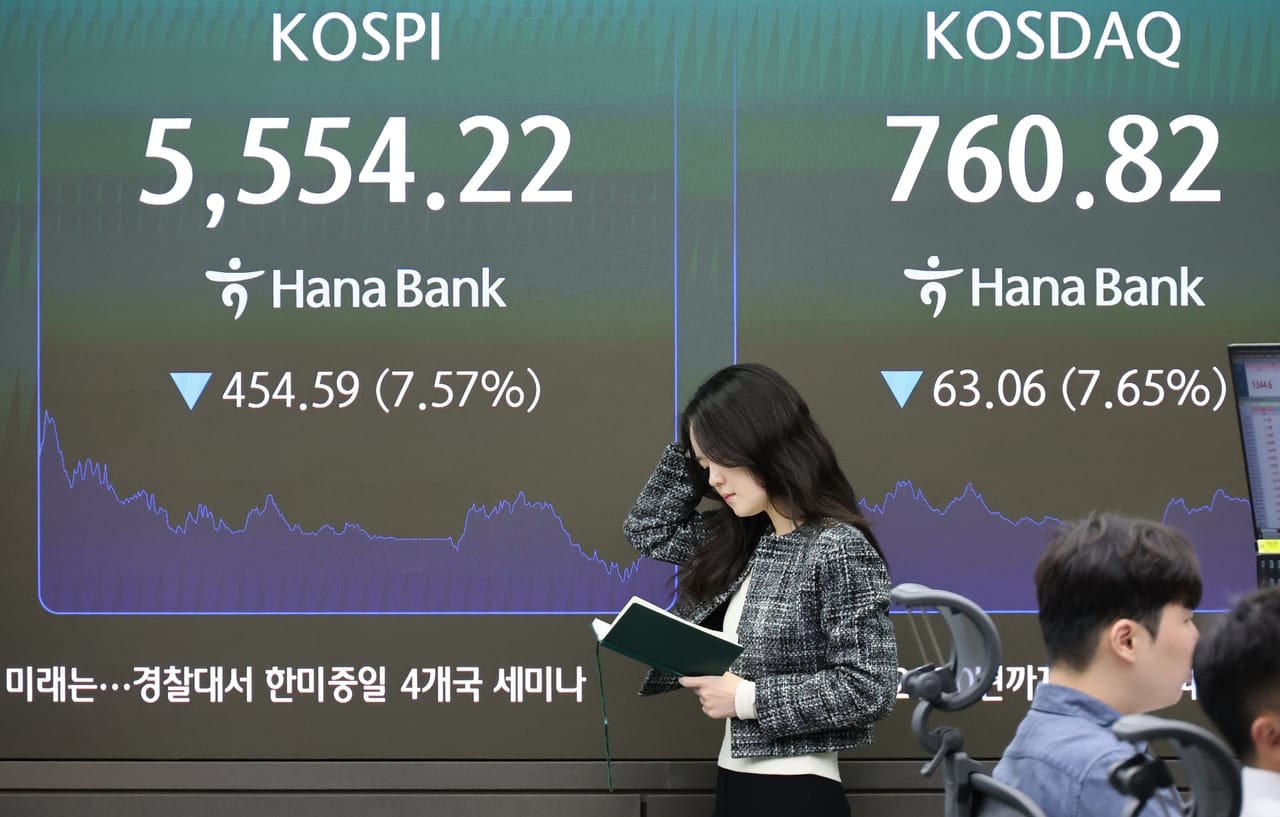
April 2 arrived carrying a loaded historical footnote: exactly one year ago, President Trump announced his sweeping "Liberation Day" tariffs, triggering a 12% collapse in the S&P 500 over the following seven days — the steepest drop outside of 2008 and Covid. This week's anniversary came wrapped in fresh volatility: oil surging on an Iran escalation, a jobs print that smashed every forecast, and a stock market that somehow ended the week higher.
Here is everything that moved markets, and what to watch next week.
Story 1: Liberation Day at One Year — Who Won?
The original tariff shock of April 2025 eventually triggered a 90-day pause (stocks surged 9.52% in a single day on that news — one of the largest gains since 2008), followed by a Supreme Court ruling in February 2026 that the broadest tariff framework was unconstitutional. Trump responded by reclassifying tariffs under Section 301 authority and announcing a new 10% "universal" tariff on 12+ trading partners.
The verdict after one year: US markets underperformed. Some international indices — Brazil, the UK, Japan — outperformed the S&P 500 over the past 12 months as investors rotated away from US exceptionalism. The S&P 500 is still approximately 5.7% below its all-time high from January 27, 2026. The dollar remains structurally strong, which hurts US exporters but hasn't translated into equity outperformance.
Warren Buffett this week said stocks were "not yet cheap enough" for him to step in. Siebert Financial strategist Malek offered the bluntest take of the week: "This is not a trading moment." The anniversary reinforced one clear lesson — policy uncertainty reprices assets faster than any fundamental shift.
Story 2: Iran, Oil, and $111 WTI
The dominant market force this week remained the Iran conflict. The US-Israel military campaign against Iran, which began in late February 2026, entered a new phase when Trump warned on Wednesday that Iran would face strikes on "bridges, power plants, and critical infrastructure." In a post on Truth Social, he gave Iran "48 hours before all Hell rains down."
Oil markets reacted the way any rational trader would: violently. WTI crude surged more than 11% on Thursday, settling above $111 per barrel — the highest since the early days of the conflict. Brent crude closed at $109.03, up 7.78%. At one point Thursday, Brent was above $112 intraday before partially retracing on reports of back-channel Oman-mediated talks.
The background: the Strait of Hormuz handles roughly 20% of the world's daily oil supply. Iran has intermittently disrupted commercial traffic since February. The Houthis in Yemen joined the conflict in late March, attacking Red Sea shipping and adding another chokepoint to the risk map. Reuters quoted Mizuho's energy futures director Robert Yawger: "If the Houthis attack shipping and shut down the southern entrance to the Red Sea, it could drive prices up by $5 to $10 per barrel on top of what we're already seeing."
US crude has now risen approximately 90% since the start of 2026. Average gasoline prices at the pump crossed $4 per gallon this week for the first time in more than three years. BNP Paribas issued a note this week warning that "the first stage of oil price pass-through will have arrived in March via motor fuel" — setting up next Friday's CPI release as a market-moving event.
For gold traders, the oil story matters directly: oil shocks historically push the dollar higher (the dollar is the global reserve currency for commodity settlement), which creates headwinds for gold even as geopolitical fear provides support. That tension defined gold's week.
Story 3: Jobs Blowout — NFP +178,000 vs. 59,000 Forecast
Friday delivered the data shock of the week. The Bureau of Labor Statistics reported March nonfarm payrolls at +178,000 — nearly triple the consensus estimate of 59,000. Goldman Sachs had modelled a range of 15,000-87,000. The actual print was more than double the top of that range.
Context: February's -133,000 print (revised from -112,000) was distorted by winter storms and oil-shock-related supply chain disruptions. March's reversal reflects the underlying resilience of US labour markets even as macro conditions deteriorate. Healthcare, construction, and transportation drove the gains.
Unemployment edged up to 4.3% (from 4.2%), while wage growth came in at 0.3% month-on-month — below the prior 0.4%. That wage figure is the silver lining for inflation watchers: the labour market is strong but not generating wage-driven inflation on top of oil-driven inflation.
The market implications were swift. Fed funds futures shifted sharply — traders priced out any June cut and moved June-cut odds below 20%. The dollar strengthened. Bond yields climbed. Gold dipped. But equities rallied on the "strong economy" narrative, with the S&P 500 logging its best weekly performance in four months.
Gold: Down from the Highs, Holding Key Support
Gold spot closed Friday around $4,686 per ounce (JM Bullion, 23:19 EDT April 4). For context:
- All-time high: $5,595 (January 29, 2026)
- One month ago: $5,338 (a 12.4% decline from there)
- One year ago: $3,114 (gold is still up 50.5% year-over-year)
- April 2 close: $4,675 after Trump Iran speech dipped it briefly to $4,600 intraday
The March correction — gold's worst monthly performance in 17 years by some measures — reflects three overlapping forces: a stronger dollar on rate repricing, profit-taking after the historic rally, and gold's exclusion from tariff calculations (unlike steel and aluminium). But the structural long thesis remains intact. Goldman Sachs maintains a $5,400 year-end target; UBS projects $6,200.
Key technical levels to watch this week: support at $4,550-$4,600, resistance at $4,750-$4,800. A hot CPI on April 10 could test support. Any Iran de-escalation signal could push gold back toward $4,800 quickly.
Gold ended the week at ~$4,686 — down 12% from its March high but still 50% above year-ago levels. CPI on April 10 is the next major catalyst. If you're trading gold on shorter timeframes, consider Bybit TradFi for gold CFDs.
Stocks and ETFs
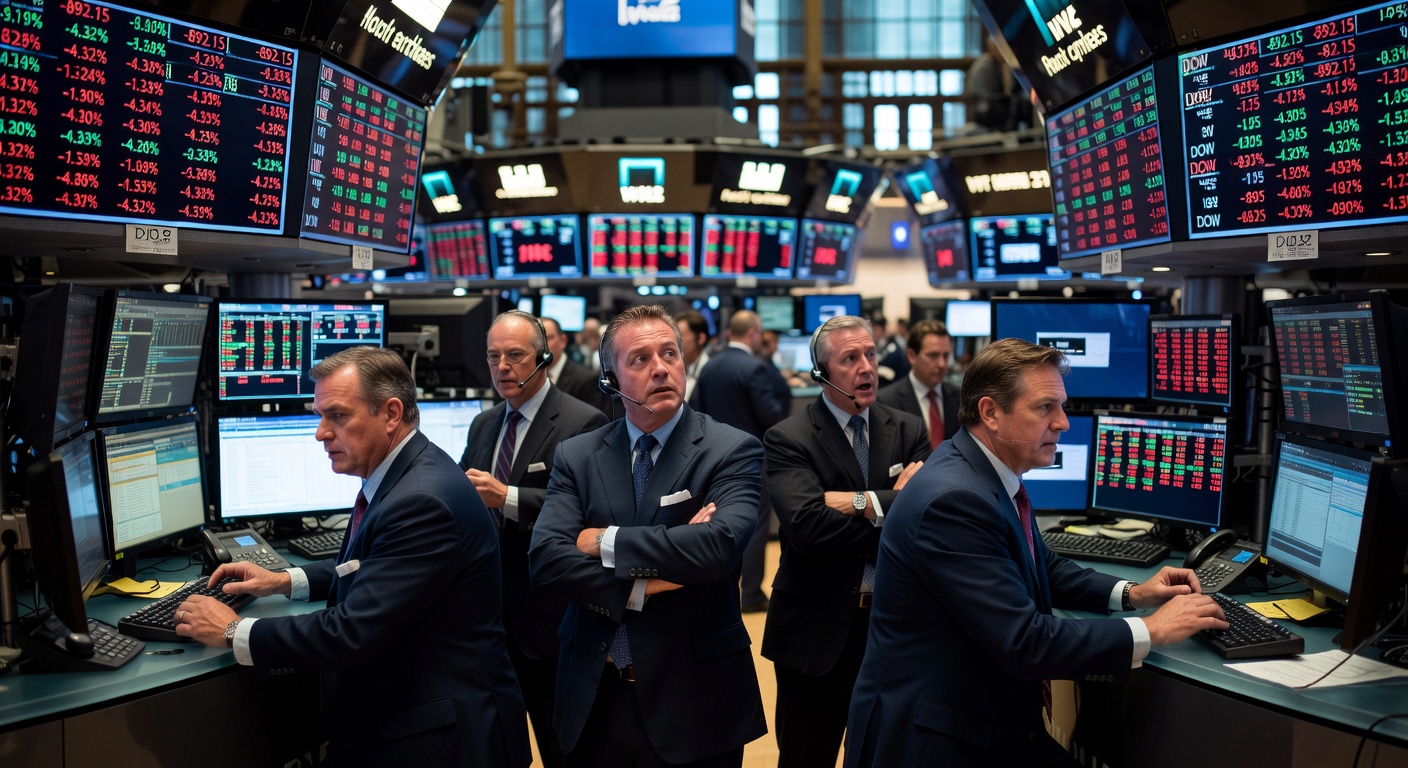
The S&P 500 posted its best week in four months, gaining 3.4% — its first weekly gain in six weeks and now sitting 5.67% below its January 27 all-time high. The Nasdaq outperformed at +4.4% for the week. The Dow added approximately +3%.
Sector performance breakdown:
- Energy (XLE) — week's standout; oil producers surged as WTI hit $111. BP, Shell, ExxonMobil all gained.
- Technology (QQQ) — +4.4% for the week, recovering from rate-driven compression, but still at risk if CPI prints hot.
- Financials (XLF) — mixed; higher yields help net interest margins but credit quality concerns persist in an oil-shock environment.
- Healthcare (XLV) — defensive strength; holding better than most cyclicals year-to-date.
- Gold Miners (GDX) — underperformed gold itself as the metal's correction weighed on leveraged mining economics.
- Small Caps (IWM/Russell 2000) — still in bear market territory; most sensitive to domestic credit conditions, which are tightening.
International equity markets had a rougher ride. Japan's Nikkei fell on Thursday's oil spike. South Korea's Kospi underperformed. European indices were mixed — the FTSE 100 outperformed on its heavy energy weighting. One clear theme from Liberation Day's first anniversary: international diversification outperformed concentrated US exposure over the past 12 months.
Bitcoin and Crypto: Extreme Fear Persists
Bitcoin is at $67,043 with a -0.17% 24-hour move. Ethereum is at $2,044, down 0.42%. The Crypto Fear & Greed Index has been pinned between 8 and 12 — deep Extreme Fear territory — for the entire past week.
| Date | F&G Index | Classification |
|---|---|---|
| Mar 30 | 8 | Extreme Fear |
| Mar 31 | 11 | Extreme Fear |
| Apr 1 | 12 | Extreme Fear |
| Apr 2 | 9 | Extreme Fear |
| Apr 3 | 11 | Extreme Fear |
| Apr 4 | 12 | Extreme Fear |
BTC opened April around $68,510, dipped with the broader risk selloff, and has been consolidating in the $65,000-$68,000 band. Analysts at Goldman Sachs and CoinDCX project a test of $70,000-$73,000 if macro conditions stabilise — particularly if Iran de-escalation signals or Fed pivot language emerges. The 50-week moving average on BTC's weekly chart remains bullish, but macro headwinds are real: a hot CPI on April 10 would likely send BTC toward $63,000-$64,000 support.
Ethereum is consolidating near $2,044. Total crypto market cap remains under pressure. Liquidations have been elevated across major venues during the headline-driven intraday swings seen this week.
Economic Calendar: Week of April 6
All times UTC:
- Mon Apr 6, 14:00 UTC — US ISM Services PMI (March). A reading below 50 would reignite recession fears given the oil backdrop. Forecast: 52.7 prior.
- Tue Apr 7 — Fedspeak likely; watch for comments on the NFP print and inflation trajectory.
- Wed Apr 8, 18:00 UTC — FOMC Minutes (March 18-19 meeting). Traders will parse every word on the Fed's tolerance for oil-driven inflation and whether any board members discussed rate hikes as a tail scenario.
- Thu Apr 9, 12:30 UTC — US Initial Jobless Claims. Following the NFP blowout, any spike in claims would whipsaw rate expectations again.
- Fri Apr 10, 12:30 UTC — US CPI (March). The most important release of the week. BNP Paribas projects +0.9% month-on-month. If headline CPI comes in above 3.5% year-on-year, rate cut expectations for 2026 may be fully priced out. Gold, oil, and equities will all move sharply on this print.
Geopolitical wildcard: any Iran ceasefire signal or Hormuz reopening announcement would override all data releases. Trump's Truth Social account is a first-order market input right now.
Week Ahead Scenarios
Bull case: Iran-Oman back-channel produces a partial Hormuz protocol. Oil drops to $90-$95. CPI prints in line or soft. S&P 500 extends toward 6,700. Gold recovers to $4,800-$4,900. BTC tests $70,000.
Base case (most likely): Iran standoff persists, oil trades $100-$115. CPI prints hot at 0.7-0.9% MoM. Fed stays on hold. Markets consolidate in ranges. Gold holds $4,500-$4,700. BTC stuck in the $65,000-$68,000 band.
Bear case: Trump escalates Iran strikes, Hormuz tightens further. Oil spikes above $120. CPI blowout forces market to price in possible Fed hike. S&P 500 breaks 6,000. Gold drops below $4,400 on dollar surge. BTC tests $60,000.
Position sizing matters more than direction calls right now. The range of outcomes is unusually wide.