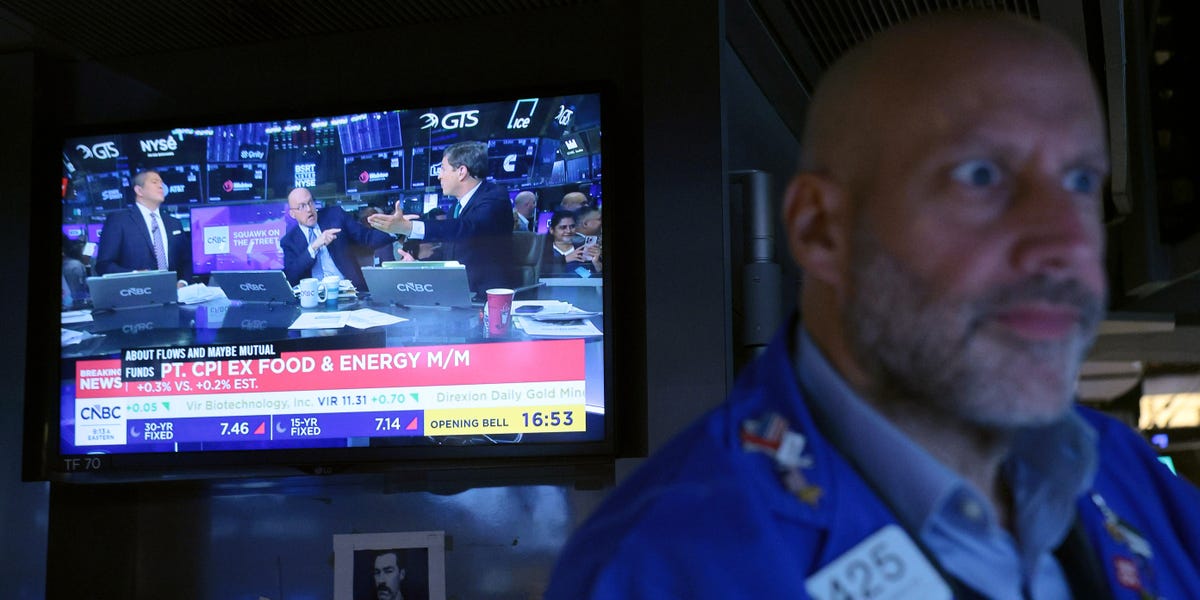
The week of July 19 to July 25 was defined by a single question that has hung over this bull market all year: is the roughly $725 billion that Big Tech is pouring into artificial-intelligence infrastructure actually going to pay off? After a strong start, Alphabet and Tesla earnings put that question front and centre, and the answer the market delivered was a brutal one, wiping nearly $800 billion off the Magnificent Seven in a single session. Layered on top was a fresh energy shock, with Brent crude vaulting above $100 for the first time since May on a widening US-Iran conflict, a repricing of Federal Reserve rate-hike odds, and a European Central Bank meeting. Crypto, for once, was the calm corner. Here is what actually mattered across stocks, crypto and macro, and what is on the docket next week.
Top Stock Stories of the Week
The Magnificent Seven Shed Nearly $800 Billion in a Day
The story of the week was the biggest one-day wipeout in mega-cap tech since April 2025. Markets actually opened the week strong, with the S&P 500 climbing 0.89 percent to 7,509.20 on Tuesday and the Nasdaq Composite up 1.29 percent to 25,837.21, a firm risk-on tone we flagged in Tuesday's morning analysis. Then the earnings arrived. After Wednesday's close, Alphabet and Tesla, the first two Magnificent Seven names of the quarter, both disappointed on the one metric investors have grown obsessed with: spending. On Thursday, July 23, the seven largest US technology stocks collectively shed roughly $797 billion in market value in a single session, their worst day since April 2025, as investors recoiled from the ballooning cost of the AI build-out rather than the headline numbers themselves.
Tesla Misses, Alphabet Lifts Its Capex Guide
The two reports crystallised the anxiety. Tesla fell about 14 percent after a second-quarter earnings miss in which operating expenses rose faster than revenue and capital expenditure soared 142 percent to $5.79 billion from $2.39 billion a year earlier. Alphabet dropped about 7 percent even on a solid quarter, because it raised full-year 2026 capital-spending guidance to a range of $195 billion to $205 billion, up from $180 billion to $190 billion, telling the market the infrastructure bill is still climbing. The read-through was immediate: if the two most disciplined spenders are guiding higher, the payback horizon for the entire AI trade just got longer, and richly valued growth names wear that risk first.
Chips Take It on the Chin, Industrials Provide Cover
The damage spread fastest through semiconductors and memory. Intel slid 7.89 percent on Friday after its own report landed inside the capex-fear narrative, and SanDisk tumbled about 11 percent as memory names bore the brunt. The tape was not uniformly red, though. 3M jumped more than 7 percent on a second-quarter beat, and General Motors rose nearly 5 percent after topping both the top and bottom lines, the kind of old-economy strength that kept the Dow resilient even as tech buckled. By Friday's close the S&P 500 finished at 7,411.98, essentially flat on the day but lower on the week, the Nasdaq Composite ended at 24,975.82, down about 2 percent over five sessions, and the Dow closed at 51,947.25. The CBOE Volatility Index jumped 12.4 percent to 18.70 as the week wore on, a clear sign nerves were fraying.
- The Magnificent Seven shed ~$797B in one session on Thursday, the worst day since April 2025
- Tesla -14% on a Q2 miss with capex +142% to $5.79B; Alphabet -7% after lifting 2026 capex to $195-205B
- Intel -7.89%, SanDisk -11% led chip and memory weakness; 3M +7%, GM +5% on beats
- Friday close: S&P 7,411.98, Nasdaq 24,975.82, Dow 51,947.25; VIX up to 18.70
Top Crypto Stories of the Week
Bitcoin Holds $66K as ETF Inflows Stay Positive
While equities convulsed, digital assets were unusually composed. Bitcoin held above $66,000 through midweek as sentiment stayed neutral and spot exchange-traded-fund flows turned positive, a resilience that stood in stark contrast to the tech selloff around it. Spot Bitcoin ETFs pulled in net inflows of $203.1 million and spot Ether ETFs added $37.5 million, with even the newer altcoin products seeing money arrive: Solana funds took $3.6 million and XRP funds $6.8 million. The takeaway is structural. Crypto traded on its own regulatory catalysts this week rather than as high-beta equity, a decoupling worth watching after months of tight correlation, as chronicled in our midweek coverage.
The Majors Cool With Risk, But Orderly
The largest alternatives drifted lower without breaking. By Friday, Ether traded near $1,882, off about 2.5 percent, XRP sat around $1.11, down roughly 2.2 percent, and Solana held about $75.42, down 3.8 percent. Those are modest moves given equities were shedding hundreds of billions in a day, and the orderly nature of the pullback across the top of the market was the tell: this was gentle risk-trimming, not a crypto-specific unwind. Across the rest of the top 50, breadth stayed cautious but stable, with live levels and flows visible on the ThriveInMarkets homepage and the ETF Flows tabs.
CLARITY Act Wobbles, Visa Launches a Stablecoin Platform
The policy and infrastructure headlines did the heavy lifting. Senate Republicans unveiled an updated CLARITY Act market-structure draft that notably bans senior US officials, including the President, from sponsoring crypto for compensation until January 2029, but the window to pass it before the August recess is shrinking as Senate Democrats intensify their opposition, and the deadline now looks likely to slip. On the commercial side, Visa launched its Visa Stablecoin Platform, letting banks, fintechs and payment providers issue, hold and transfer stablecoins, a meaningful step toward mainstream settlement rails. Separately, the US government transferred $288 million of seized Bitcoin and Ether to Coinbase Prime, prompting speculation about a potential sale, while New Hampshire signed new crypto legislation into law.
- Bitcoin held above $66K through the tech selloff on positive spot-ETF inflows ($203.1M)
- Majors cooled but orderly: ETH ~$1,882, XRP ~$1.11, SOL ~$75.42 by Friday
- CLARITY Act draft advanced but faces a shrinking pre-recess window as Democrats push back
- Visa launched a stablecoin platform; US moved $288M of seized crypto to Coinbase Prime
M&A, Partnerships, Deals
Dealmaking kept its healthcare and life-sciences tilt. Tempus AI agreed to acquire Personalis, deepening its push into AI-driven precision oncology, while Samsung Biologics launched an all-cash offer for the contract manufacturer PolyPeptide Group, a sizeable cross-border consolidation in the drug-manufacturing supply chain. Industry gatherings reported an uptick in biotech M&A momentum and a slowly reopening IPO window, though public debuts still require clear clinical proof to price. The theme across the week's deals was the same one driving the equity tape: capital is flowing hardest toward companies that can show a concrete return, not just a compelling story.
- Tempus AI to acquire Personalis, extending its AI precision-oncology footprint
- Samsung Biologics made an all-cash offer for PolyPeptide Group, a CDMO consolidation
- Biotech M&A momentum picked up, though the IPO window remains selective
Regulatory & Macro
The macro backdrop turned decisively more hawkish, and oil was the reason. Brent crude closed above $100 a barrel for the first time since May, jumping about 7 percent to $100.69 on Friday with WTI near $92, leaving crude up roughly 38 percent on the month. The bid reflected Houthi attacks on Red Sea tankers, President Trump's threat of a massive strike on Iran, and damage to the Caspian Pipeline Consortium terminal that handles most Kazakh crude, keeping the Strait of Hormuz premium firmly in place. The White House moved to exempt some energy products from tariffs to blunt the inflation hit. That energy surge revived the prospect of a Fed hike: money markets now price roughly a 35 percent chance of an increase at the July 28-29 FOMC meeting, up from about 10 percent a week earlier, with the federal funds rate currently held at 3.50 to 3.75 percent. Gold eased about 2 percent to around $4,030 as higher real yields dulled its appeal. In Europe, the European Central Bank held its key rates unchanged, with President Christine Lagarde cautioning that inflation is expected to stay above target into at least the first half of 2027.
- Brent above $100 (+7% Friday to $100.69), first time since May; crude up ~38% on the month
- Drivers: Houthi Red Sea attacks, Iran-strike threats, the Caspian pipeline hit; White House trimmed energy tariffs
- Fed hike odds jumped to ~35% for July 28-29, from ~10% a week ago; funds rate held at 3.50-3.75%
- Gold ~$4,030 (-2%) on higher real yields; the ECB held rates, Lagarde flagged above-target inflation into 2027
Week Ahead: What to Watch
The coming week is arguably the most consequential of the quarter. These are levels and catalysts to watch for direction, not instructions to act on any asset:
- The FOMC decision on Wednesday, July 29. With hike odds repriced toward 35 percent on the oil shock, this two-day meeting is live in a way it was not a week ago. There is no updated dot plot at this meeting, so the statement language and Chair's tone carry the full weight. This print could reprice Fed expectations across the curve.
- Three more Magnificent Seven reports. Microsoft and Meta report Wednesday, July 29, with Apple and Amazon on Thursday, July 30, plus Qualcomm. After this week's capex-driven carnage, the market will scrutinise cloud and AI spending guidance far more than the headline beats.
- Oil and the Iran premium. Brent above $100 is now an inflation story as much as a geopolitical one. Any de-escalation or fresh escalation around the Strait of Hormuz and the Red Sea could swing both crude and rate expectations sharply.
- Bitcoin's $66K reference. The zone Bitcoin defended through the equity selloff remains the crypto line to watch, especially if the CLARITY Act timeline slips further into the August recess.
- FOMC July 28-29 is suddenly live; watch the statement, not a dot plot, for the hike-or-hold signal
- Microsoft, Meta, Apple, Amazon report; AI capex guidance is the swing factor after this week
- Brent above $100 keeps the Iran premium and inflation risk in focus
- Bitcoin's $66K zone stays the crypto reference into a slipping CLARITY Act timeline
For the daily play-by-play behind this recap, browse this week's coverage on Market Insights, revisit Monday's evening review and the week ahead preview, and check the economic calendar for next week's catalysts.
ThriveInMarkets publishes market commentary for general information only and does not provide personal investment advice. Weekly figures are drawn from cash-session closes and live crypto and commodity prints during the week; levels cited are reference points, not instructions to buy or sell any asset.