The Trifecta Nobody Expected This Fast
Three years ago, XRP was fighting for its life in court. Today it has three things no other crypto asset can claim simultaneously: a formal commodity classification from the SEC, seven live spot ETFs, and — as of this week — an active pilot inside Singapore's central bank sandbox. That combination is historically unprecedented. And the market is still pricing XRP at $1.40.
This is the story of why those fundamentals matter, what they mean for institutional adoption, and why the price is telling a completely different story right now.
Ripple Enters the MAS BLOOM Sandbox — March 25, 2026
The headline this morning: Ripple has joined BLOOM, the Monetary Authority of Singapore's initiative designed to extend settlement capabilities for tokenized bank liabilities and regulated stablecoins. Working with Unloq, a supply chain finance technology provider, Ripple is piloting a system where cross-border trade payments in RLUSD are released automatically when predefined shipment conditions are met — verified delivery, customs clearance, or financing milestones.
This is not a press release partnership. This is a live, regulated sandbox backed by one of Asia's most credible financial regulators. The MAS does not let companies into BLOOM for marketing purposes. To be admitted, the technology stack — in this case RLUSD running on the XRP Ledger — has to be considered credible enough for regulated experimentation.
Fiona Murray, Ripple's Managing Director for Asia Pacific, pointed to Singapore's "clear, supportive regulatory environment" as a key reason the pilot is happening here first. Singapore has been Ripple's APAC base since 2017, and the MAS has methodically built the regulatory infrastructure that makes this kind of pilot possible.

What Ripple and Unloq are replacing is genuinely broken: traditional cross-border trade finance involves layers of manual verification, documentary credits, and correspondent banking relationships that can take days or weeks to settle. The Unloq SC+ platform bundles trade obligations, settlement conditions, and financing workflows into a single execution layer. RLUSD on XRPL handles the actual money movement. If a shipment is verified in Singapore and a buyer in Tokyo needs to pay, the settlement happens automatically — not three days later when a correspondent bank finally processes the SWIFT instruction.
If RLUSD succeeds in Singapore, the playbook is replicable. The EU has a parallel framework. The UK's FCA sandbox has been watching. Central banks in the UAE, Australia, and Brazil have all signaled interest in programmable settlement infrastructure. Singapore is the proof of concept. What happens here shapes what happens everywhere else.
The Legal Cloud Is Gone: SEC Commodity Classification
On March 17, 2026, the SEC formally classified XRP as a digital commodity — alongside Bitcoin, Ethereum, and 13 other assets. This ended one of the longest-running legal battles in crypto history. The original SEC vs. Ripple lawsuit, filed in December 2020, argued XRP was an unregistered security. Five years later, the regulator reversed course entirely.
What commodity status actually means in practice:
- Institutional custody — banks and asset managers can hold XRP without securities compliance overhead
- Derivatives markets — commodity designation opens the door for regulated futures and options on major exchanges
- ETF pathway — commodity-classified assets have a cleaner route through the SEC's approval process
- Enterprise adoption — companies building on XRPL no longer face regulatory ambiguity when using XRP as a bridge asset
The legal uncertainty was the single biggest institutional blocker for XRP. Every compliance officer at every bank had "pending SEC litigation" as a reason not to touch it. That objection is gone.
XRP ETFs: $1.44 Billion In, But Momentum Is Fading
Seven spot XRP ETFs are already trading in the US. Cumulative inflows since launch have reached $1.44 billion — a number that would have been unimaginable during the SEC litigation years. The products exist. Retail and institutional investors can now get regulated XRP exposure through standard brokerage accounts.
But the weekly flow data tells a more complicated story. Inflows at launch hit $200 million per week. By the week ending March 23, that figure had collapsed to under $2 million. The same week saw net outflows of $28 million from XRP ETFs — while Bitcoin ETFs absorbed $767 million in net inflows.
The SEC is still reviewing the final batch of XRP ETF applications, with a deadline of March 27, 2026. Additional approvals could bring more products and renewed marketing cycles. But unless macro conditions improve, new product launches alone won't move the needle on flows.
The Price Reality: $1.40, Down 13% on the Week
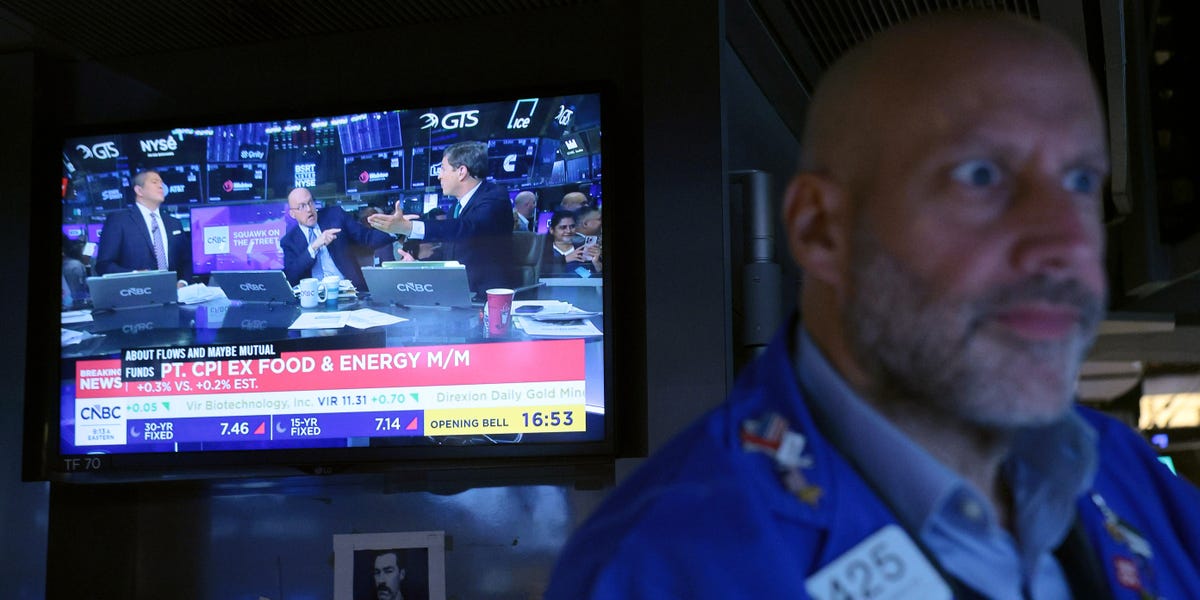
Here is the honest version: XRP is at approximately $1.40 as of March 25 — down 13% over the past seven days, despite the SEC ruling and the Singapore announcement. Trading volume is running at roughly half its 90-day average. The market is not rewarding the fundamentals right now.
The reason is macro. The broader context is stagflationary: the Iran war has pushed oil above $88, inflation expectations are re-anchoring higher, and risk assets broadly are under pressure. The Fear & Greed Index sits at 14 — Extreme Fear. In that environment, positive project-specific news gets overwhelmed by macro selling.
Key technical levels for XRP traders to watch:
- $1.30 — critical support; a weekly close below here opens the $1.10–$1.15 range
- $1.45–$1.50 — near-term resistance cluster; reclaiming this level would signal macro headwinds are abating
- $1.60 — the major resistance above which XRP enters a structurally different regime
- $2.00 — psychological target and the prior January 2026 peak; requires both macro stabilization and continued institutional inflows
The disconnect between fundamentals and price is real — but it is not unusual. Assets with improving fundamentals and deteriorating macro conditions often spend months in this purgatory. The price action will catch up when macro clears. The question is whether traders can hold through the noise long enough.
Why the MAS Pilot Is Different From Everything Before It
Ripple has announced partnerships, corridors, and pilots before. Most of them were bilateral agreements between Ripple and a regional bank that never reached material volume. This is different for a specific reason: it is not Ripple signing a bank — it is a central bank inviting Ripple in.
When MAS admits a technology stack to BLOOM, it is effectively certifying that the infrastructure meets the regulatory standard for real-money experimentation with real trade finance flows. That is not a commercial deal. It is a regulatory endorsement. And regulatory endorsements from Singapore carry weight with other central banks in ways that exchange listings and bank partnerships do not.
The sequence of events in 2026 so far — commodity classification, ETF approvals, central bank sandbox — represents a structural shift in how regulated institutions can engage with XRP. Each milestone removes a friction point that previously kept institutional capital out. None of them guarantee price performance. But together they are building the foundation for a different kind of XRP than existed in 2023.
What Traders Should Actually Watch Now
Three near-term catalysts could move XRP price in either direction:
- March 27 SEC deadline — additional ETF approvals could revive institutional marketing cycles and trigger short-term inflows
- Iran ceasefire progress — any credible de-escalation would lift the macro ceiling suppressing all risk assets, including XRP
- RLUSD volume data from Singapore — if the MAS pilot reports real transaction throughput in Q2, other central banks will accelerate their own evaluations
The bullish case for XRP in 2026 is not based on speculation. It is based on three concrete structural changes — legal clarity, ETF access, and central bank validation — that compound on each other over time. The bearish case is not that the fundamentals are wrong; it is that macro conditions could deteriorate further before those fundamentals translate into price.
Both can be true at once. Hold the thesis, manage the risk, watch the levels.