If you have ever watched a token rip on-chain for 48 hours before it appeared on a Tier-1 venue, you have already felt the gap MEXC tries to fill. The exchange markets itself as the "Exchange of Gems" — fast listings, enormous altcoin depth, and a fee schedule that undercuts most centralized competitors on spot. We went through the platform with a practical trader lens: what you pay, what you can trade, where the risks sit, and whether the zero-fee pitch holds up once you are actually clicking buttons.
Disclosure: links to MEXC in this article are affiliate links. If you sign up through our referral, we may earn a commission at no extra cost to you. That does not change our editorial view — we still flag the regulatory and liquidity caveats below.
- Best for: active spot traders, altcoin hunters, and grid-bot users who care about fee drag
- Spot fees: 0% maker and 0.05% taker on most pairs — among the lowest in the industry
- Futures fees: 0% maker / 0.01% taker on perpetuals — well below typical 0.02% / 0.05% tiers
- Listings: 2,000+ assets; often early access before large-cap CEX listings
- Skip if: you are in the US, UK, or Canada — MEXC restricts those jurisdictions
What Is MEXC?
MEXC launched in 2018 (originally as MXC) and rebranded to compete globally with derivatives-first exchanges like Bybit and OKX. Today it reports 40M+ users across 170 countries, with a product stack that spans spot, perpetual futures, copy trading, P2P fiat on-ramps, staking, and launchpad-style token events.
The exchange is incorporated in the Seychelles and operates through regional entities where required — including European licensing structures — but it is not a US- or UK-regulated brokerage. That trade-off is central to how MEXC competes: fewer Western compliance constraints, faster token listings, and aggressive fee pricing.
MEXC's pitch is speed on two axes: execution throughput (the platform claims capacity above one million transactions per second) and listing velocity (new pairs often go live hours after a token trends on-chain). If your strategy depends on catching micro-caps before liquidity migrates to Binance or Coinbase, that listing speed is the product.
Who MEXC Is Built For (and Who Should Pass)
MEXC fits traders who:
- Rotate through altcoins and meme sectors, not just BTC/ETH
- Run high-frequency spot strategies where fees would otherwise compound against edge
- Want perpetual futures with leverage well beyond spot-only brokers
- Are comfortable with custodial exchange risk and jurisdictional gray areas
MEXC is a poor default if you:
- Need a fully regulated US or UK on-ramp — use Binance.US, Coinbase, or a DEX like Hyperliquid instead
- Want white-glove support during volatile listing events
- Trade only large-cap pairs where fee differences are negligible anyway
For a broader exchange comparison across futures venues, see our Bybit vs Bitget vs Coinbase breakdown.
MEXC Fees: Where the 0% Pitch Actually Matters
Fee marketing in crypto is noisy. MEXC's advantage is that the low spot structure has persisted — it is not obviously a 30-day promo that quietly reverts.
Spot trading
On most spot pairs, MEXC charges:
- Maker: 0.00%
- Taker: 0.05%
That matters disproportionately for strategies that post liquidity: scalps, mean-reversion grids, and market-making style bots. On exchanges charging 0.10% round-trip or more, a tight-edge strategy can be fee-negative even when direction is right. With zero maker cost, posted orders keep more of the spread you capture.
Futures (perpetuals)
Standard perpetual fees are:
- Maker: 0.00%
- Taker: 0.01%
Against a typical 0.02% / 0.05% futures schedule elsewhere, the taker side alone can be roughly 80% cheaper at base tier. Holders of the native MX token and high-volume VIP accounts can reduce futures costs further — often cited around 10% additional discount on derivatives, with promotional campaigns stacking on top during busy listing seasons.
Deposits, withdrawals, and fiat
- Crypto deposits: free
- Withdrawals: network-dependent (TRC-20 USDT often around $1; ERC-20 higher with gas)
- Card / third-party fiat buys: typically 2–5% via partners (Banxa, MoonPay, Mercuryo, etc.) — standard for on-ramp rails, not MEXC-specific
- Funding rates: exchange-standard 8-hour perpetual funding, variable by market positioning
| Fee type | MEXC (typical) |
|---|---|
| Spot maker | 0.00% |
| Spot taker | 0.05% |
| Futures maker | 0.00% |
| Futures taker | 0.01% |
| Crypto deposit | Free |
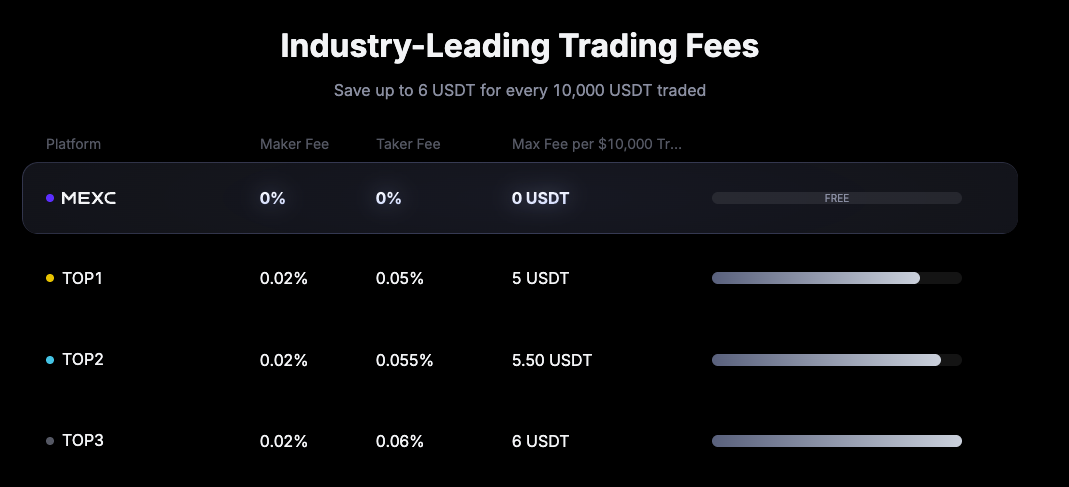
MEXC fee page — 0% spot maker fees on most pairs
Coin Selection: The Real Differentiator
Headline numbers vary by week, but MEXC consistently lists 2,000+ cryptocurrencies — multiples of what most Tier-1 venues carry. Beyond BTC, ETH, and SOL, the catalog is segmented into fast-moving buckets: meme tokens, AI infrastructure, DeFi experiments, and real-world-asset wrappers.
The practical edge is timing. Tokens that later graduate to large-cap CEX listings often trade on MEXC while still micro-cap. That early window is also the highest-risk window: thin books, wide spreads, and listing hype reversals are common. Treat micro-cap exposure as a sizing problem, not a conviction problem.
Trading Interface and Tools
MEXC does not reinvent terminal design — and that is fine. The spot and futures layouts follow the familiar tri-pane structure: TradingView chart center, order book and tape on the side, order entry panel adjacent. If you have used Binance or Bybit, the learning curve is measured in minutes, not days.
Notable tooling beyond vanilla spot/futures:
- Grid / quantitative bots — especially compelling when maker fees are zero; micro-spreads are not eaten by commission drag
- Copy trading on futures — follow ranked lead traders with published ROI and drawdown stats (high leverage copy can wipe balances fast; treat as risk-on satellite capital)
- Sub-accounts — up to 30 isolated wallets with separate API keys; useful for quarantining experimental listings away from core capital
- Futures testnet (M-Testnet) — practice perps with virtual balance before committing real margin
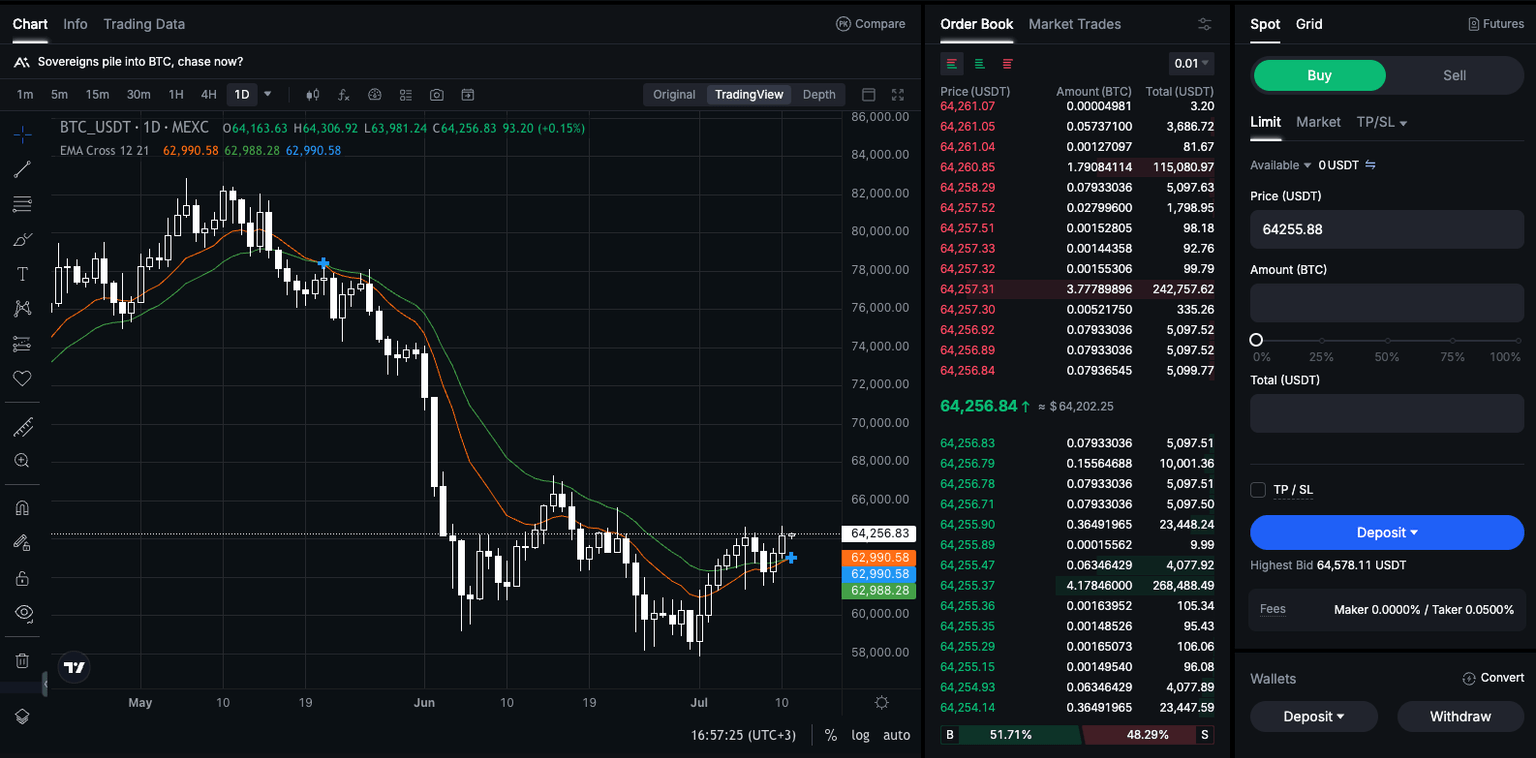
MEXC spot terminal — familiar chart + order-book layout
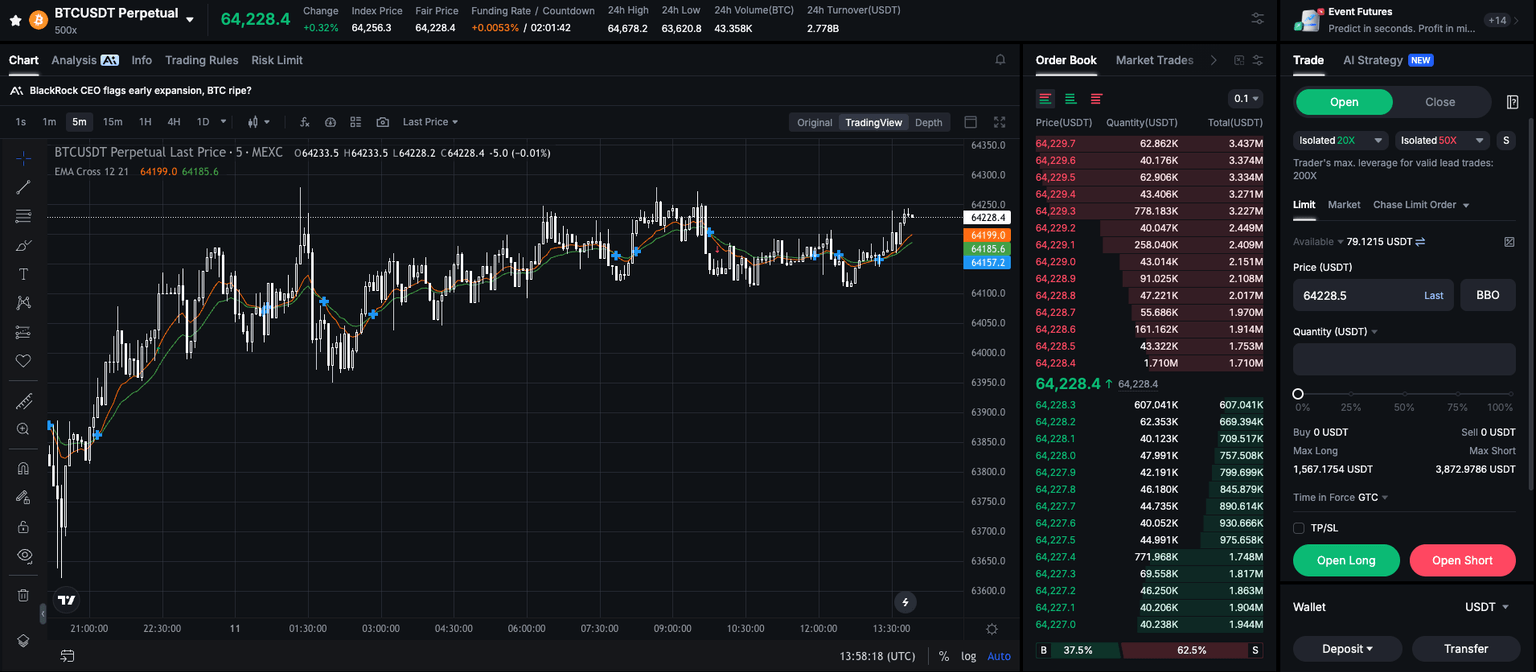
MEXC futures dashboard with leverage and perp order tools
MX Token, Kickstarter, and Earn Products
The MX token functions less like a pure fee-discount coin and more like a membership pass:
- Kickstarter / Launchpad events: new listings allocate reward pools; MX holders commit tokens to vote (without spending them) and receive pro-rata airdrops if the project passes
- Fee discounts: additional futures rebates for MX stakers and VIP tiers
- Buyback-and-burn: MEXC routes a portion of revenue into MX repurchases, aiming for supply reduction over time
On the yield side, MEXC Savings / Launchpool offers flexible and fixed staking on majors and stablecoins — USDT products have historically printed mid-single-digit to high-single-digit APY depending on campaign, with promotional bursts higher. Yields move with market conditions; verify live rates before allocating idle cash.
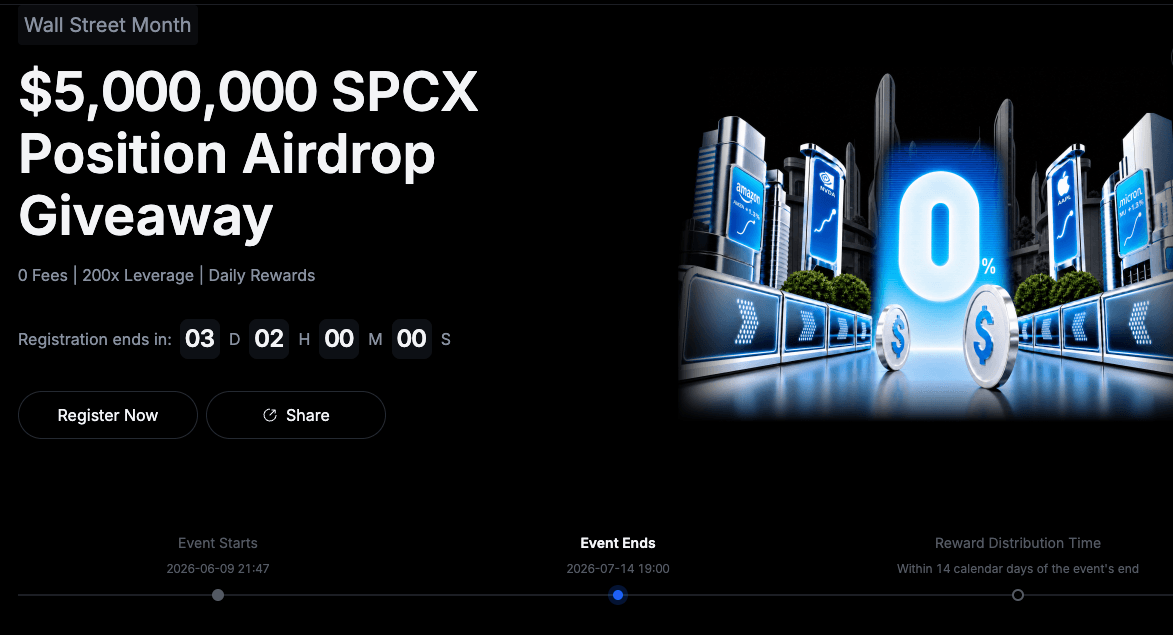
MEXC Kickstarter — vote on new listings and earn airdrop allocations
Security, Custody, and Proof of Reserves
MEXC is custodial: the exchange holds private keys. Operational security features include 2FA (authenticator, SMS, email), anti-phishing codes on official emails, withdrawal address whitelists, and cold-storage claims for the bulk of balances.
The transparency layer traders should monitor is monthly Proof of Reserves (PoR) with Merkle-tree verification so individual accounts can be checked against published liability totals. Recent public disclosures have shown reserve ratios above 100% on major assets like BTC, ETH, USDT, and USDC — meaning reported holdings exceeded user balances. PoR is a snapshot, not a guarantee against future operational failure, but it is a baseline hygiene check custodial venues should pass.
Our standing rule for any CEX: keep working capital only on-exchange. Long-term holdings belong in self-custody. If you are new to wallet security, start with our crypto security series.
Deposits, Withdrawals, and Fiat On-Ramps
Crypto deposits are straightforward: generate a network-specific address, send, wait for confirmations. Always match the token and chain — sending SOL on the wrong network is how beginners permanently lose funds.
Fiat entry routes through:
- P2P marketplace — bank transfer / local payment methods with escrow
- Third-party card processors — Banxa, MoonPay, Mercuryo, etc.
- Regional gateways — SEPA-style options in Europe where enabled
Withdrawals for verified accounts on major assets typically clear in minutes; very large withdrawals may trigger manual review (sometimes up to 24 hours). Plan liquidity accordingly before volatile events.
KYC Tiers and Account Limits
MEXC uses tiered verification:
- Primary KYC: government ID — commonly unlocks substantial daily withdrawal limits (often cited around 80 BTC equivalent)
- Advanced KYC: adds facial verification — higher ceilings (often cited around 200 BTC equivalent)
Unverified accounts exist with tighter caps, but policy has tightened industry-wide; assume you will need KYC for meaningful size.
How to Open and Fund a MEXC Account
- Register at MEXC with email or phone. Enable 2FA immediately.
- Verify identity under Account → Identification if you plan to deposit fiat or withdraw size.
- Deposit via Wallet → Deposit (crypto) or Buy Crypto (card/P2P).
- Trade spot under Markets → Spot. Use limit orders when you care about fill price; market orders are fine when urgency beats a few ticks — and with 0% maker fees, posting liquidity is usually cheaper than chasing with takers.
- Optional futures — transfer USDT from spot wallet to futures wallet, set leverage conservatively (start low; max advertised leverage on majors can reach 200x–500x, which is a liquidation machine for most humans).
Pros and Cons at a Glance
Pros
- Industry-leading spot maker fee (0%) and very low taker/futures costs
- Massive altcoin catalog with fast listing cadence
- Familiar terminal UX; TradingView charts; bots and copy trading built in
- MX Kickstarter airdrops can supplement returns for active holders
- Sub-accounts and API support for systematic traders
Cons
- Not available to US, Canadian, and several restricted jurisdictions
- Regulatory profile is offshore — not equivalent to a NASDAQ-listed broker
- Support quality can lag during peak listing mania
- Micro-cap pairs can carry high slippage despite low fees
FAQ
Is MEXC legit?
MEXC is a long-running centralized exchange with public PoR reporting and a large user base. Legitimacy in crypto still means custodial risk: no exchange is a bank. Size positions accordingly.
Why are spot maker fees zero?
MEXC uses ultra-low spot fees to pull flow, then monetizes through futures commissions, listing economics, and ancillary products. The structure has been durable enough that active traders should treat it as a core feature, not a countdown promo.
Can Americans use MEXC?
No. MEXC blocks US users by policy and geofencing. US readers should use compliant venues — see our affiliate disclosure for partners we link by region.
What is the minimum deposit?
There is no universal minimum; it is token-specific. USDT deposits are often practical from $1–10 depending on network fees.
Does MEXC have a demo account?
Yes — the futures M-Testnet lets you practice perps with virtual funds before risking real margin.
Final Verdict
MEXC is not trying to be Coinbase. It is trying to be the fastest, cheapest bridge between on-chain speculation and centralized liquidity. For traders whose edge lives in altcoin rotation, tight spot execution, or fee-sensitive automation, the 0% maker schedule and 2,000+ market map are genuinely differentiated — not marketing wallpaper.
The trade-offs are real: offshore regulation, uneven support under stress, and thin books on the exact tokens you came for. If you accept custodial exchange risk and you are in an eligible region, MEXC belongs on your shortlist alongside venues like Bybit — use MEXC where listing breadth and spot fee math win; use Bybit where TradFi, card products, or specific derivatives depth matter more.
Ready to test the terminal yourself? Open an account through our MEXC referral link, verify KYC if you plan to move size, and start on spot with a pair you already understand before touching high-leverage futures. Not financial advice — always do your own research.