1. Apple Beats Q2 With $111.2B and Names John Ternus the Next CEO
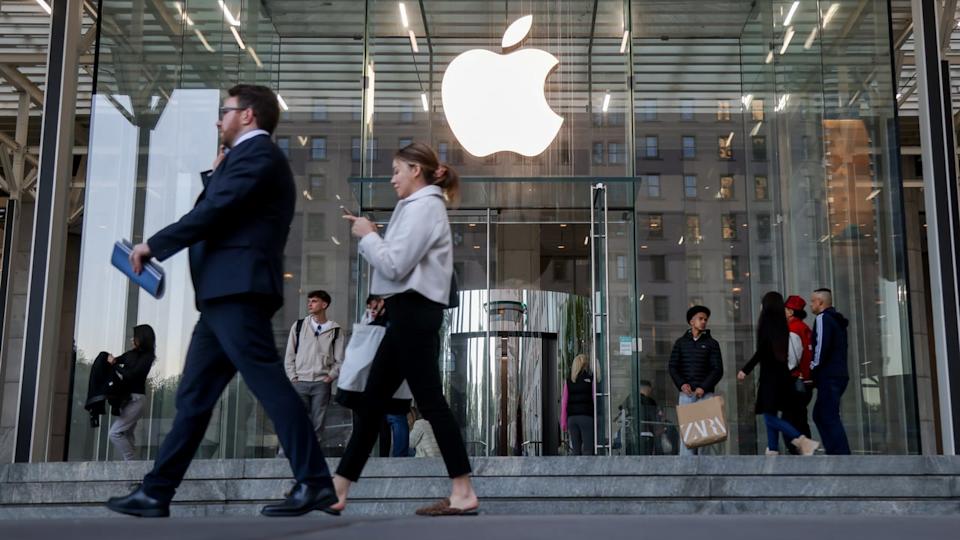
Apple delivered a clean Q2 FY2026 beat after the close yesterday and stapled a full CEO succession onto the print. Revenue landed at $111.2 billion (+17% year-over-year) versus the $109.7 billion consensus, with EPS of $2.01 beating the $1.93 estimate. The segment mix was the strongest in years: iPhone $57.0 billion (+22%) driven by the iPhone 17 family which Tim Cook called the most popular lineup in company history, Services $31.0 billion (+16%) setting a fresh all-time record, Mac $8.4 billion, iPad $6.91 billion, Wearables/Home/Accessories $7.9 billion. Geographically every region printed double-digit growth, with Greater China revenue +28% YoY answering the soft-China narrative that had pressured the stock for two quarters.
The CEO transition is the structural surprise. Tim Cook will move to executive chairman and John Ternus is named incoming CEO, the first chief executive change at Apple since 2011. Ternus was Apple's senior vice president of hardware engineering and the architect of the M-series silicon transition. The market read was clean: AAPL climbed approximately 3% in after-hours trading on the print, the cleanest of the five Mag 7 prints this week. Combined with yesterday's GOOGL +6% and AMZN +4% against the META -6% capex drag, the four-name week now reads as a tilt back toward the AI-monetization-is-real camp from the AI-capex-is-too-heavy concern.
- Apple Q2 FY2026 beat: $111.2B revenue (+17%), $2.01 EPS vs $1.93 est; cleanest Mag 7 print this week
- iPhone $57B (+22%) with iPhone 17 family the most popular lineup ever; Services $31B record (+16%)
- Greater China +28% YoY answers the soft-China narrative that pressured the stock for two quarters
- Tim Cook to executive chairman, John Ternus named CEO; first chief executive change at Apple since 2011
- Stock +3% AH; tilts the week back toward AI-monetization-is-real versus capex concern
2. Q1 GDP at 2.0%, Core PCE 3.2% in March: The Stagflation Print
The 12:30 UTC data stack landed mixed-to-hawkish for the rate strip. Q1 advance GDP printed 2.0% annualized, below the 2.3% consensus and the softest Q1 read of the cycle. The same release showed Q1 PCE annualized at 4.5% (versus 2.9% in Q4 2025) with core at 4.3% annualized, the energy pass-through from the Hormuz disruption now plainly visible in the deflator. March headline PCE rose 3.5% YoY matching expectations; core PCE accelerated to 3.2% YoY from 3.0% in February, in line with the consensus but a fresh acceleration that closes the door on a near-term rate cut.
The framing is now stagflation-tilt: weaker output paired with sticky inflation that is being driven by the supply side rather than demand. The BEA noted gasoline and energy goods accounted for $81.3 billion of the $195.4 billion monthly spending increase, the bluntest illustration of the Hormuz pass-through into household budgets we have had this cycle. The strip reaction was immediate: CME FedWatch odds for a June cut compressed further versus the post-FOMC baseline, the September meeting now carries the bulk of the cut probability, and the long end re-bid as the growth slowdown read offset the inflation acceleration.
- Q1 GDP 2.0% annualized, below the 2.3% est; softest Q1 print of the cycle
- March core PCE 3.2% YoY, accelerating from 3.0%; meaningfully above the 2% target
- Q1 PCE annualized 4.5% (vs 2.9% in Q4) with core 4.3%; energy pass-through visible
- Stagflation framing: weak output + sticky inflation; supply-side, not demand-driven
- Strip reprice: June cut odds compressed, September now carries the cut probability
3. ECB Holds at 2.00% and Lagarde Says the Council Debated a Hike
The European Central Bank kept its deposit facility rate at 2.00%, with the main refinancing rate at 2.15% and the marginal lending facility at 2.40%. The decision itself was the consensus call. The tone was the surprise. Christine Lagarde told the press conference that the Governing Council had "debated options at length, including a rate hike," the most hawkish framing from the ECB this cycle, and one that European markets did not have priced. The driver is the same lever as the U.S.: eurozone April flash CPI lifted to 3.0% on energy pass-through, even as Q1 GDP grew just 0.1%. Same stagflation read, lighter starting point on rates.
The June 4 meeting is now the watch event. Some sell-side desks are already penciling a 25 bp hike to 2.25% as the base case if energy stays elevated and core inflation does not roll. The euro firmed versus the dollar in the press conference window, German bund yields lifted on the hawkish-hold framing, and STOXX 600 gave back early gains. For globally diversified positioning across rate paths, Bybit's TradFi platform offers EUR/USD, DXY and bund-adjacent exposure with tight spreads.

- ECB held deposit at 2.00% as expected; the surprise was the tone
- Lagarde: "debated options including a hike"; most hawkish framing of the cycle
- Eurozone CPI 3.0%, Q1 GDP +0.1%; lighter stagflation read than the U.S. but same direction
- June 4 meeting now the watch event; some desks penciling 25 bp hike to 2.25%
- Euro firmed, bund yields lifted, STOXX gave back gains in the press conference window
4. WTI Eases to $105 After Touching $111 on Iran Briefing
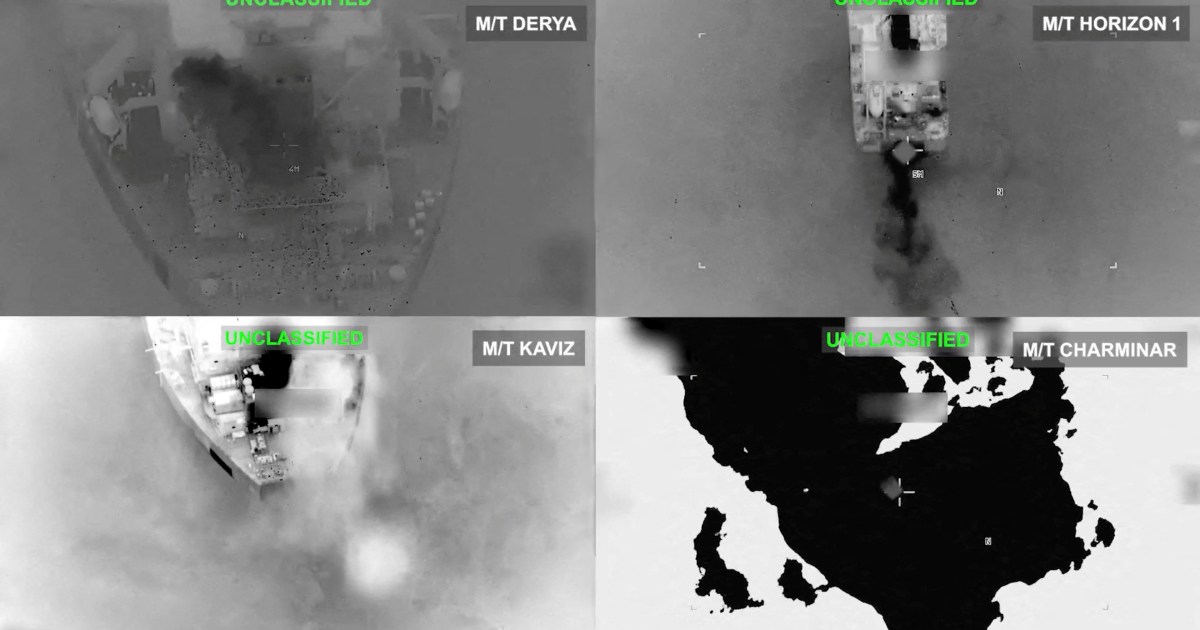
Oil is consolidating after a clean spike-and-fade. WTI futures trade $105.71 after briefly touching $111 intraday on reports that President Trump was being briefed on expanded military options for Iran. The pullback is roughly 4% off yesterday's high but WTI is still printing well above the $100 reference and only marginally below yesterday's $109.95 close. The structural driver has not changed: Strait of Hormuz traffic remains at roughly 5% of pre-war norms, only eight vessels crossed the strait Sunday versus the pre-conflict average of 129 per day, and approximately 2,000 ships remain stranded in the Gulf. Per Goldman Sachs, the dual blockade has reduced global oil production by 14.5 million barrels per day, the largest oil supply disruption in modern history.
The technical reference zones are tightening. The $103.82 38.2% Fibonacci retracement is the immediate floor under price. $107 remains the prior pivot and now sits as the first resistance into any reclaim. $112-$115 is the next bullish extension if the strait stays closed and the briefing report converts into action. Brent trades $114-$116 with the cycle-extension marker at $120 still in play. Invalidation for the spike thesis remains a confirmed Iran-U.S. de-escalation with a verifiable Hormuz reopen, which the curve has consistently faded for nine weeks.
- WTI $105.71 after fading from $111 spike; Trump briefed on expanded Iran military options
- Hormuz traffic ~5% of pre-war norm; ~2,000 ships stranded; Goldman estimates 14.5 mbpd disruption
- $103.82 fib floor, $107 prior pivot turned resistance, $112-$115 next extension if strait stays closed
- Brent $114-$116; cycle-extension marker at $120 still the operating frame
- Invalidation remains a confirmed de-escalation with Hormuz reopen, faded for nine weeks
5. Bitcoin $77K Bid, Gold Lifts to $4,640 on the PCE Print
Crypto and gold both absorbed the hot core PCE print as a real-yield squeeze rather than a hawkish-rate event, the dovish-bias asset response that has defined the late-April tape. Bitcoin trades $77,042 (+0.36% 24h), back into the upper half of the $75K-$80K April range that has held every test this month. The $75,000 daily-close floor remains the structural reference; $80,000 is the cycle resistance and the level the next leg has to reclaim. Ethereum trades $2,284 (+0.43%), holding the $2,200 structural pivot but still lagging BTC on slower spot ETH ETF inflows. The two-scenario read into today's ISM print remains: a soft ISM re-engages BTC at $77-80K and ETH back through $2,300; a hot ISM tests $74K BTC and $2,200 ETH.
Gold is the cleaner read on the inflation print. XAU/USD trades $4,640, lifted approximately 2% from yesterday's $4,547 close as the core PCE acceleration compressed real yields against the metal. Reference zones: $4,500 remains the structural floor (March 12 swing low confluence with the prior cycle breakout pivot); $4,700-$4,780 is the bullish re-engagement zone we flagged through this week, now within reach if real yields keep grinding lower. Separately, Eli Lilly (LLY) climbed roughly 7% in early Friday trading after Mounjaro sales rose 125% YoY, Zepbound +80%, and the company raised its full-year 2026 guide. The healthcare bid is offsetting some of the energy-driven inflation drag in the broad index.
- BTC $77,042 (+0.36%), upper half of $75K-$80K range; $75K daily-close floor still the line
- ETH $2,284 (+0.43%), $2,200 pivot holds; lags BTC on slower spot ETF inflow
- Gold $4,640 (+2.0% from yesterday's close); PCE compressed real yields, $4,700-$4,780 next zone
- LLY +7% on Mounjaro +125%, Zepbound +80%, raised FY26 guide; healthcare bid offsetting energy drag
- Crypto and gold absorbing PCE as real-yield squeeze, not as hawkish-rate event
6. What to Watch: ISM Manufacturing at 14:00 UTC, NFP Comes May 8
The data tape today is lighter than this week's average but not empty. 14:00 UTC: ISM Manufacturing PMI for April lands as the first post-FOMC sentiment read; the March print was 52.7, the strongest factory reading since August 2022, and consensus is for a modest cooling toward 51-52 on energy-cost pressure. Construction spending drops in the same window. April nonfarm payrolls do not print today: the April employment situation is scheduled for Friday May 8, the standard delayed release per BLS calendar (despite the calendar Friday rhythm). Powell's term as chair ends May 15, but he stays on the Fed Board per yesterday's structural surprise.
The macro week wraps with no FOMC speakers (Fed blackout extends through tomorrow on the post-meeting silent period). For positioning across crypto, oil, equities and gold into next week's setup, see the full economic calendar and our market insights feed for the daily structural reads. Reference levels into the close stay clean.
- S&P 500: ES futures 7,172 (+0.07%), cash trading 7,160s; bullish above 7,200, bearish below 7,100
- WTI: $103.82 fib floor, $107 prior pivot turned resistance, $112-$115 next extension if Hormuz stays closed
- Gold: $4,500 structural floor, $4,700-$4,780 bullish re-engagement zone
- BTC: $75,000 April daily-close floor, $80,000 cycle resistance; $77K is the operating midpoint
- ETH: $2,200 structural pivot, $2,400 dovish re-engagement, $2,100 bearish-extension trigger
Nothing in this analysis is investment advice or a personal recommendation. These are structural reference points and macro context for traders who already understand position sizing and risk management. The framework is the framework: levels for risk, scenario reads for direction, discipline to wait for both before acting.