Trump Declares Iran Deal "Largely Negotiated" As 60-Day Ceasefire Framework Lands
The biggest geopolitical print of the quarter arrived over the long US weekend. President Trump told Truth Social on Sunday May 24 that a peace agreement with Iran is "largely negotiated" and will be announced "soon", and Axios reported the proposed framework in detail: a 60-day ceasefire during which the Strait of Hormuz reopens, Iran is permitted to freely sell oil, the US releases tranches of frozen Iranian assets only after Hormuz traffic resumes, and Iran agrees in principle to dispose of its enriched uranium stockpile. Per Axios's exclusive readout, the deal stops short of a final nuclear settlement and instead establishes a 60-day window to negotiate the harder questions on enrichment limits and IAEA verification. The White House cautioned that the final text could still take "several days" to land per a separate Axios brief, and Iran's Fars news agency pushed back overnight asserting that Hormuz "remains under Iran's management" and calling Trump's announcement "incomplete and inconsistent with reality." Markets read the noise as headline risk on top of a directional shift and bought aggressively into the Asia open. This is the most significant unwind catalyst for the post-February 28 war premium that has dominated commodity and rates structure since the Strait of Hormuz was effectively closed in early March.
- Trump Sunday Truth Social: deal "largely negotiated," announcement "soon"
- 60-day ceasefire + Hormuz reopens + Iran sells oil freely + frozen assets released in tranches
- Iran agrees in principle to dispose of enriched uranium; final nuclear deal pushed to the 60-day window
- White House: text could take "several days" for Iranian leadership approval
- Iran's Fars news pushes back: Hormuz "stays under Iranian management"
WTI -5.87% To $90.93, Brent -5.58% To $97.76 As Hormuz Risk Premium Unwinds
Oil printed its single largest two-day repricing since the war began. Per CNBC's Asia markets desk, WTI July futures traded 5.87 percent lower at $90.93 per barrel in early Asia hours, and Brent July fell 5.58 percent to $97.76, the first sub-$100 print for the global benchmark in two weeks. The move follows a $96.60 Friday WTI settlement that had already been pressured by the Iran-talks tape into the long weekend close. The structural read for energy is that the war risk premium embedded in front-month crude has now collapsed by roughly $17 per barrel from the May 17 high near $108, a 16 percent unwind in eight trading sessions. The reference zone shifts meaningfully: prior structure had the $95 to $100 band as the post-Hormuz baseline; today's print pulls the entire curve below that floor and the $85 to $90 zone becomes the next visible reference if the Hormuz reopening lands inside the 60-day window. The bullish trigger for an oil bounce remains $95; a sustained break of $88 would mark a full unwind of the war premium and a return to the pre-February geopolitical base.
- WTI -5.87% to $90.93 in early Asia trade; first sub-$100 print for Brent in 2 weeks
- Brent -5.58% to $97.76; combined two-day move is the largest of the war
- War risk premium has now collapsed roughly $17/bbl from the May 17 $108 high (16% unwind)
- Key reference zone shifts to $85-$90; bullish trigger $95; full unwind below $88
- Iran-Fars pushback on Hormuz "management" is the live headline risk to monitor
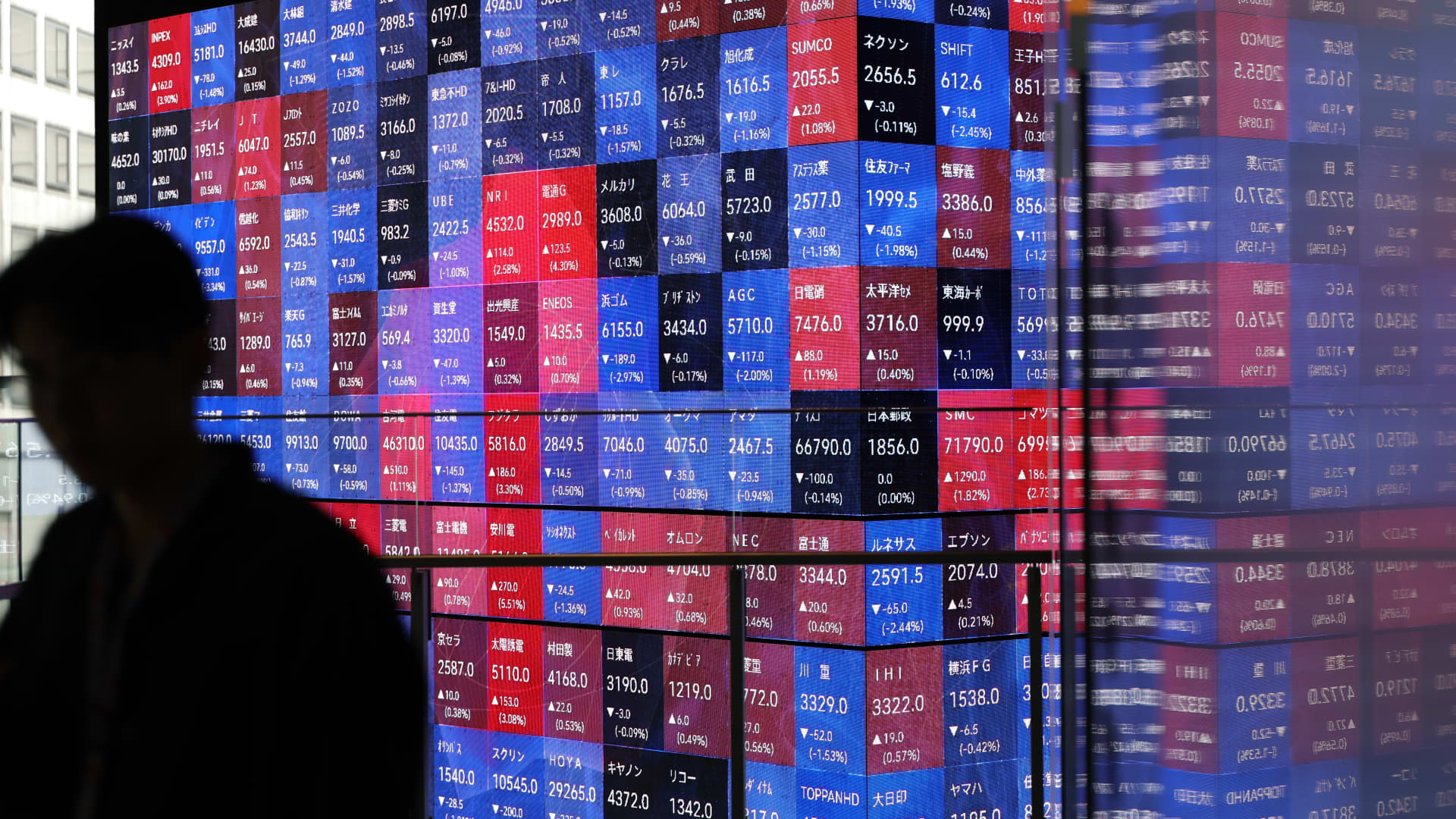
Nikkei +3.02% To Record 65,254 As SoftBank And Semis Lead The Asia Bid
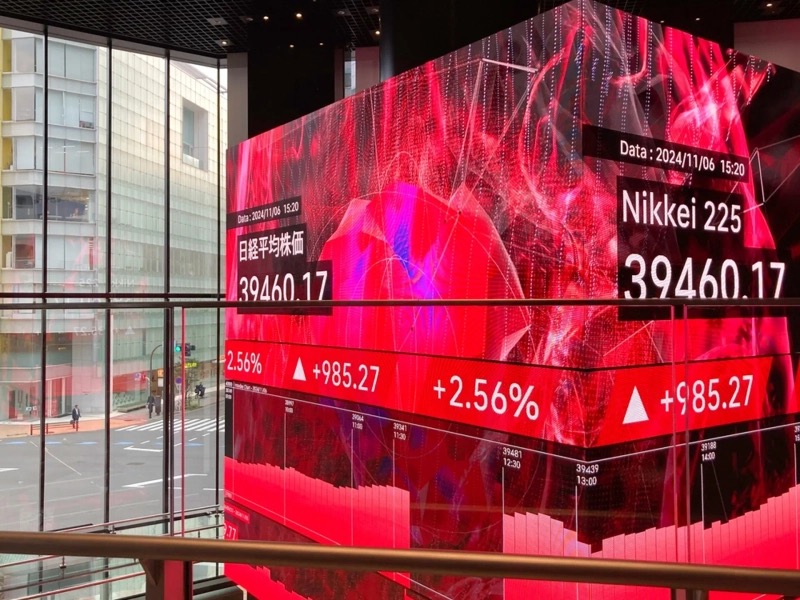
Japan's benchmark printed the cleanest single-session expression of the Hormuz unwind anywhere in the world. The Nikkei 225 cleared 65,000 for the first time ever on an intraday basis per Japan Times, gaining 1,914.93 points or 3.02 percent to a 65,254 record close. The move continues the AI-driven leadership we tracked all of last week in Friday's Asia AI analysis, with SoftBank Group again leading the heavyweight tape and NAND producer Kioxia Holdings climbing 5.94 percent to 60,810 yen on the back of Friday's 2 percent Philadelphia Semiconductor Index gain. JPMorgan now projects the Nikkei to reach 70,000 by year-end, citing the structural AI capex setup and a weaker yen working in Japan's favour. The broader Asia tape traded in sympathy: Hong Kong's Hang Seng, Taiwan's TAIEX and South Korea's KOSPI all closed firmer, and the PBOC fixed the yuan at 6.8318 against the dollar, the strongest reference since February 2023, signaling Beijing is comfortable letting the yuan firm into the dollar weakness that the Hormuz unwind has reintroduced. The structural read into the US Tuesday open is that Asia has front-run a global risk-on rotation, and any S&P open below the 7,490 ES futures projection will be read as an opportunity to catch up rather than a fade signal.
- Nikkei +3.02% to 65,254 record; first time above 65,000 on any basis
- Kioxia +5.94% to 60,810 yen; SoftBank again leads the heavyweight tape
- JPMorgan PT 70,000 for year-end on AI capex strength and a weaker yen
- PBOC yuan fix 6.8318, strongest since February 2023; Beijing comfortable with firmer yuan
- Asia has front-run the global risk-on rotation; US Tuesday open is a catch-up tape
BTC $77K, ETH $2,110, Gold $4,560 As Sunday Risk-On Lifts All Boats
The Sunday electronic session produced a clean cross-asset risk-on print. Bitcoin holds $77,155 on TradingView, up 0.20 percent on the 24-hour window and rebuilding above the $76,800 base printed mid-last week. Ethereum sits at $2,112, up 0.24 percent, still flat versus the prior weekly close but holding the post-PPI consolidation zone. Gold spot has rallied roughly 1.4 percent to $4,560 on the back of the Hormuz unwind and the parallel softening in the dollar index, with the metal printing a session high that suggests the May 14 to May 19 selling sequence is now fully absorbed. The macro context for crypto and metals is the same: ES June futures sit up 0.7 percent and Nasdaq futures up 1.2 percent per investingLive's Asia wrap, the dollar index is leaking on the energy-led softening of the US current account narrative, and the 10-year Treasury yield is consolidating near 4.55 percent as the Iran disinflation impulse takes the rate-hike tail out of the December FOMC distribution. Reference structure for BTC: $76,000 remains the visible cycle base, and a clean reclaim of $80,000 would invalidate the post-PPI bearish break that has held the tape since May 13. For gold, the reference zone shifts higher to $4,550 to $4,650; a sustained break above $4,650 reopens the path to the $4,700 May 14 swing high.
- BTC $77,155 (+0.20%); $76K cycle base intact, $80K reclaim invalidates bearish break
- ETH $2,112 (+0.24%); holding post-PPI consolidation
- Gold $4,560 (+1.4%) on Hormuz unwind + softer DXY; May sell sequence absorbed
- ES +0.7%, Nasdaq +1.2% Sunday open; DXY leaking, US 10-year near 4.55%
- Gold reference shifts higher: $4,550-$4,650; $4,650 break reopens $4,700 swing high
What To Watch With US Markets Shut For Memorial Day
The US cash equity and bond markets are closed today for Memorial Day per CNBC, with regular trading resuming Tuesday May 26 at the usual 9:30 AM ET open. The most recent stateside reference print remains Friday's S&P 500 close of 7,473.47, a fresh record that capped the index's eighth consecutive weekly gain. The structural read for Tuesday is the cleanest in weeks. If the Hormuz framework holds, the catch-up rotation favors energy underperformance, large-cap tech continuation, financials and small-caps on the disinflation impulse, and a continuation of the post-Nvidia AI capex bid into the May 27 HP and May 28 Dell earnings. The principal headline risks to monitor before the Tuesday open: (1) the Iranian leadership's formal response to the Axios-reported framework, (2) any State Department or Iranian foreign-ministry walkback on the Hormuz "management" question, and (3) a Tuesday auction calendar that includes a 2-year Treasury note and a fresh round of Fed speakers under Chair Warsh. The bearish risk is a clean Iranian rejection of the framework on the Monday Tehran tape, which would reverse the bulk of the Asia oil drop and put the Nikkei record back into play as a one-day overshoot. The bullish risk is a confirmed Iranian sign-off that takes WTI below $88 and the Nasdaq through 24,500 on Tuesday's open.
- US cash equity + bond markets closed today; resume Tuesday 9:30 AM ET
- Friday S&P close 7,473.47; ES futures point to a Tuesday catch-up open
- If framework holds: energy underperforms; tech, financials, small-caps lead
- Headline risks: Iranian leadership response, Hormuz "management" walkback, 2yr auction
- Bullish risk: WTI below $88, Nasdaq through 24,500 on confirmed Iranian sign-off
Bottom Line
Monday May 25 is shaping up as the cleanest cross-asset Hormuz-unwind print since the war began. President Trump's Sunday Truth Social declaration that an Iran deal is "largely negotiated", paired with the Axios-reported 60-day ceasefire framework covering Strait of Hormuz reopening, frozen-asset tranche releases and an Iranian commitment in principle to dispose of enriched uranium, has produced the largest single-day oil repricing of the cycle. WTI front-month is down 5.87 percent to $90.93 and Brent down 5.58 percent to $97.76 in early Asia trade, with the war risk premium now down roughly $17 per barrel from the May 17 $108 high. Japan's Nikkei 225 has cleared 65,000 for the first time on a 1,914-point 3.02 percent surge, JPMorgan has raised the year-end target to 70,000, and the PBOC fixed the yuan at the strongest level since February 2023. ES June futures sit up 0.7 percent and Nasdaq futures up 1.2 percent into a US session that is shut for Memorial Day, with crypto and gold both bid in sympathy: BTC $77,155, ETH $2,112, gold $4,560. The Friday S&P close of 7,473.47 stands as the most recent stateside print and ES projects a clean catch-up Tuesday open. The principal risk to the move is an Iranian leadership rejection of the framework on the Monday Tehran tape, which Fars news has already partially flagged on the Hormuz "management" question.
For traders following the Hormuz unwind, the post-Nvidia AI tape and the cross-asset disinflation rotation, Bybit's TradFi platform offers tight spreads on US equity, FX and commodity exposures with defined-risk tooling. Not financial advice. Always do your own research.