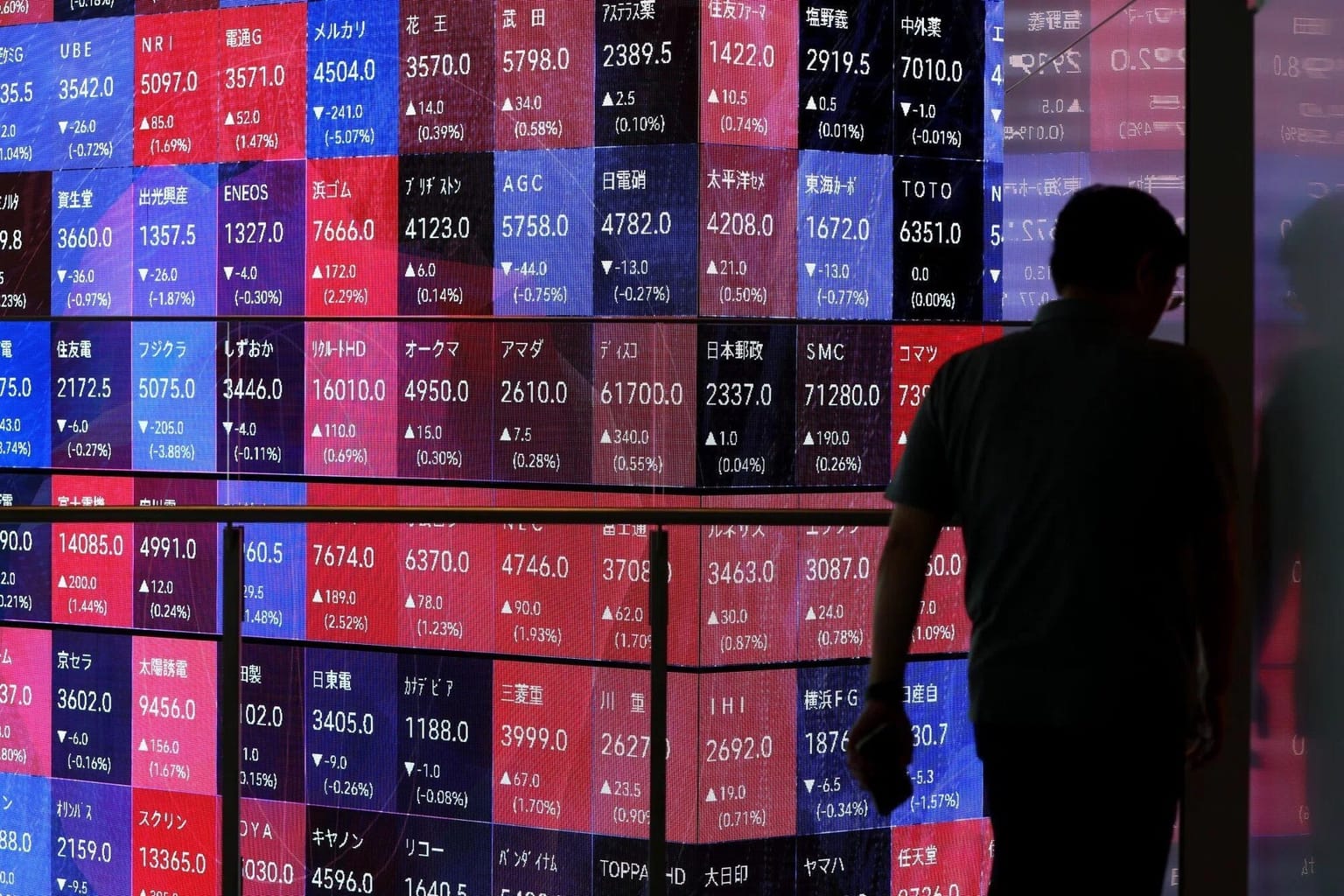
The central-bank week opened with a bang in Tokyo. The Bank of Japan raised its policy rate to 1 percent, the highest level since 1995, delivering the hawkish move markets had largely priced and setting a tone of monetary normalization just as Kevin Warsh prepares to chair his first Federal Reserve meeting. Across asset classes the reaction was measured rather than violent: Bitcoin held near $66,400 and Ethereum near $1,772, spot gold eased to about $4,327 as traders trimmed risk ahead of Wednesday, and WTI crude steadied near $80.47 after Monday's roughly 5 percent slide on the completed US-Iran peace deal. With the BoJ now done, the entire week pivots to Warsh's dot plot. Here is what is moving and why.
Bank of Japan Lifts Rates to a Three-Decade High
The story of the morning is Tokyo. The Bank of Japan lifted its short-term policy rate to 1 percent, its highest since 1995, in a 7 to 1 vote in which board member Toichiro Asada favored a hold, per CNBC. The move caps a long, halting exit from the negative-rate era and signals the BoJ now treats sticky inflation, not deflation, as its primary concern. The market had been well prepared: pre-meeting pricing assigned roughly an 80 to 96 percent probability to the hike, so the decision itself was less important than the guidance around it. The yen firmed marginally and Japanese government bond yields rose, while the Nikkei 225 climbed as exporters digested a still-accommodative real-rate backdrop. For global investors the read-through matters most through the carry trade: a higher yen funding cost gradually narrows the incentive to borrow cheaply in Japan and chase yield abroad, a slow-burn headwind for risk assets rather than an overnight shock.
- BoJ raised its policy rate to 1%, the highest since 1995
- The decision passed 7 to 1, with one member favoring a hold
- The hike was roughly 80 to 96% priced, so guidance mattered more
- The yen firmed and JGB yields rose; the Nikkei climbed
- Watch the carry trade: a costlier yen is a slow headwind for risk
Fed Week: Warsh's First Dot Plot Is the Story
Attention now turns fully to Washington, where the two-day FOMC meeting runs June 16 to 17 and culminates in Kevin Warsh's first decision and press conference Wednesday at 18:00 UTC. A hold is all but certain, with futures pricing a near 99 percent probability that the funds rate stays in the 3.50 to 3.75 percent range, per FXStreet. That makes the fresh Summary of Economic Projections and its dot plot the whole event. As indmoney notes, the March median pointed to two more 2026 cuts, a path hot May inflation has likely rendered stale, and futures have since drifted toward no cuts at all this year. A second wrinkle is structural: Warsh has signaled he may eventually scrap the dot plot altogether, so any change to its format could itself jolt volatility. As we flagged in Monday's analysis, conviction across markets is borrowed against this single Wednesday print.
- Warsh's first FOMC decision lands Wednesday 18:00 UTC
- A hold at 3.50 to 3.75% is near-certain; the dot plot is the story
- The March median showed two 2026 cuts; hot inflation made that stale
- Futures have drifted toward no cuts this year
- Any change to the dot plot's format could spike volatility

Crypto Check: Bitcoin Holds, Ether Lags
Crypto is treading water with a constructive tilt. Bitcoin traded around $66,400, up roughly 1.6 percent over 24 hours and holding near the top of its recent range after Monday's risk-on session lifted it back above $66,000. Ethereum sat near $1,772, essentially flat on the day and once again trailing the majors. The split echoes the equity tape, where high-beta names led Monday's rally while ether did not, and it reflects a market that is unwilling to commit fresh capital before the Fed. With no crypto-native catalyst on the calendar, digital assets are taking their cue from the same macro risk capping equities. The key reference zone stays the mid-$60,000s: while Bitcoin holds above $65,000 the near-term structure remains constructive, whereas a decisive break below it would signal the pre-Fed caution is turning into genuine de-risking.
- Bitcoin ~$66,400 (+1.6%), holding the upper end of its range
- Ethereum ~$1,772, flat and still lagging the majors
- No crypto-native catalyst; the tape is driven by macro risk
- Key reference zone: the mid-$60,000s, with $65,000 the structural pivot
- Conviction is light until Wednesday's dot plot clears
Commodities: Oil Steadies, Gold Eases Into the Fed
The commodities tape is consolidating after a dramatic Monday. WTI crude held near $80.47, broadly flat after sliding roughly 5 percent at the start of the week as the completed US-Iran peace deal cleared the way to reopen the Strait of Hormuz, per fxdailyreport. The war premium that propped up energy for three months has now largely drained, and the market is settling into a new, lower range built on restored supply rather than a demand scare. Gold eased to about $4,327, slipping from Monday's $4,338.90 close as traders pared positions before the Fed, per Trading Economics. Bullion is trading the rate path, not the geopolitical headline: it sits near record territory because rate-cut hopes have lingered, but a hawkish dot plot that pushes cuts further out would remove a key support. The modest pullback is consistent with a market hedging its bets rather than abandoning the metal.
- WTI ~$80.47, flat after Monday's ~5% slide on the Iran deal
- The war premium has largely drained; supply, not demand, set the new range
- Gold eased to ~$4,327 from Monday's $4,338.90 as traders trim risk
- Bullion is trading the rate path, not the geopolitical headline
- A hawkish dot plot would remove a key support for gold
The Day Ahead and Levels to Watch
With Tokyo's decision banked, the session quiets ahead of Wednesday. US equity futures point to a steady open after the S&P 500 closed Monday at a record 7,554.29; the index extended its run on the Iran-deal relief rally, as covered in Monday's evening review. The next macro signpost is US Retail Sales on Wednesday at 12:30 UTC, a read on the consumer that lands just hours before the Fed and could color how the dot plot is received. Traders should also note that this is a holiday-shortened week: US markets close Friday June 19 for Juneteenth, which can thin liquidity and exaggerate moves into Thursday's close. For the equity tape, the bullish trigger is a steady dot plot that keeps the door open to cuts; the bearish trigger is a hawkish set of projections that revives the higher-for-longer narrative, and a break of Monday's record would be the first sign that scenario is taking hold. Until Wednesday, the path of least resistance is sideways, with the market unwilling to make a big bet in either direction.
- S&P 500 at a record 7,554.29; futures steady into the US open
- US Retail Sales Wednesday 12:30 UTC precedes the Fed by hours
- US markets close Friday June 19 for Juneteenth, thinning liquidity
- Bullish trigger: a steady dot plot that keeps cuts on the table
- Bearish trigger: hawkish projections and a break of Monday's record
ThriveInMarkets publishes market commentary for general information only and does not provide personal investment advice. Prices are live or closing levels as labeled and move quickly; levels cited are technical reference points, not instructions to buy or sell any asset.