This is a review, written in our own words, of one stretch of a podcast. It is not a transcript, not a clip, and not a recommendation to buy or sell anything. On July 30, 2026, Ray Dalio, the founder of Bridgewater Associates, spoke with Steven Bartlett on The Diary of a CEO. The episode is on YouTube under the title "Ray Dalio: I Predicted The 2008 CRASH, I Know What Comes Next!" The full conversation runs about an hour and a half and covers debt, politics, and the long cycle. The part that matters for markets is shorter. Dalio says artificial intelligence can be a real technology and the stocks tied to it can still be a bubble. The way he says that bubble would break is specific: people borrow against paper wealth on the way up, then something forces them to sell, and the selling feeds on itself.
Watch the episode if you want his voice and the rest of the hour. What follows is our paraphrase of the bubble passage, then our comment on the public record. We do not speak for Dalio, for Bartlett, or for the show.
- This is a review of the July 30, 2026 Diary of a CEO episode. The argument below is paraphrased. The video is the source.
- Dalio's point: a new technology can work, and the price people pay for it can still be a bubble. He used 1929 and the 2000 dot-com bust as the parallels, not a calendar date.
- The mechanism he walked through is a loan against a rising asset. If the asset falls, the loan is still due, so holders sell. Selling pushes the price down again.
- He named the usual prick as a need for cash: higher interest rates, a wealth tax, or a flood of new shares. He also said not to try to time it.
- FINRA margin debt was $1.45 trillion in August 2026, up about 37% in a year, and below the June peak. The Shiller CAPE was 41 on September 30, near the January 2000 reading of 43.77. Neither figure is a crash date.
What he argued
Bartlett opened with Jeremy Grantham's warning, from an earlier visit to the same show, that markets were looking at a very large bubble. Dalio did not brush it off. He said the classic signs are there. He was careful about the word. A bubble, in the way he used it, is not a slogan. It is a sequence. Prices rise a long way, the companies look successful, and then the prices collapse. He pointed at 1929, which was followed by the Great Depression, and at 2000, the dot-com bubble.
The pattern he described is the same shape in both cases. A new technology arrives and it really is extraordinary. In the late 1920s that was electricity in houses, refrigeration, radio, cars, and airplanes. In 2000 it was the internet. Today it is AI. People are right to be excited. They then do something extra. They bet as if excitement were a price. Some of them borrow to make the bet. The price keeps rising because everyone wants in, and the price itself stops being the question.
He separated wealth from money, which is the part that connects to loans. A rising stock makes the holder look rich. That richness is a price on a screen. You cannot spend the screen. You spend money, and money comes from selling, or from borrowing against the thing you have not sold. On the way up, the paper is collateral, so the loan is easy to get, and the buying can compound. On the way down, the loan does not shrink just because the price did. Servicing it, or repaying it, means selling. Selling hits the next holder's collateral. That is the reverse compound.
Bartlett played the idea back as a classroom example, and Dalio agreed the playback was the mechanism. A holding marked at 100 dollars supports a loan of half that, 50 dollars. Something then makes investors need cash. They sell together. The holding that was marked at 100 is now marked at 25, and the 50 dollar loan is still 50. The holder is short, so the sale gets more urgent, and the urgency is shared. Spending falls after that, because people who feel poorer buy less. Dalio treated that chain as something these booms produce, not as a date he was willing to circle.
What he said would prick it
Asked what pops the bubble, he did not offer a mystery shock. He said the early prick is usually something that makes people turn wealth into money. The usual version is a rise in interest rates, because debt costs more. A wealth tax can do the same job, because the tax is paid in money and the wealth is in assets, so assets get sold. He also pointed at supply. When companies and founders sell new shares into the boom, they are adding stock at the same time buyers are stretched. He used a founder who raises a large sum now, while investors are still eager, as an example of that extra supply. The founder may be acting sensibly for the company. The market still has to absorb the shares.
He added two qualifiers that the clip versions of this interview tend to drop. A bubble is a matter of degree, not a switch that is on or off. And the holder matters. He contrasted strong hands with weak hands: investors who do not know what they own, especially if they own it with debt, or through leveraged funds that multiply the market's move. He treated that leveraged betting as a sign that the buyer is gambling on the price, not underwriting the business.
He then refused the trade that listeners usually want. The future, he said, is very unknown. Timing a bubble is hard even for professionals. His practical answer was diversification, and a return to the basics of how money is managed, not a call to dump AI stocks on a Tuesday. Unemployment, in his account, gets hit twice and on different clocks. The technology changes which jobs exist, slowly. The bust cuts costs in a hurry, because firms that need cash lay people off. He did not fold those into one forecast.

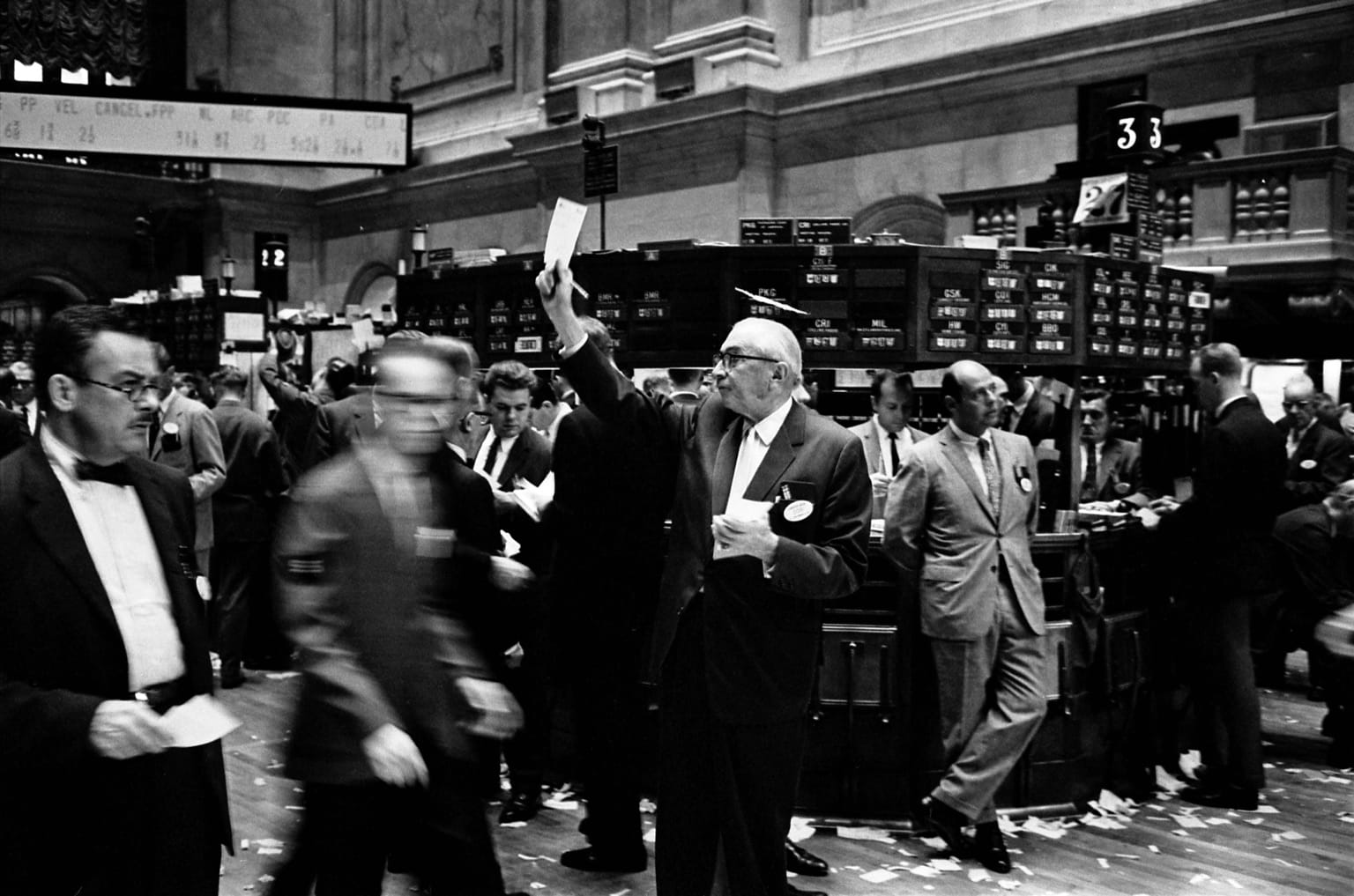
Server hall: BalticServers.com, CC BY-SA 3.0, via Wikimedia Commons. Hero photograph: Thomas J. O'Halloran, Library of Congress, public domain, via Wikimedia Commons.
- Paper wealth is not cash. Borrowing against it works until the price falls and the loan does not.
- The prick he named is a need for money: higher rates, a wealth tax, or more shares for sale.
- He called the bubble a degree, and he told the audience not to time it.
What the record supports
The dot-com comparison is the cleanest one he made, and the history is not subtle. The Nasdaq Composite closed at 5,048.62 on March 10, 2000. It closed at 1,114.11 on October 9, 2002. That is a fall of 77.9 percent. The Financial Times later recorded the long repair: the index did not close back through that March 2000 level until April 23, 2015, at 5,056.06. The internet was not a mirage. Search, commerce, and software ate the economy. A buyer who paid the 2000 price still sat through a 78 percent drawdown and a fifteen-year wait to get the index level back. That is the distinction Dalio is pointing at. The technology can win and the investment can still be a bad price.
Valuation today is high by the same long yardstick, and it is not a copy of the peak. Multpl's Shiller CAPE, built from Robert Shiller's data, was 41.00 on September 30, 2026. The same series prints 43.77 on January 1, 2000. Forty-one is a rare reading. It says investors are paying a lot for a decade of earnings. It does not say the selling has started, and it does not say the reading must touch the old high before anything changes. Dalio's prick was never "CAPE prints a number." It was someone needing cash.
Borrowing against securities is not theoretical. FINRA's margin statistics put debit balances in customers' securities margin accounts at 1,453,832 million dollars in August 2026, about 1.45 trillion. A year earlier, August 2025, the same line was 1,059,723 million, so the balance rose about 37 percent. June 2026 was higher still, at 1,502,072 million, and August was a step down from that peak. Read that carefully. It fits the first half of his story, that people have borrowed a great deal against portfolios, and the borrowing grew much faster than a calm year would suggest. It does not fit a claim that the forced sale is already the whole market. The series can rise for a long time. It also leaves things out. A bank loan against a stock portfolio, the sort of securities-backed loan in his example, is not the same line as a broker margin debit. FINRA is the broker-dealer number. It is the public one. It is not the whole one.
The cash market, as of the last US close, is not the spiral either. The S&P 500 closed Wednesday, September 30, at 7,651.54, which is under the August 13 record of 7,816.70. The Nasdaq Composite closed at 26,861.06. Those are the figures in Thursday's morning note. A market off its high by a couple of percent is a pullback inside an expensive tape. It is not the rush he described, where collateral falls, loans stay, and everyone sells at once.
Our comment
The mechanism is ordinary finance, and that is why it is worth taking seriously. Collateral lending is pro-cyclical. It gives you more money when prices are high and it takes money away when prices are low. 1929 had that in broker loans. 2008 had it in houses. 2000 had less of a household-loan story and more of a price story, which is why his dot-com parallel is about what people paid, and his loan parallel is about how a fall would spread if the buying was done on debt. Both can be true in the same boom. AI spending can be real, the chips can be scarce, and a buyer can still have paid a price that only works if nothing interrupts the loan.
Where we would not follow a shortened version of the clip is the jump from "this can happen" to "it is happening on a date." He did not give the date. He said the signs are classic, that a peak soon would be compatible with the old pattern, and that timing it is a bad plan. A wealth tax is a political fight in some places, not a law he announced. Higher rates are a condition he named, and rates are already high, which cuts both ways: debt is already expensive, and a further rise would be a new prick, not a story that has already finished. New share sales matter only as they arrive. A founder raising money is not, by itself, the pop.
The useful watch list is therefore the one his mechanism implies, and it is a watch list, not an order. Does margin debt keep making new highs, or does it roll over while prices are still firm? Are companies selling a lot of new stock into strength? Does the marginal buyer need leverage to stay in? Does a rate move or a tax proposal force a sale of the asset rather than a sale of something dull? If those line up, his reverse compound is the risk. If they do not, an expensive market can stay expensive, and the technology can keep working underneath it. The 2000 buyer who was right about the internet and wrong about the price learned the second lesson the hard way. That is the lesson in the episode. It is not a timetable.
- Nasdaq, March 10, 2000 to October 9, 2002: 5,048.62 to 1,114.11, down 77.9%. The index level was not retaken until 2015. The internet still won.
- Shiller CAPE 41 on September 30, 2026, against 43.77 on January 1, 2000. High. Not a sell signal by itself.
- FINRA margin debt $1.45 trillion in August, up about 37% in a year, and under the June peak. Broker margin is not every loan against stock.
- Wednesday's S&P close, 7,651.54, is below the August record. That is not the forced-sale spiral.
For the day's levels, see the morning note. None of the above is a recommendation to buy or sell any asset, fund, or tax idea. The podcast belongs to its makers. This page is a review of it.