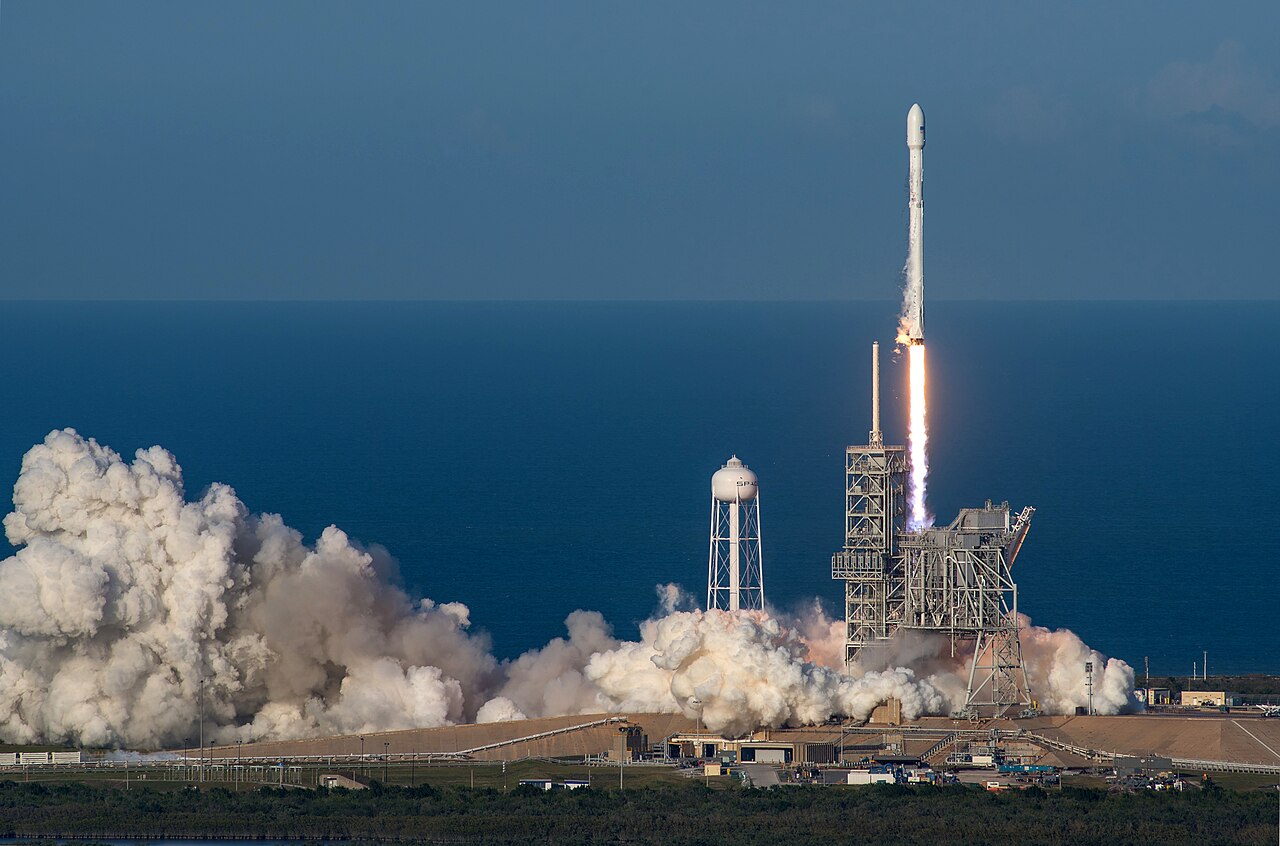
For more than two decades, SpaceX has been the most valuable company that ordinary investors could not buy. That is about to change. The rocket maker founded by Elon Musk is heading for the public markets in what is set to be the largest initial public offering in history, with shares expected to price on Thursday, June 11 and begin trading on the Nasdaq on Friday, June 12 under the ticker SPCX. This is a plain-English explainer of what SpaceX is, why it is going public now, how the deal is put together, and how an IPO actually works. It is educational only. Nothing here is a recommendation to buy or to avoid the stock, and ThriveInMarkets does not give personal investment advice.
What Is SpaceX?
Space Exploration Technologies, better known as SpaceX, was founded by Elon Musk in 2002 with a deliberately grand mission: to slash the cost of reaching orbit and, eventually, to help make humanity a multi-planet species by settling Mars. For its first years it was a long-shot startup that nearly went bankrupt. Then the engineering started to work. Its Falcon 9 rocket has been the company's workhorse since 2010, and in December 2015 SpaceX pulled off something the established industry had called impractical: it landed a Falcon 9 first stage back on Earth intact. Reusing boosters instead of throwing them away after one flight rewrote the economics of spaceflight. By May 2026, SpaceX boosters had landed and re-flown close to 650 times, and in 2025 the company was launching on average more than three times a week.
That cadence turned SpaceX into critical infrastructure. It flies NASA astronauts to the International Space Station aboard its Dragon capsule, having become the first private company to send humans to orbit in May 2020. It launches satellites for governments and companies worldwide. It is building Starship, a fully reusable super-heavy vehicle meant to carry cargo and people to the Moon and Mars and to eventually succeed the Falcon family. And through Starlink, it has become the largest satellite operator on the planet, running roughly two-thirds of all active satellites in orbit. In short, SpaceX is no longer just a rocket company. It is a launch provider, a global internet provider, and an aspiring backbone for the next generation of computing.
- Founded in 2002 by Elon Musk to cut launch costs and reach Mars
- Falcon 9 made reusable rockets routine; about 650 booster landings by May 2026
- Flies NASA astronauts via Dragon; first private crewed orbital flight in 2020
- Starship is the next-generation Moon and Mars vehicle in development
- Starlink runs roughly two-thirds of all active satellites in orbit
The IPO at a Glance
The headline numbers are staggering. According to the company's SEC filings and reporting from CNBC, SpaceX is targeting a price of $135 per share, which would value the company at roughly $1.75 trillion. It plans to sell about 555.6 million shares to raise around $75 billion, with underwriters holding an option to buy an additional 83.33 million shares that could push the total well above $80 billion. To put that in perspective, this would be the biggest IPO ever, more than triple the size of Alibaba's 2014 listing, the previous US record, and it would instantly rank SpaceX among the largest companies in America, above Tesla's market value. SpaceX filed its public S-1 on May 20, 2026, amended it on June 1, began its investor roadshow on June 4, and is set to price on June 11 and debut on June 12.
One detail matters for understanding the company's governance: even after selling tens of billions of dollars of stock, Elon Musk is expected to retain more than 82 percent of the voting control through a special class of shares. In practice, that means public shareholders will own a slice of the economics but will have little say over how the company is run. That is increasingly common among founder-led technology companies, but it is a defining feature of this deal.
- Ticker SPCX on the Nasdaq; prices June 11, trades June 12
- Target $135 per share at a roughly $1.75 trillion valuation
- About 555.6 million shares sold to raise around $75 billion
- Set to be the largest IPO in history, triple Alibaba's record
- Musk keeps 82%+ voting control via a special share class
Why Go Public Now, After 24 Years?
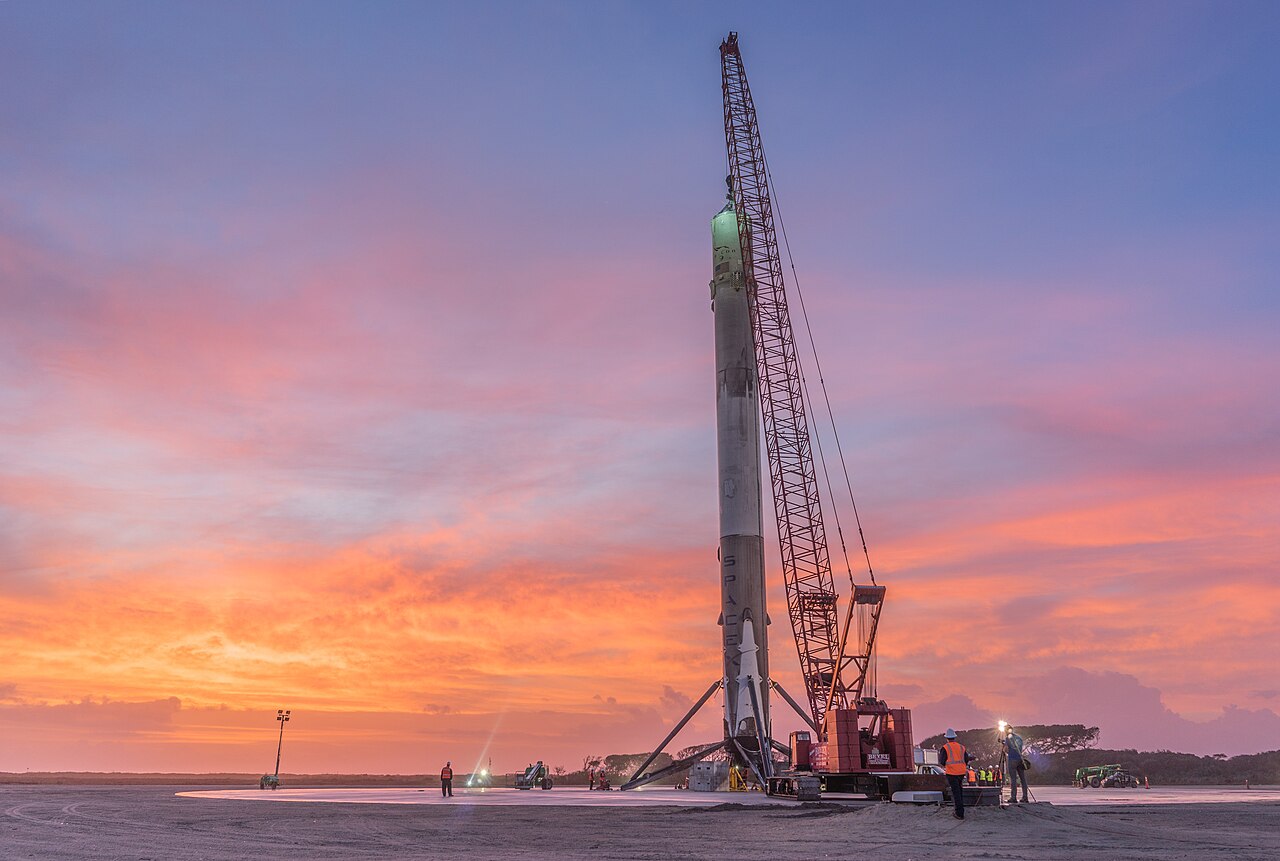
Musk resisted taking SpaceX public for years, arguing that quarterly market pressure was a poor fit for a company chasing decade-long moonshots. So why now? The simplest answer is capital. SpaceX has laid out blockbuster spending plans, and an IPO raises a war chest to fund them. As NPR reported, those plans go beyond rockets: the company wants to build data centers in space, an orbital network of solar-powered satellites that would process and store data, and it has sought regulatory approval to launch as many as one million satellites. The pitch ties SpaceX directly into the artificial-intelligence buildout, potentially providing compute infrastructure for Musk's xAI and links to Tesla. Layer on the continued expansion of Starlink and the long-running ambition to reach Mars, and the funding needs run into the tens of billions.
There are other reasons a private company eventually goes public. An IPO gives early employees and long-time investors a way to sell shares and realize gains after years of holding illiquid stock. It creates a tradable currency the company can use for acquisitions and compensation. And it raises the company's public profile. As Al Jazeera noted, the listing is also widely expected to crown Musk the world's first trillionaire on paper. The flip side is accountability: as a public company, SpaceX will have to open its books every quarter and answer to outside shareholders for the first time.
- Capital to fund Starship, Mars, and orbital AI data centers
- Seeking approval for up to one million satellites for space-based compute
- Gives employees and early investors a way to cash out
- Creates stock as a currency for deals and pay
- Trade-off: quarterly disclosure and public accountability
Inside the Numbers: Starlink and the Losses
A trillion-dollar valuation invites a fair question: does the business support it? The filing paints a company growing fast but still deep in the red. SpaceX reported 2025 revenue of about $18.7 billion alongside a net loss of roughly $4.9 billion and an operating loss near $2.6 billion, while generating positive adjusted EBITDA of about $6.6 billion. In other words, the underlying operations throw off cash on some measures, but heavy investment in Starship and the satellite network keeps the bottom line negative for now.
The engine behind the growth is Starlink. The satellite-internet unit generated $11.4 billion in revenue in 2025, about 61 percent of the company total, and that share climbed to roughly 69 percent in the first quarter of 2026. By the end of March 2026, Starlink counted 10.3 million subscribers across 155 countries. That concentration is a double-edged sword: it is the clearest growth story in the business, but it also means a large share of the valuation rides on one fast-moving consumer and enterprise product rather than on the rocket launches that made SpaceX famous.
- 2025 revenue about $18.7 billion; net loss around $4.9 billion
- Positive adjusted EBITDA near $6.6 billion on heavy reinvestment
- Starlink drove 61% of 2025 revenue, rising to about 69% in Q1 2026
- 10.3 million Starlink subscribers in 155 countries by March 2026
- Growth is real, but a large share of the value rides on one unit
How an IPO Works, and How Retail Can Take Part
An initial public offering is the process of a private company selling shares to the public for the first time. Investment banks, called underwriters, help set a price and gather orders from large institutions during a roadshow, then allocate shares the night before trading begins. Historically, those allocations went almost entirely to big funds, and everyday investors could only buy once the stock started trading. This deal is different in one notable way: SpaceX has earmarked as much as 30 percent of the offering for retail investors and tapped several consumer brokerages to distribute shares, per Reuters.
There are two broad ways an individual can end up owning the stock, and they are very different. The first is getting an allocation at the $135 IPO price before it trades. According to Fortune, SpaceX designated Robinhood, SoFi, E*Trade, Fidelity, and Charles Schwab to offer shares to eligible retail clients. The requirements vary by broker: Robinhood and SoFi list no minimum balance, E*Trade has no account minimum, Fidelity requires a retail account of at least $2,000, and Schwab sets a minimum liquid net worth of $100,000. The process generally involves having an eligible account, meeting the funding requirement, and submitting an "indication of interest" before pricing. Because demand is expected to dwarf supply, brokers may not fill every request; Fidelity, for example, has said it will use a lottery to allocate shares fairly when it cannot satisfy everyone.
The second way is simply buying on the open market once SPCX starts trading on June 12, through any standard brokerage account, the same as buying any listed stock. There is no allocation or lottery involved, but there is a catch: the opening price is set by supply and demand, not by the company, and hot IPOs can open far above, or below, their offering price and swing violently in early sessions. It is also worth knowing about anti-flipping rules. Brokers that hand out IPO allocations often discourage selling immediately; reporting on this deal describes lock-style restrictions such as a 15-day window at Fidelity, with some other platforms applying longer holds, and flipping too quickly can affect access to future offerings. None of this tells you whether to participate. It simply explains the plumbing so you can understand what you would be signing up for.
- Up to 30% of the offering is set aside for retail investors
- Allocation at the $135 price runs through Robinhood, SoFi, E*Trade, Fidelity, Schwab
- Eligibility and minimums differ by broker; submit an indication of interest before pricing
- Heavy demand can mean a lottery and partial or zero allocation
- Or buy on the open market from June 12, where price and volatility are set by the market
Risks and Open Questions
Every IPO filing includes a long list of risks, and this one is no exception. The company is still posting large net losses and is spending heavily on unproven initiatives, from Starship to orbital data centers. The valuation is the subject of genuine debate, since a roughly $1.75 trillion price tag bakes in years of flawless execution. Musk's concentrated voting control means public holders have limited influence and the company's fortunes are tied tightly to one person who also runs Tesla, xAI, and other ventures. There is customer and segment concentration in Starlink, sensitivity to government contracts and policy, and the ever-present regulatory and technical risk of a business where rockets can fail and spectrum and satellite approvals are not guaranteed. The stock is also debuting into a jittery tape; as we covered in our June 10 morning analysis, markets were already digesting a geopolitical shock and a hot inflation print this week, which can color how any new listing trades out of the gate.
The Bottom Line
The SpaceX IPO is a genuinely historic event: the most valuable private company in the world stepping into public markets at a record size, wrapped around one of the most ambitious business plans ever filed. For the first time, ordinary investors will be able to own a piece of a company that lands rockets, beams internet to 155 countries, and openly talks about Mars. Whether that belongs in any particular person's portfolio is an individual decision that depends on goals, time horizon, and risk tolerance, and it is a decision best made with a licensed adviser and your own research, not on hype. What is not in doubt is that the listing will be one of the defining market stories of 2026, and the way SPCX trades in its first days and weeks will tell us a lot about how much appetite remains for the biggest swings in technology.
This article is published for general market education. ThriveInMarkets is a market commentary publisher and does not provide personal investment advice or recommendations to buy or sell any security. Figures cited are drawn from public filings and news reports and may change; final IPO terms can differ from the targets described. Verify all details with primary sources and consider speaking with a licensed financial professional before making any decision.