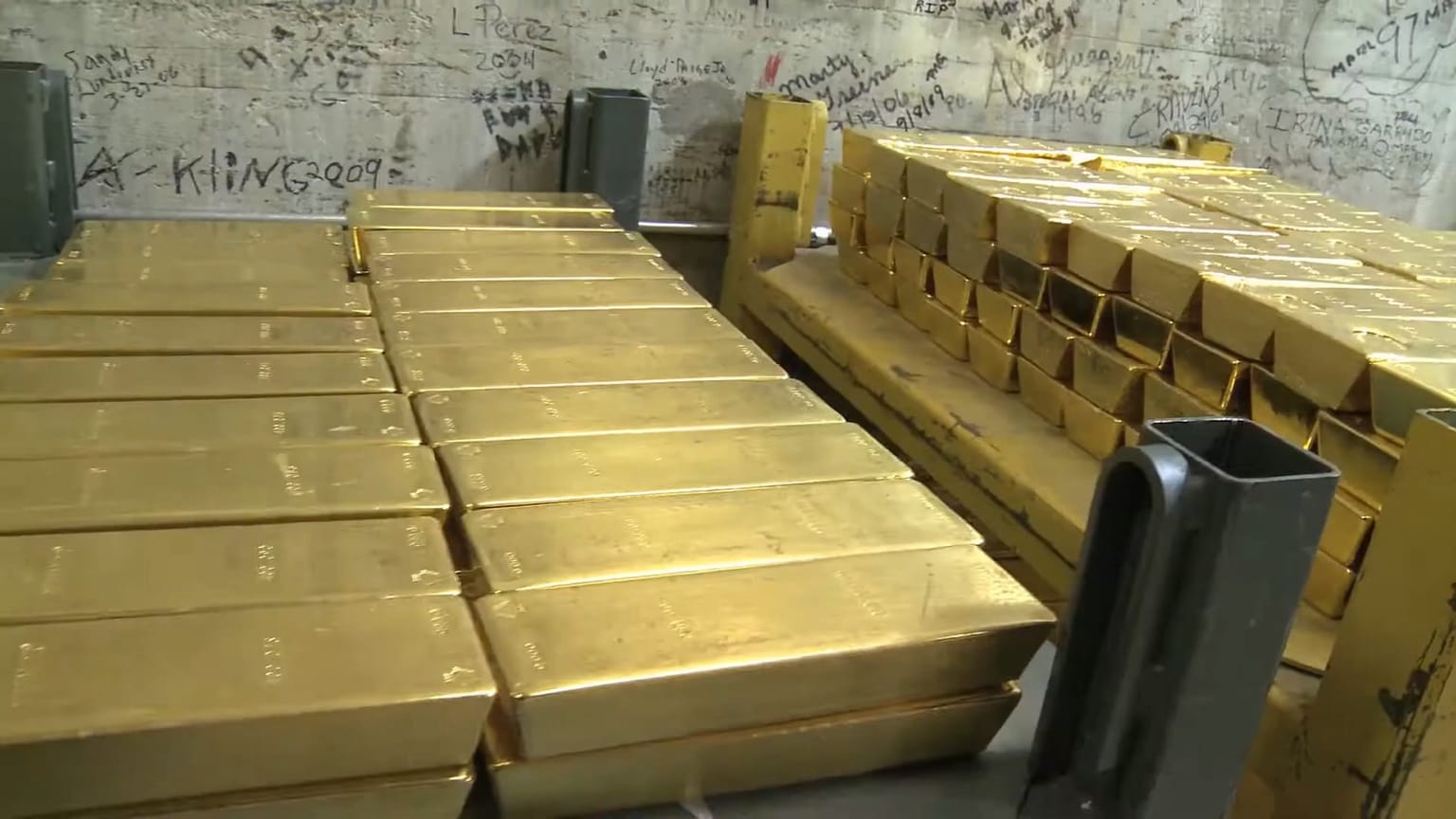
Gold is falling because a 10-year Treasury now pays about 5.16 percent, and a bar of gold pays nothing. Spot gold closed Friday, September 25, near 4,285 dollars, about 2.1 percent below the prior Friday's 4,378. The front-month Comex contract settled at 4,286.20 dollars, down 2.27 percent on the week, and Dow Jones Market Data counted that as the fourth down week in five. The same week, bitcoin held up. This is the mechanism, then the week's numbers. It is not a recommendation.
- Spot gold Friday close about $4,285, roughly -2.1% from $4,378. Comex front month $4,286.20, down four of the past five weeks
- The 10-year finished the week at 5.16-5.18%, the highest area since 2007. The 10-year real yield rose from 2.68% to about 2.83%
- WTI fell from $100.30 to $92.41 in the same week. Gold fell with it
- Bitcoin was about $84,835 on Sunday after a week in which US crypto ETFs took about $3.04 billion
- Wednesday's August PCE at 12:30 UTC is the next test of that real yield
The 5 Percent Rival
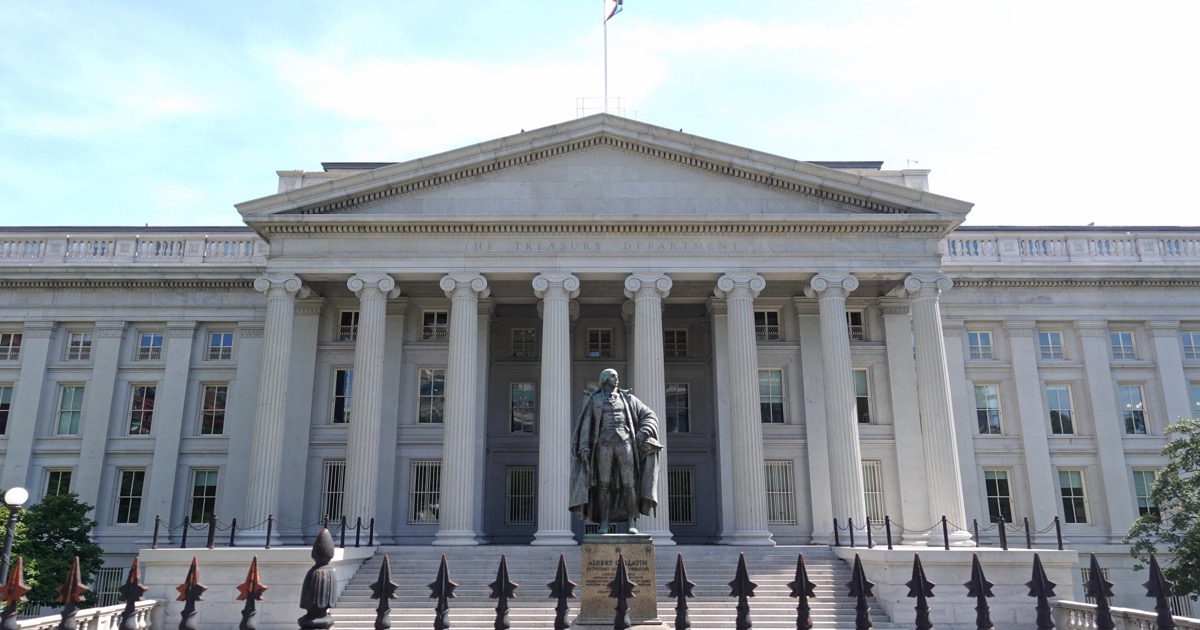
Gold has no coupon, no dividend, and no maturity. The return for holding it is the change in the price, plus whatever insurance value a holder assigns to a bar that is nobody's liability. A Treasury note is the other side of that choice. On Friday the 10-year yield was about 5.163 percent (CNBC), after Thursday's constant-maturity print of 5.18 percent on FRED. Morningstar, citing Dow Jones, put the week's high at 5.180 percent, the highest since July 6, 2007.
The path into that print was short. FRED shows the 10-year at 5.01 percent on Friday, September 18, then 4.96 percent on Monday and Tuesday, 5.11 percent on Wednesday after the hot flash PMIs, and 5.18 percent on Thursday. Wednesday's S&P Global flash composite PMI was 58.4, a multi-year high, and October rate-hike odds on FedWatch finished Friday around 64 to 66 percent. The Fed already hiked on September 16, to a 3.75-4.00 percent funds range. The next decision is October 28. Catch up: Wednesday's evening review and Sunday's weekend recap.
Every tenth of a percent on that note is income a gold holder does not receive. At 5.16 percent, a 10-year compounds to a large gap over five or ten years if the gold price stands still. Holders who bought gold as a debasement hedge are now looking at a risk-free coupon they last saw in 2007. The long end was already high before this week. Treasury buybacks have not capped it. The funding picture is in Saturday's debt piece.
Real Yields Did the Work
The yield that maps onto gold more cleanly than the headline 5 percent is the real yield: the 10-year Treasury yield minus expected inflation, observed directly as the yield on 10-year TIPS. If the nominal yield rises because inflation expectations rise, gold can rise with it, because the metal is a claim on a real thing. If the nominal yield rises because the real yield rises, the cost of holding a bar went up and the inflation story did not.
That is this week. The Fed's H.15 series put the 10-year real yield at 2.68 percent on September 18 and 2.85 percent on September 24. Treasury's par real curve put Friday, September 25, at 2.83 percent. The inflation breakeven, nominal yield minus that real yield, stayed near 2.34 percent. The extra yield investors demanded was a real yield, about 15 basis points on the week, not a jump in expected inflation.
Oil tells the same story from the other side. West Texas Intermediate settled Friday at 92.41 dollars, down from 100.30 dollars the Friday before (MarketWatch). Gold fell in that same week. A week in which the metal was trading a Strait of Hormuz scare would have shown gold firm while crude was still elevated. Crude gave back about eight dollars, and gold gave back about 90. The two markets agreed on the direction. The bond market set it.
Comex gold is also well off the January high. Dow Jones put the front-month contract 19.41 percent below the 5,318.40 dollar settlement of January 29, 2026, and still 7.54 percent above the July 16 settlement low of 3,985.60 dollars. This week's loss is a real-yield week inside a larger drawdown, not a crash through the summer floor.
- Gold pays no coupon. Friday's 10-year paid about 5.16%
- The 10-year real yield rose from 2.68% (Sep 18) to 2.83-2.85%. Breakeven inflation stayed near 2.34%
- WTI $100.30 to $92.41. Gold fell in the same week, so the week's tape lined up with yields
- Comex gold is about 19% under the January 29 settlement of $5,318.40
The Tape That Held: Bitcoin's ETF Week
Bitcoin did not follow the bar. On Sunday, September 27, bitcoin last printed about 84,835 dollars (TradingView), up about 5.5 percent from the prior Sunday's roughly 80,389. US funds tied to bitcoin, ether, Solana, XRP and Zcash took in about 3.04 billion dollars from Monday through Thursday, according to SoSoValue via ProCoinNews. Bitcoin products took 2.25 billion of that, including about 999 million on Monday. Those flow figures stop on Thursday. The Sunday price is a 24-hour print, not a cash close. Live levels sit on the homepage, and the running tally is on ETF flows.
The split is the point. A debasement bid can stay in a wrapper that has a daily creation flow. A gold bar has no equivalent inflow pipe, and it now competes with a 5 percent coupon. Bitcoin can still fall if those ETF flows reverse. Last week they did not, and the yield spike hit the metal harder than the coin. That is a one-week fact, not a law.
GLD, Spot Gold, and Miners
The price is one number. The wrapper changes how a holder feels it.
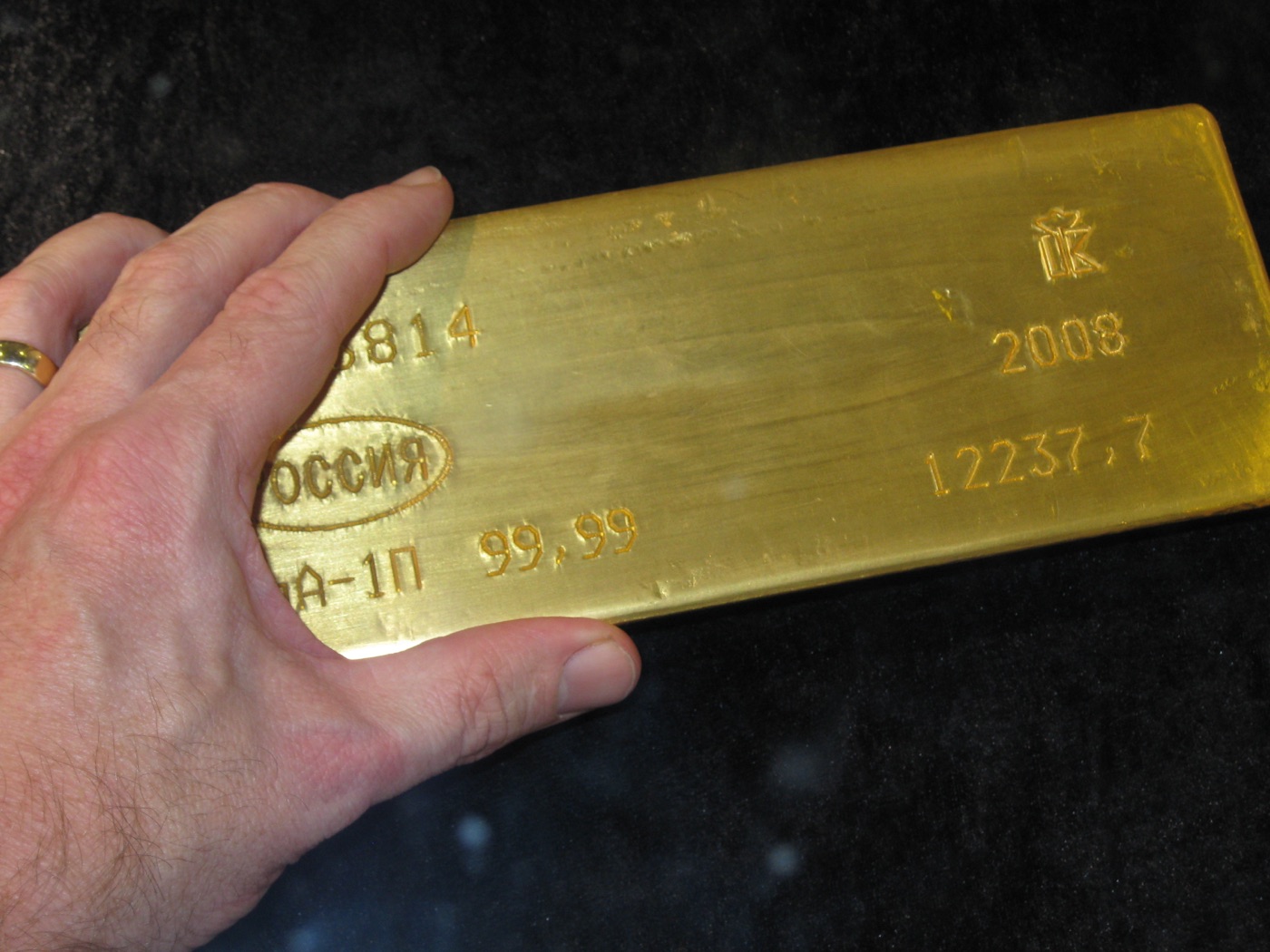
GLD and IAU are grantor trusts that hold bullion. They are built to track the spot move, minus the trust's expense ratio. A 2 percent week in the bar is about a 2 percent week in the share, on top of whatever premium or discount the share trades at. They do not start paying a coupon because the 10-year hit 5 percent. In a real-yield spike they keep losing ground to a Treasury bill or a short Treasury fund, because the Treasury pays and the share does not.
XAU/USD is the same spot price in a margin account. The macro story is identical. The path is not: leverage means a 2 percent week in the metal is a much larger week in the account. The bracket for trading that pair, without a signal attached, is in the gold vehicle guide.
Miners, including a basket such as GDX, add a second bet. They own the metal through equities, so they carry gold, the stock market, and the cost of capital. When the 10-year and the dollar rise together, that second bet usually falls harder than the bar. This piece does not pin a miner percentage for the week. The mapping is the one to remember: bullion tracks the real yield, miners track the real yield plus the equity tape.
What Wednesday's PCE Does to This
The next real-yield test is already on the clock. The August personal income and outlays report, which contains the PCE price index the Fed targets, is due Wednesday, September 30, at 12:30 UTC. Newsquawk's week-ahead cluster looks for headline PCE at about +0.4 percent on the month, with the annual rate unchanged at 3.7 percent, and core PCE at about +0.3 percent on the month, annual rate unchanged at 3.3 percent. July left core at +0.2 percent on the month and 3.3 percent on the year. The docket is on the economic calendar.
A hotter core print raises the odds of another hike on October 28 and gives the real yield a reason to hold the 2.8 percent area or push higher. That is a heavier opportunity cost for gold. A cooler core print, something back at +0.2 percent or below, tells the bond market the September hike is getting traction and gives the real yield room to slip. Gold's response follows that yield, with a lag of minutes rather than a new story about the Strait. Friday's payrolls, consensus near +100,000 with unemployment at 4.1 percent, are the second test. The release mechanics are in the NFP guide and the CPI guide. PCE is the Fed's preferred inflation gauge. CPI is the one households see first.
Three Paths From $4,285
These are ways the next week can resolve. They are not entries.
Hot PCE, real yield holds. Core at +0.4 percent or the 10-year sticks in the 5.20 percent area that desks traded on Thursday. Gold then has to defend the mid-4,200s. Saxo's Ole Hansen told Kitco he is watching about 4,235 dollars, with a break opening a conversation about the 4,000 area from June and July. That is his level, not a forecast from this desk.
An in-line PCE. Core near +0.3 percent and the annual rate stuck at 3.3 percent. Gold can chop between Friday's 4,285 dollar close and the prior Friday's 4,378, with the real yield doing the work inside that range. A 10-year that stays between 5.10 and 5.20 percent fits this path.
A cooler PCE, or a real supply shock that also eases real yields. Core at +0.2 percent or softer, or a jump in crude that investors treat as growth-negative enough to pull the real yield down. Gold then has a path back through 4,378 and toward the 4,400 area it tested earlier in September. A crude spike on its own, with the real yield still rising, does not complete this path. Last week already showed a firm oil price and a falling gold price in the same tape.
- Wednesday 12:30 UTC: August PCE. Consensus cluster about +0.3% core on the month, 3.3% on the year
- Watch the 10-year real yield (DFII10), not only the 5.16% headline
- Friday's $4,285 is the pivot. Hansen's cited shelf is about $4,235. The prior Friday was $4,378
- Friday 12:30 UTC: September payrolls, the second test after PCE
Gold is falling because the alternative got paid. A 5.16 percent 10-year, with the real yield up to about 2.83 percent, is a direct cost of holding a 4,285 dollar bar. Oil's eight-dollar fade in the same week shows the metal was trading that cost. Bitcoin's ETF week shows a different wrapper can still attract flow while the bar does not. Wednesday's PCE is the next print that can move the cost.
ThriveInMarkets publishes market commentary for general information only and does not provide personal investment advice. Gold, oil, and Treasury figures are Friday closes or official daily yields for September 25, 2026, except where a Thursday FRED print is labeled. Bitcoin is the Sunday, September 27, 09:04 UTC level from the weekend recap. Levels cited are observations, not instructions to buy or sell any asset.