The Strait That Broke Markets
One waterway is running the show. The Strait of Hormuz - the narrow chokepoint between Iran and Oman through which roughly 20% of the world's oil supply flows - has been under Iranian military control since late February. Today, Tehran confirmed what markets feared: there is no ceasefire coming. Iran's foreign ministry flatly denied reports of peace talks, and President Trump signalled the US could escalate strikes over the next two to three weeks.
The result? Brent crude hit $112.42 per barrel by Friday morning - up 52% from a year ago and 41% from just one month back. Goldman Sachs and Bloomberg have modelled scenarios where sustained Hormuz closure pushes Brent toward $150-$170, a stagflationary shock that would fundamentally reprice everything from Fed rate expectations to corporate earnings.
What started as a regional conflict on February 28 is now a global macro regime change. Energy markets, inflation expectations, and risk asset prices are all recalibrating around a single geopolitical variable that nobody fully controls.
Gold: The $100 Whipsaw That Told You Everything
Gold had one of its wildest sessions in months on Thursday, and Friday's price of $4,672 tells only half the story. The metal crashed from around $4,700 to $4,600 intraday after US interest rates spiked sharply on the back of Trump's speech hinting at further military escalation against Iran. The logic: more war = more inflation = Fed stays higher for longer = dollar strengthens = gold gets hammered.
Then came the snap back. Gold reclaimed $4,672 as safe-haven demand reasserted itself - because the other side of "more war" is "more geopolitical uncertainty," which historically supports gold. The metal is now caught between two competing forces: a stronger dollar (bearish for gold) and genuine fear (bullish for gold). The result is violent two-way price action that's making clean directional trades nearly impossible.
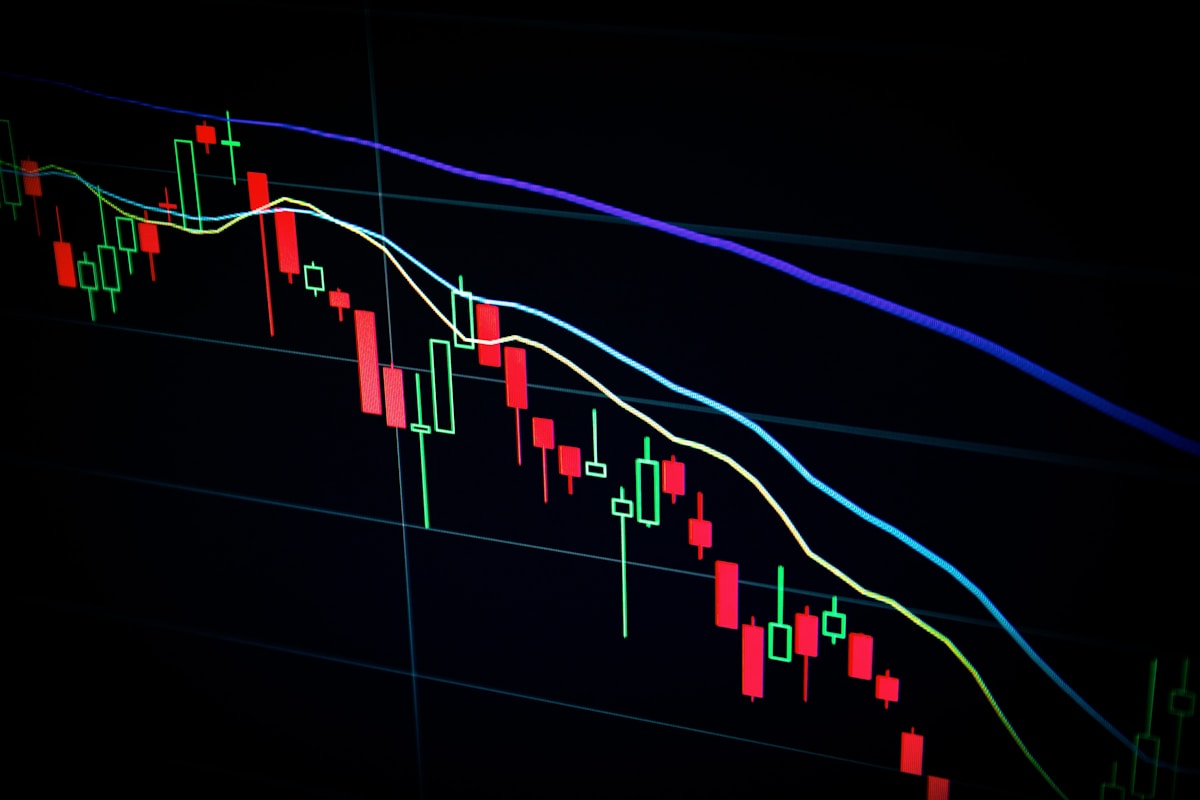
Gold crashed to $4,600 Thursday on a rate spike before recovering to $4,672 - a $100 intraday whipsaw driven by competing safe-haven and dollar dynamics
Key levels to watch: $4,550-$4,600 is support. A break below risks a test of the cycle lows near $4,200-$4,300. On the upside, $4,750-$4,800 is resistance. A sustained break above that zone - particularly above the 50-day EMA - would signal bullish momentum is back. Until then, position sizing needs to be tight. One tweet can move this market $100 in minutes. Also note: futures markets are closing early on Friday for Good Friday. Liquidity thins out fast.
Since the Iran conflict began on February 28, gold has lost approximately 13% of its value - a counterintuitive outcome driven by dollar strength and rising real rates. But the metal has found a base in the $4,200-$4,300 range and is building a sequence of higher lows. Long-term, the case for gold remains intact. Short-term, this is a headline-driven market that punishes overconfidence.
Bitcoin: Holding $66K as Extreme Fear Grips Crypto
Bitcoin is trading at $66,797 with a modest 0.19% decline on the day. Volume remains decent at $28.3B in 24-hour turnover. Ethereum is at $2,049, down 0.40% on $11.5B volume. Neither is crashing, but neither is recovering either. The Crypto Fear and Greed Index printed 9 - Extreme Fear today, its lowest reading in months.
The macro picture explains the stasis. With oil above $112 and Iran blocking Hormuz, inflation expectations are elevated. The Fed has zero political room to cut rates into an oil shock - and markets know it. Rate-sensitive assets like crypto are stuck in a holding pattern until either the geopolitical situation resolves or the Fed blinks. Neither looks imminent.
A $2.15 billion options expiry on Deribit passed today with max pain near $68,000. BTC stayed below that level, which favoured short-side options players. The next significant on-chain catalyst to watch is the NFP print tomorrow morning - if jobs come in soft, rate cut expectations could revive and give crypto a short-term bid. But don't count on it.
S&P 500: Calm on the Surface, Fragile Underneath
The S&P 500 ended Thursday at 6,582.69, up a marginal 0.11%. On paper, not bad. In reality, the index has been grinding sideways for weeks, and the fragility underneath is palpable. The Dow barely moved, the Nasdaq added 0.18%, and the Russell 2000 - the small-cap barometer that tends to lead turning points - has already entered bear market territory, down over 6% in recent sessions.
The oil shock is the key threat to equities. Energy costs flow directly into corporate margins, and transportation, manufacturing, and consumer discretionary sectors feel it fastest. Airlines are particularly exposed. At $112 Brent, airline fuel bills are running roughly 60-70% above year-ago levels. That is not a headwind. That is a face-plant.
On the positive side, energy stocks are printing money. XLE (Energy Select Sector SPDR) has been a standout performer in 2026. Companies like ExxonMobil, Chevron, and ConocoPhillips are benefiting directly from elevated crude. If oil stays above $100, energy remains the defensive play - it's one of the few sectors where high prices are a feature, not a bug.
Tomorrow's Economic Calendar - April 4, 2026
Friday is packed with high-impact data. Good Friday means early closes for many markets, so liquidity drops significantly into the afternoon.
- 13:30 UTC - US Non-Farm Payrolls (March): Forecast 135,000 jobs added. Previous: 151,000. Unemployment expected to hold at 4.4%. Wage growth forecast at 0.3% MoM / 3.7% YoY. This is the week's biggest macro print. A miss to the downside revives Fed cut bets and could spark a short-term rally in crypto and gold. A beat keeps the hawkish narrative intact.
- 13:30 UTC - Average Hourly Earnings (March): Forecast +0.3% MoM. Hot wages would add to inflation concerns and strengthen the dollar.
- 13:30 UTC - US Unemployment Rate (March): Forecast 4.4%. Any uptick above 4.5% would significantly shift the rate outlook.
- Ongoing - Iran/Hormuz situation: Trump flagged potential intensified strikes in the "next two to three weeks." Any weekend escalation will gap markets on Monday open. Watch oil futures Sunday night.
- Early close - US futures markets: Good Friday. Expect thin liquidity after the NFP print. Spreads widen. Move carefully.
Stocks and ETFs to Watch
- XLE - Energy Select Sector SPDR ETF: The cleanest way to ride the oil surge. Holds ExxonMobil, Chevron, ConocoPhillips, EOG Resources. At $112 Brent, this is where the money is flowing. Watch for a continued breakout if oil holds above $110.
- XOP - S&P Oil and Gas Exploration and Production ETF: Higher beta than XLE. If you want more leverage to the oil price move without single-stock risk, XOP is the play. Up significantly in 2026 as exploration margins expand.
- VDE - Vanguard Energy ETF: Broader energy exposure with a lower expense ratio. Solid for longer-term energy positioning.
- LMT - Lockheed Martin / RTX - Raytheon: Defense names have been quietly bid as military spending rises during the Iran conflict. A prolonged war scenario continues to support the entire defense complex.
- USO - United States Oil Fund: Direct crude exposure. Useful for short-term tactical plays around NFP and weekend geopolitical risk.
- GLD / IAU - Gold ETFs: If you're not running direct XAU/USD exposure, these are the liquid gold proxies. Watch for a break above $4,750 as the signal to add.
The Bottom Line
The Strait of Hormuz is the world's most important 21-mile stretch of water right now, and it is closed. Oil at $112 is not a prediction anymore - it is a fact. Gold is volatile but building a base. Bitcoin is in Extreme Fear but holding key levels. And the S&P 500 is a stock-picker's market hiding under index-level calm.
Tomorrow's NFP is the one number that could shift the near-term narrative. Weak jobs data gives the Fed an excuse to pivot, gives crypto a bid, and gives gold a clean run at $4,750. Strong data does the opposite. Either way, trade carefully into a low-liquidity Good Friday. The moves can be fast and mean-reverting when the big hands step back.
The geopolitical clock is ticking. Trump said two to three more weeks of potential escalation. Markets will price that in one headline at a time.