1. Project Freedom Launches: 100+ Aircraft, 15,000 Troops, Destroyers in Hormuz
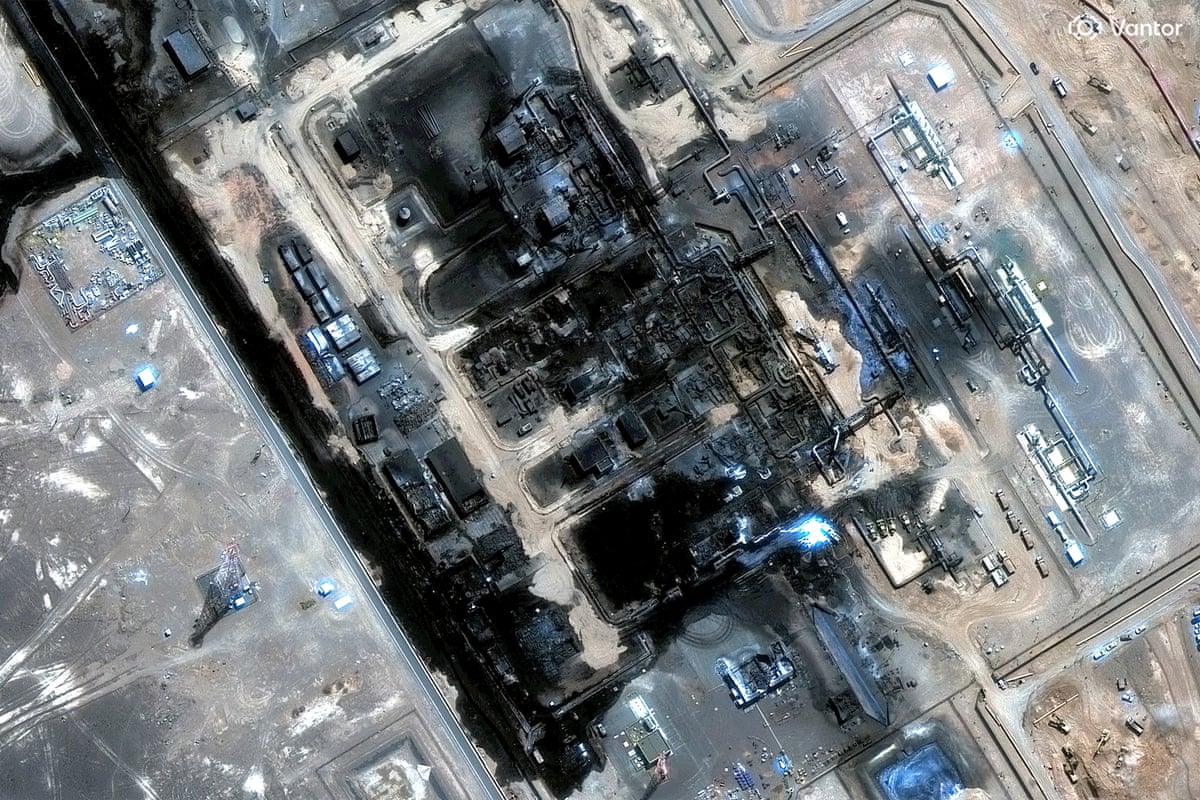
The week opens on a hard pivot. US Central Command (CENTCOM) began Project Freedom on May 4, the Trump administration's military escort mission to restore commercial navigation through the Strait of Hormuz after roughly nine weeks of effective Iranian blockade. The footprint announced by the Pentagon is heavy: guided-missile destroyers, more than 100 land and sea-based aircraft, multi-domain unmanned platforms, and 15,000 service members. The stated mission is to escort merchant vessels through the strait that has been closed since February 28, 2026, when the US-Israel air war on Iran killed Supreme Leader Ali Khamenei and Tehran responded by mining and seizing the chokepoint. Approximately 20,000 seafarers remain stranded on roughly 2,000 ships in Gulf waters.
Iran's Armed Forces General Staff issued an immediate warning that any "aggressive action by America to disrupt the situation will only result in further complication and endangerment of the security of vessels," with state media adding that US ships acting as escorts will be treated as legitimate targets. The Hormuz reopen is therefore not yet priced. The market response so far has been a fade rather than a relief rally: WTI is trading $101.62, down roughly 4% from Friday's $105.71 close, as the curve takes some risk premium back on the prospect of partial reopen, but Brent and physical traders are pricing the operation as contested rather than resolved. The escort mission is meaningfully different from a ceasefire: ships still have to transit a waterway that Iran retains the ability to mine and target, with US naval assets now in the threat envelope.
- CENTCOM began Project Freedom Monday: 100+ aircraft, 15,000 troops, guided-missile destroyers escorting Hormuz traffic
- ~2,000 ships and ~20,000 seafarers stranded in Gulf waters since Feb 28 closure
- Iran warned US escort ships will be treated as legitimate targets; the reopen is contested, not resolved
- WTI -4% to $101.62 on the partial-reopen read; physical curve still pricing disruption
- The structural difference: an escort mission is not a ceasefire, US naval assets now in the threat envelope
2. Palantir Q1 After the Close: $1.54B Revenue Bar, Options Pricing 10% Swing
The earnings calendar takes the relay tonight. Palantir (PLTR) reports Q1 2026 after the close at 21:00 UTC, the highest-profile pure-play AI software print of the cycle and the first read on whether enterprise AI monetization is keeping pace with the hyperscaler capex bill. Wall Street consensus is for revenue of $1.54 billion (+74% YoY) and EPS of $0.28 (+115% YoY). The bar is high. Bespoke data shows Palantir has topped earnings estimates 90% of the time, but the stock averages just a 1.1% gain on print days, and PLTR is already down 19% year-to-date on valuation concerns despite a US-led AI capex tailwind that, per Friday's analysis, just exceeded $700 billion across the four hyperscalers.
The options strip is pricing a 10.55% post-print move in either direction, the largest implied move on a Palantir print since IPO. The watch items are the US commercial AI Platform (AIP) growth rate (consensus 94% YoY), full-year 2026 guidance (Palantir typically updates guidance with Q1), and government contract booking pace against the post-Hormuz defense priority shift. The shares trade roughly $144 into the print versus the $180s peak, leaving room either way. Reference zones for the post-print read: a hot guide reopens the $160-$170 zone; an in-line print likely keeps PLTR ranging $135-$150; a soft commercial growth number tests the $130 February swing low.
- Palantir Q1 reports after close (21:00 UTC): consensus $1.54B revenue (+74% YoY), $0.28 EPS (+115%)
- Options pricing 10.55% move; largest implied print move since IPO
- Watch: commercial AIP growth (94% est), FY26 guide update, government booking pace post-Hormuz
- PLTR -19% YTD on valuation; trading $144 vs $180s peak
- Reference zones: bullish above $160 on hot guide, bearish below $130 on soft commercial
3. AMD Tuesday, Disney Wednesday, NFP Friday: The Calendar Stack
Palantir is the opener; the calendar is loaded behind it. AMD reports Tuesday after the close with consensus at $1.29 EPS (+34% YoY) on $9.89B revenue (+33% YoY). The market wants MI300X traction details and TSMC capacity allocation to Instinct, the AI accelerator competing with Nvidia's H200/B200 line. Bespoke notes AMD beats estimates 62% of the time but fell 17% last quarter despite topping both top and bottom lines, so the bar is the guide, not the print. Disney prints Wednesday morning alongside Uber; April nonfarm payrolls drop Friday at 12:30 UTC with consensus at 49,000 jobs added and 4.3% unemployment, the softest payroll print of the cycle if it lands.

The macro setup into NFP is the inversion of the late-March print. The Friday core PCE acceleration to 3.2% already moved the rate strip toward September as the cut window. A 49K NFP would reinforce the stagflation framing (weak labor + sticky inflation) and shorten the cut path; a 100K-plus surprise would push the cut back into Q4. ISM Services PMI prints Tuesday at 14:00 UTC with consensus at 52 (versus 54.0 in March). JOLTS drops Tuesday and ADP Wednesday as NFP previews. The Fed is in blackout through the data week with no FOMC speakers scheduled.
- AMD Tuesday after close: $1.29 EPS, $9.89B rev consensus; the guide matters more than the print
- Disney + Uber Wednesday; consumer-side Mag 7 follow-through
- April NFP Friday 12:30 UTC: consensus 49K, 4.3% unemployment; softest of cycle if it lands
- ISM Services Tuesday 14:00 UTC consensus 52 (vs March 54.0); JOLTS Tue, ADP Wed as NFP previews
- Fed in post-FOMC blackout through the data week
4. S&P Futures 7,265 at Records, BTC $79.7K Holds Range
Risk into the open is bid. S&P 500 ES futures trade 7,265 in overnight, up roughly 0.10%, after the cash index closed at a fresh all-time high Friday. April finished as the strongest month for US equities since 2020, driven by the Mag 7 superweek that punished aggressive capex (META -9% on the week) but rewarded AI monetization wins (GOOGL +10%, AAPL +3%). The structural read: the index is climbing the wall of an Iran war, sticky inflation and a softening labor tape because earnings keep beating and AI capex keeps lifting forward EPS. Bullish trigger remains a hold above 7,200; bearish trigger remains a daily close below 7,100; structural floor sits at the 7,000 prior breakout.
Bitcoin trades $79,714 (+0.13%), holding inside the upper half of the $75K-$80K April range. ETH lifts to $2,361 (+1.68%), the cleanest spot move of the morning. The crypto setup is dominated by ETF flow recovery: US spot Bitcoin ETFs pulled $3.29 billion over the past two months, taking cumulative net inflows since launch to $58.72 billion versus the October peak of $61.19 billion. April alone delivered $2.44 billion of inflows, the strongest institutional month since October 2025, with BlackRock's IBIT booking a $284M single-day on May 1. Reference zones unchanged: $75,000 April daily-close floor, $80,000 cycle resistance, with a sustained reclaim of $80K opening the $84K-$85K extension. ETH bullish trigger is a daily close above $2,400; structural pivot remains $2,200.
- ES futures 7,265 ATH-bid; April was the strongest US month since 2020
- Index climbing the wall of war + sticky inflation + soft labor on AI EPS lift
- BTC $79,714 (+0.13%), upper half of $75K-$80K range; $80K still cycle resistance
- BTC ETF inflows $3.29B over two months; cumulative $58.72B vs $61.19B Oct peak
- April BTC ETF inflows $2.44B, strongest since Oct 2025; BlackRock $284M on May 1
5. Gold Eases to $4,615, WTI Triangle Compresses Between $90 and $110
The two inflation hedges are both giving back small ground into the open. Gold trades $4,615, down approximately 0.54% from Friday's $4,640 close, as the partial-Hormuz read pulls a touch of geopolitical premium out of the metal even with real yields still compressed. Reference zones unchanged: $4,500 remains the structural floor at the March 12 swing low; $4,700-$4,780 is the bullish re-engagement zone if Hormuz stays contested or core PCE stays sticky. Below $4,500 the next visible support is $4,400.
WTI is the cleaner read. The fade from $111 last week to $101.62 this morning describes a symmetrical triangle compressing between $90 and $110 on the daily, with the lower boundary defending and the upper boundary capping every attempt to reprice the Hormuz disruption higher. The triangle resolves on the news. A successful Project Freedom convoy through the strait pulls the floor to $95 and opens a test of the $90 March pivot; an Iranian strike on US escort ships reopens the $112-$115 extension and puts the $120 cycle marker back in play. Brent runs roughly $3-$5 above WTI through the operation. The structural Hormuz framework remains intact and the market is sitting on its hands until either the convoy clears or it gets shot at.
- Gold $4,615 (-0.54%); structural floor $4,500, bullish zone $4,700-$4,780
- WTI $101.62 in symmetrical triangle bounded $90-$110 on daily
- Triangle resolves on the news: convoy clears = $95, then $90; convoy attacked = $112-$115, then $120
- Brent runs $3-$5 above WTI through Project Freedom
- Curve is sitting on its hands until the first convoy outcome
6. What to Watch: Today and the Stacked Week
Today is light on US data and heavy on positioning. 14:00 UTC: Factory Orders for March, the only Tier 1 print before the bell. 21:00 UTC: Palantir Q1 earnings, with the call at 21:30 UTC and FY26 guide the focal item. The full week stack: Tue ISM Services + JOLTS + AMD after close; Wed ADP + ISM-Services Employment subindex + Disney/Uber pre-market; Thu jobless claims + productivity; Fri April nonfarm payrolls at 12:30 UTC. Project Freedom outcomes will print live through the week and reprice the oil curve in real time.
Reference levels into the open are clean. The framework is the framework: levels for risk management, scenario reads for direction, discipline to wait for both before acting. For the structural week-by-week reads, see the market insights feed and the full economic calendar for catalyst timing.
- S&P 500: ES futures 7,265 ATH, bullish above 7,200, bearish below 7,100, structural floor 7,000
- WTI: $101.62 in $90-$110 triangle; convoy clears = $95, attacked = $112-$115
- Gold: $4,615, $4,500 structural floor, $4,700-$4,780 bullish re-engagement zone
- BTC: $79,714, $75K April daily-close floor, $80K cycle resistance, $84K-$85K on reclaim
- ETH: $2,361, $2,200 pivot, $2,400 bullish trigger, $2,500 dovish re-engagement
Nothing in this analysis is investment advice or a personal recommendation. These are structural reference points and macro context for traders who already understand position sizing and risk management. The framework is the framework: levels for risk, scenario reads for direction, discipline to wait for both before acting.