War Flares: US Strikes Iran, Oil Jumps Past $92
The cross-asset story into the first full European session of June is a geopolitical one. The United States said Monday that it struck radar and drone sites inside Iran after Tehran shot down an American drone over the weekend, a sharp escalation that reignited the Strait of Hormuz risk premium that had only just begun to fade. WTI front-month crude jumped roughly 6 percent to about $92.42, after spiking as much as 8 percent intraday, its sharpest move in weeks per Trading Economics. The move flips the script on a brutal May, when WTI fell roughly 16 percent for its worst month since 2020 on a reported framework to reopen the Strait of Hormuz, as we covered in our June 1 morning analysis. Shipping traffic through the strait, which carries about a fifth of the world's oil, has run far below pre-war levels since the late-February conflict per the running crisis timeline. Reference structure: the war premium rebuilds while WTI holds above the $88 zone from late May; a sustained hold above $92 keeps the structure firm toward the $95 area, while a credible de-escalation headline would soften the bid back toward the high $80s.
- US struck radar and drone sites in Iran after Tehran downed a US drone
- WTI ~$92.42 (+5.8%), spiking as much as 8% intraday
- The strike revives the Strait of Hormuz risk premium that had been fading
- Oil had fallen ~16% in May, its worst month since 2020
- Reference: premium holds above $88; a firm $92 points toward $95
Wall Street Holds Records as Nvidia Offsets War Fears
The remarkable part of the tape is what did not happen: stocks did not break. Wall Street closed Monday June 1 at fresh record highs even as oil spiked and the war flared, with the S&P 500 adding 0.26 percent to a record 7,599.96, the Nasdaq Composite rising 0.42 percent to 27,086.81 and the Dow Jones Industrial Average up 46.42 points to 51,078.88 per TheStreet. The offset was Nvidia, which climbed more than 6 percent after unveiling its Arm-based N1X PC chip at Computex, the launch we detailed in yesterday's analysis, with AI optimism doing the heavy lifting against the energy shock. For June 2, US equity futures slipped modestly on what Bloomberg called war confusion, with ES futures hovering near 7,610 overnight ahead of the US cash open. Reference: the backdrop stays constructive above the 7,599.96 record close; the first structural test sits at the 7,500 round number, with the prior consolidation floor near 7,463.
- S&P 7,599.96 June 1 record; Nasdaq 27,086.81, Dow 51,078.88
- Stocks held records despite the oil spike and war headlines
- Nvidia +6% on the N1X chip launch carried the tape
- June 2 futures slipped on war confusion, ES near 7,610 overnight
- Reference: constructive above 7,600, first structural test at 7,500
Bitcoin Slides Toward $70K on a Record ETF Exodus
Crypto remains the weak corner of the cross-asset tape, and the selling intensified. Bitcoin trades approximately $70,033, down about 2.9 percent over 24 hours, sliding below the $71,400 level toward the psychologically important $70,000 mark per CoinDesk and the TradingView tape. The driver is a record institutional exodus: US spot bitcoin ETFs logged an eleventh straight session of net outflows totaling about $3.45 billion, the longest stretch of net redemptions since the funds debuted in January 2024, with BlackRock's IBIT and Fidelity's FBTC leading the selling. The higher oil tape and firmer dollar are compounding the pressure as institutions de-risk into the jobs week.
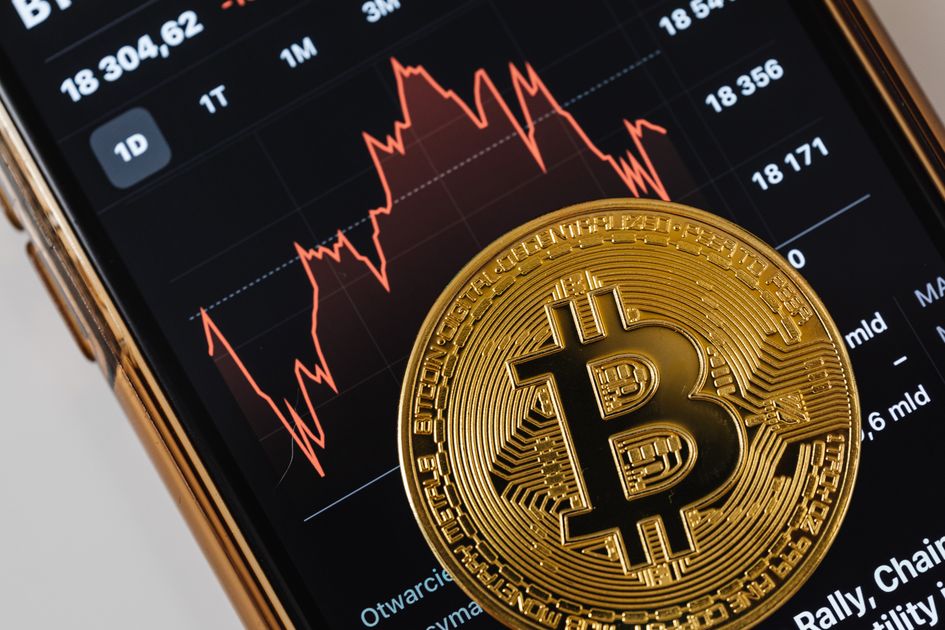
Ethereum lingers near $1,979, down about 1.9 percent and the relative laggard among the majors. Reference structure: BTC structural support sits at the $70,000 round number and the $68,700 zone below; a reclaim of $74,000 would begin to repair the breakdown, while a clean loss of $70,000 opens the air pocket beneath.
- BTC $70,033 (-2.9% 24h), sliding below $71,400 toward $70K
- Eleven straight sessions of ETF outflows, ~$3.45B, a record streak
- Longest redemption run since the funds debuted in January 2024
- ETH $1,979 (-1.9%), the laggard among the majors
- Reference: BTC support $70K then $68,700; repair on a $74K reclaim
Gold Catches a Safe-Haven Bid Above $4,500
Gold is the natural beneficiary of the renewed war premium. Spot gold trades approximately $4,537, with Tuesday's range printing $4,448 to $4,546 and an open near $4,539, holding firmly above the $4,500 mark as the US strikes on Iran revived safe-haven demand. The metal had cooled through late May as the ceasefire framework faded the war premium, but Monday's escalation flipped the bid back on. The macro backdrop stays restrictive at the same time: the hot April PCE print keeps a near-term Federal Reserve cut difficult under new Chair Kevin Warsh, leaving geopolitics, not rate-cut hopes, as the dominant driver of the bid. Reference frame: gold structural support sits at the $4,448 floor from Tuesday's range; a sustained hold above $4,540 keeps the structure pointed at the prior highs, while a credible de-escalation would test the bid lower.
- Gold ~$4,537, today range $4,448-$4,546, holding above $4,500
- US strikes on Iran revived safe-haven demand for the metal
- Hot April PCE keeps a near-term Fed cut difficult under Chair Warsh
- Geopolitics, not rate-cut hopes, is the dominant driver of the bid
- Reference: gold support $4,448; firm above $4,540 eyes prior highs
What to Watch: Jobs Week, War Headlines, FOMC
June 2 sits inside a jobs week, and the catalyst stack is unusually heavy. The single most important release is Friday's May employment report on June 5, the macro decider for a market trying to read the new Fed's reaction function after the 3.8 percent April PCE print. Layered on top is the live geopolitical wire: every headline on the US-Iran exchange and the status of Strait of Hormuz traffic can swing oil and, by extension, the inflation outlook for the back half of the year. The bitcoin ETF outflow streak remains the dominant crypto driver, with the eleven-session redemption run testing whether the $70,000 mark holds. The next major macro event after payrolls is the June 16-17 FOMC meeting, with the market still pricing a hold as the base case. The US cash open will set the tone roughly 75 minutes after the European afternoon, with traders watching whether AI-led equity strength can keep absorbing the energy shock.
- May payrolls Friday June 5 is the week's macro decider
- Watch every US-Iran and Strait of Hormuz headline for the oil swing
- Bitcoin ETF outflows remain the dominant crypto driver
- Key test: whether AI strength keeps absorbing the energy shock
- Next macro event: June 16-17 FOMC; a hold is still the base case
This analysis is published for general market education. ThriveInMarkets is a market commentary publisher and does not provide personal investment advice. Price levels referenced are technical reference points, not instructions to transact. Verify all prices on your own platform before any decision.