The Headline: Iran Is Charging a Toll to Cross the World's Most Important Oil Route
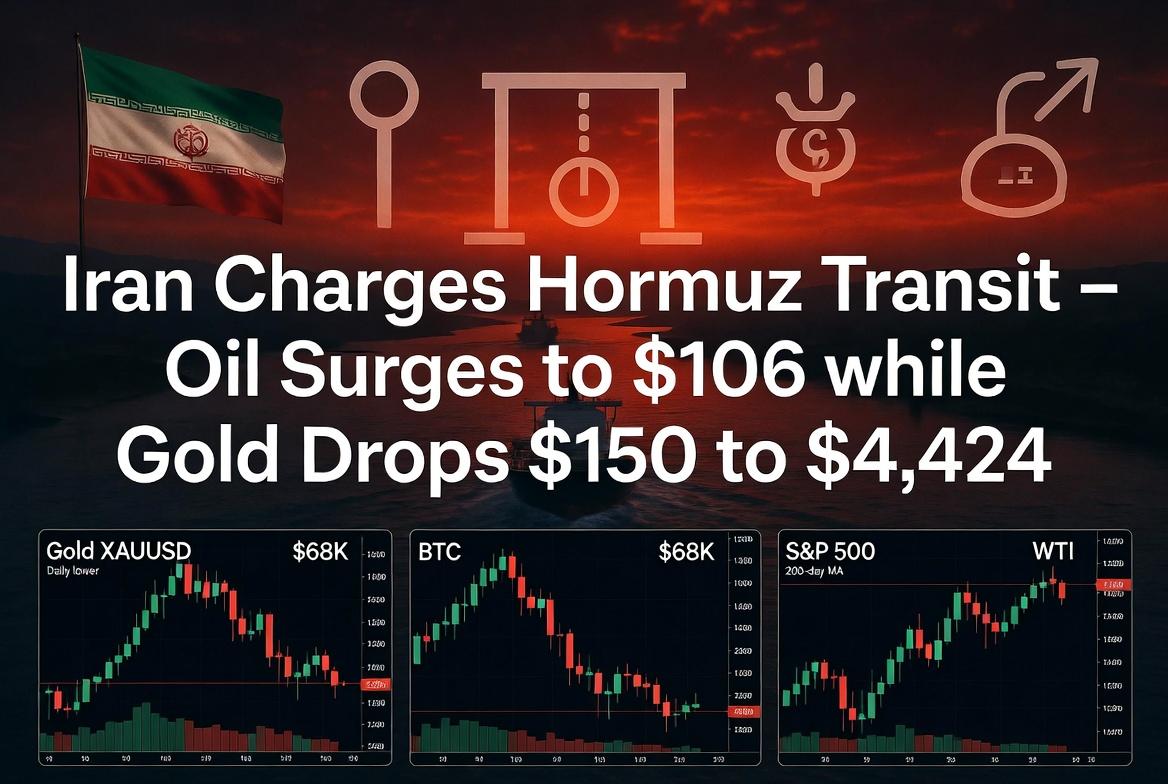
This is the story that defined Thursday's session. Iran did not merely reject Trump's 15-point ceasefire plan — it moved to institutionalize its control over the Strait of Hormuz by beginning to charge ships transit fees. A Gulf Arab bloc official confirmed that Iranian authorities have started levying tolls for safe passage through the strait, through which roughly 20% of globally traded oil and natural gas normally flows. Tehran also issued its own counter-conditions via state television: a complete halt to US and Israeli assassinations of Iranian officials, recognition of Iranian sovereignty over the Strait, reparations, and international guarantees against future conflict. None of these are conditions any US administration can accept.
At the same time, Trump's five-day pause on strikes against Iranian energy infrastructure expires Saturday. Axios reported Thursday that "a dramatic military escalation will grow more likely if no progress is made in diplomatic talks." The market spent Thursday pricing that risk — and it wasn't pretty.
The S&P 500 closed down roughly 0.91% at approximately 6,530, breaking below its closely-watched 200-day moving average for the first time since last spring. The Nasdaq dropped 1.08%. The Dow shed 394 points. Gold reversed all of Wednesday's spectacular $145 surge, dropping $149 to $4,424. BTC fell 3.31% to $68,419. The only winner was oil: WTI jumped 3.6% to $93.61, Brent surged 3.8% to $106.12.
Bitcoin: $68,419 — First Test Below $69K in Two Weeks
BTC printed $68,419, down 3.31% over the past 24 hours. The move was driven by the same macro pressure hammering equities: oil back above $90, Iran intransigence, and a US market breaking technical support. On a day like this, risk assets sell together, and BTC is firmly in that category.
The Fear & Greed Index hit 10 — Extreme Fear, a new cycle low. Context: the last time the index spent multiple consecutive days at 10-11, BTC was within 10-15% of a significant bottom in prior cycles. That is not a call — it is a data point. Sentiment this extreme rarely persists without either a flush to new lows or a violent reversal. The setup is fragile.
Derivatives data tells the same story. Futures open interest is falling, funding rates are negative, and options skew favors puts across short tenors. The market is not positioned for a rally. That is a double-edged observation: it means limited fuel for a squeeze higher in the near term, but it also means most weak hands have already sold.
Key levels overnight:
- $68,000 — round number support being tested now; a clean close below this opens $66,500-$67,000
- $69,100 — the level that needs to reclaim for the structure to stay intact
- $70,000 — psychological line; two consecutive closes below $70K is a bearish structural shift
- $65,500-$66,000 — major support zone if $68K fails
Ethereum is at $2,044, down 5.39% — underperforming BTC by a meaningful margin. ETH/BTC compression continues. Options data on Deribit shows ETH puts more expensive than BTC's across all tenors, signaling that derivatives traders expect ETH to underperform in a further selloff. Watch the $2,000 level on ETH; it held as support twice this month.
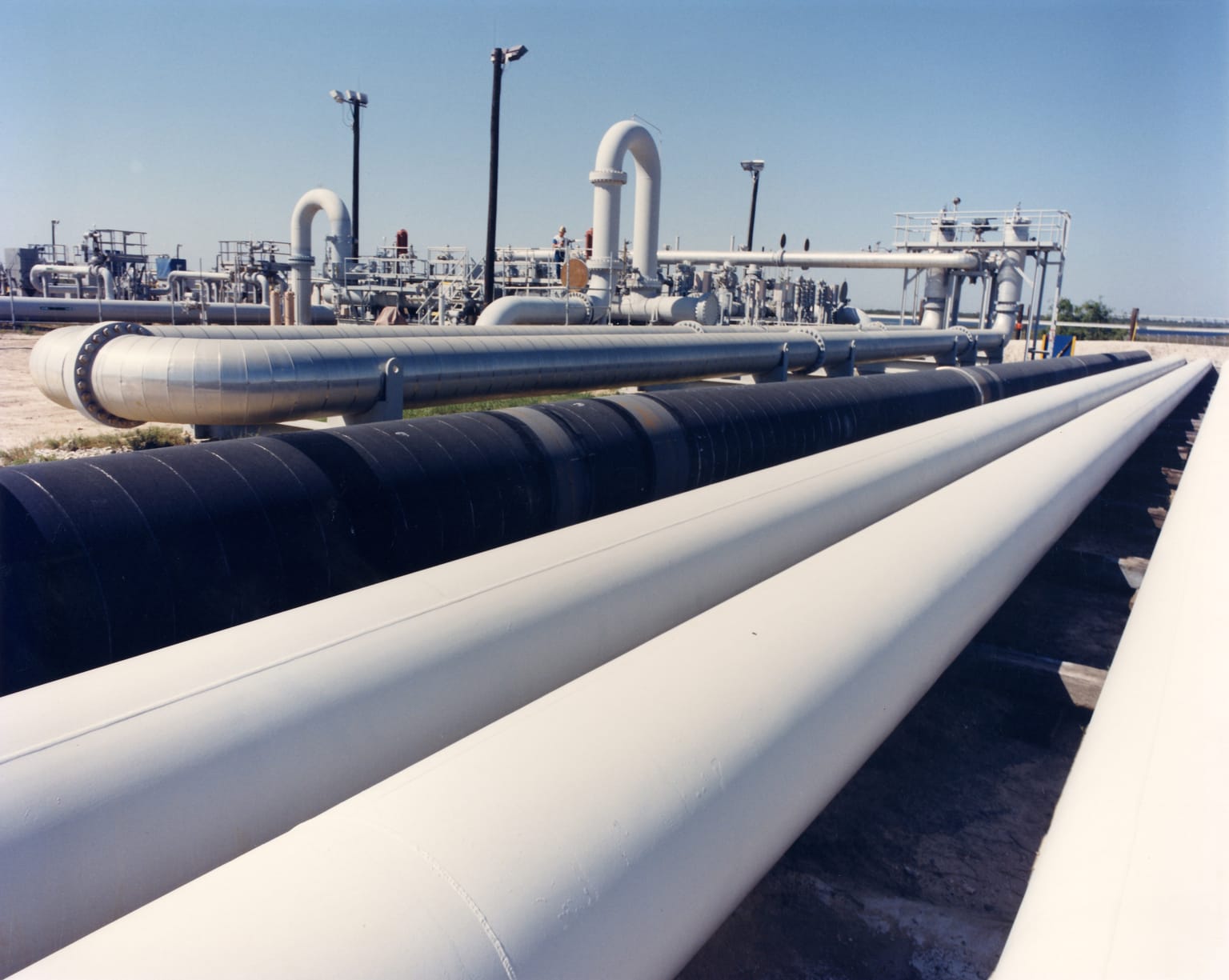
Global shipping routes disrupted as Iran charges transit fees through the Strait of Hormuz. (Unsplash)
Gold: $4,424 — Wednesday's Surge Fully Reversed
Gold's session was a near-perfect reversal of Wednesday's action. The metal opened near $4,572 (Wednesday's close) and sold off sharply throughout the US session, closing near $4,424 — a drop of roughly 3.26% or $149. Silver was hit even harder, falling 6.2% to $68. Mining stocks followed: Newmont and Freeport-McMoRan each dropped approximately 3%.
Why did gold sell off when Iran escalated? Two reasons. First, USD strengthened on risk aversion — dollars are still the global flight-to-safety default when equities break major technical levels. Second, some of Wednesday's surge was clearly speculative positioning that got squeezed out on Thursday's open when Iran's rejection headlines hit Asian markets.
The medium-term bull case for gold remains intact. The Strait of Hormuz fee structure is inflationary by design: it raises the cost of every barrel of oil that transits the strait, which is structural inflation that cannot be cured by rate hikes alone. Central banks are still net buyers. But the near-term path is choppy.
Key levels:
- $4,424 — current level; this needs to hold or the next target is $4,300-$4,380
- $4,380 — Wednesday morning's low before the surge; critical support
- $4,572 — Wednesday's close; reclaiming this would signal bulls are back in control
- $4,300 — major structural support; a close below here reopens the prior consolidation range
Oil: WTI $93.61 — The Toll Road to Higher Prices
WTI crude closed near $93.61, up 3.6% on the day. Brent printed $106.12, up 3.8%. The move erased most of Wednesday's ceasefire-driven decline in a single session. The proximate cause: Iran's transit fee announcement and the collapse of ceasefire talks. The structural cause: the Strait of Hormuz is physically still restricted, and Trump's military pause expires Saturday.
Energy stocks were the session's only bright spot. ConocoPhillips and Valero Energy each rose approximately 1%, modestly cushioning broader index declines.
The supply math has not changed. Roughly 20 million barrels per day normally transit the Strait. Current flows are estimated at 60-70% of normal. Every dollar of reduced transit efficiency is priced into Brent futures. At $106 Brent, European and Asian fuel costs are at crisis levels. If Trump's pause expires and US strikes resume, $115-$120 Brent is back on the table within days.
Key levels for WTI:
- $91.50 — near-term support; the consolidation zone from earlier this week
- $95-$96 — first resistance; a sustained break here targets $100
- $88-$90 — the "talks are happening" floor; only breaks on credible ceasefire news
- $100+ — the "pause expired and strikes resumed" price
S&P 500: 200-Day Moving Average Broken for First Time Since Last Spring
This is the technical story of the session. The S&P 500 closed at approximately 6,530, down 0.91%, breaking cleanly below the 200-day moving average. Analysts at TheStreet noted that "momentum has weakened across the broader market, pulling the S&P 500 below its closely watched 200-day moving average for the first time since last spring." The Dow fell 0.83% (394 points). Nasdaq dropped 1.08%.
The breach of the 200-day MA is significant for systematic funds. Many trend-following and risk-parity strategies use this level as a signal to reduce equity exposure. A sustained close below the 200-day (not just an intraday wick) typically triggers further mechanical selling from quant funds over the following 48-72 hours. Friday's open is critical.
The session's notable individual moves:
- Memory stocks hammered — Google unveiled TurboQuant, an AI model technique that reduces key-value cache memory requirements for large language models. Sandisk, Micron, and Seagate all sold off sharply on fears of reduced AI memory chip demand.
- Apple (AAPL) — Goldman Sachs reiterated Buy; named a beneficiary of autonomous AI agent demand driving high-end PC sales. Stock showed relative strength near its 200-day MA.
- Dell (DELL) — Also cited by Goldman as a Buy for the same AI agent thesis; stock at all-time highs near $184, up from $110 recently.
- Blue Owl (OWL) — holds 50,000 SpaceX shares valued at ~$195M, potentially worth $500M at IPO valuation of $1.75T. Stock at $9.03 after tanking from $51.84 earlier this year.
- Rare earth stocks (REMX, MP, USAR) — RUSI report warning the US could run out of THAAD and ATACM munitions within a month sent defense-adjacent names higher.
Tomorrow's Economic Calendar — Friday, March 27, 2026 (All Times UTC)
| TIME (UTC) | EVENT | FORECAST | PREVIOUS | IMPACT |
|---|---|---|---|---|
| 12:30 | US Initial Jobless Claims (week of Mar 22) | ~212K | 223K | HIGH |
| 12:30 | US Continuing Jobless Claims (week of Mar 15) | 1,860K | 1,892K | MEDIUM |
| 14:30 | EIA Natural Gas Storage Change | +28 Bcf | -9 Bcf | MEDIUM |
| Various | Multiple Fed Governor Speeches | — | — | HIGH |
| All Day | Trump Strike Pause Expiry (Iran energy infrastructure) | — | — | CRITICAL |
Why Jobless Claims matter this week: The labor market is the Fed's last argument for holding rates elevated. With the S&P 500 already below its 200-day MA, a weak claims print (above 230K) would pile stagflation pressure onto an already broken technical picture. Markets are pricing roughly one cut in 2026 — a bad jobs number pushes that to two cuts and is paradoxically bullish for BTC and gold via the rate expectations channel.
Why Trump's strike pause expiry is the real wildcard: Saturday is the deadline. If Iran has not committed to opening Hormuz by then, US military action resumes. That means Friday trading will price the weekend gap risk — traders do not want to hold unhedged long equity positions going into a potential Friday night escalation. Expect elevated VIX into the close and possible defensive rotation into gold and oil names.
Why Fed speeches matter: Multiple Fed governors are speaking Friday. With the 200-day MA broken and stagflation data accumulating (high oil + slowing growth), any hint of dovishness — even subtle language about "monitoring downside risks" — could trigger a sharp short-covering rally. Hawkish reaffirmations of the "one cut only" stance would confirm the bear case for equities.
Stocks and ETFs to Watch Friday
- XLE — Energy ETF. WTI at $93.61 makes XLE a hold or buy. If Trump's pause expires Saturday and strikes resume, XLE gaps up Monday. Key support near $90.
- GLD — Gold sold off hard today but the underlying thesis (Hormuz fees = structural inflation) has not changed. Watch for a bounce off $4,380 spot support. Friday dip buyers have been rewarded all month.
- QQQ — Under pressure from memory stock selloff (Google's TurboQuant) and broader Nasdaq weakness. Critical test of the 200-day MA. A hold here would be constructive; a break accelerates quant selling.
- SPY — The 200-day MA break is the story. Watch Friday's open closely. A gap-down open with volume would confirm the breakdown; a recovery above the 200-day by close would signal a bear trap. The $648-$652 range on SPY is the battleground.
- VIX — Elevated and likely to stay that way heading into a potential military strike weekend. VIX above 25 means options-selling strategies are under pressure; above 30 means forced de-risking.
- REMX / MP / USAR — Rare earth plays. The RUSI report warning the US is within a month of running out of critical weapons systems is new information that defense investors have not fully priced. Rare earths are in every THAAD and ATACM component.
- MU (Micron) — Down hard on Google TurboQuant memory efficiency news. Oversold on a single analyst fear? Watch for a dead-cat bounce if the AI memory story proves overblown.
Key Levels Overnight Summary
- BTC: Support $68,000 / $66,500 | Resistance $69,100 / $70,000
- ETH: Support $2,000 / $1,950 | Resistance $2,100 / $2,220
- Gold: Support $4,380 / $4,300 | Resistance $4,500 / $4,572
- WTI Oil: Support $91.50 / $88 | Resistance $95 / $100
- S&P 500: Support 6,500 / 6,450 | Resistance 6,580 (200-day MA) / 6,650
The single biggest overnight catalyst is Saturday's deadline on Trump's strike pause. If talks do not visibly progress by Friday afternoon, expect markets to price significant weekend gap risk going into the 21:00 UTC close. Oil should catch a bid into the close; equities may face a wave of defensive hedging. BTC at $68K with Fear & Greed at 10 is historically a zone of opportunity, but the macro backdrop makes it painful to hold. Position size accordingly, and keep stops tight through the weekend.