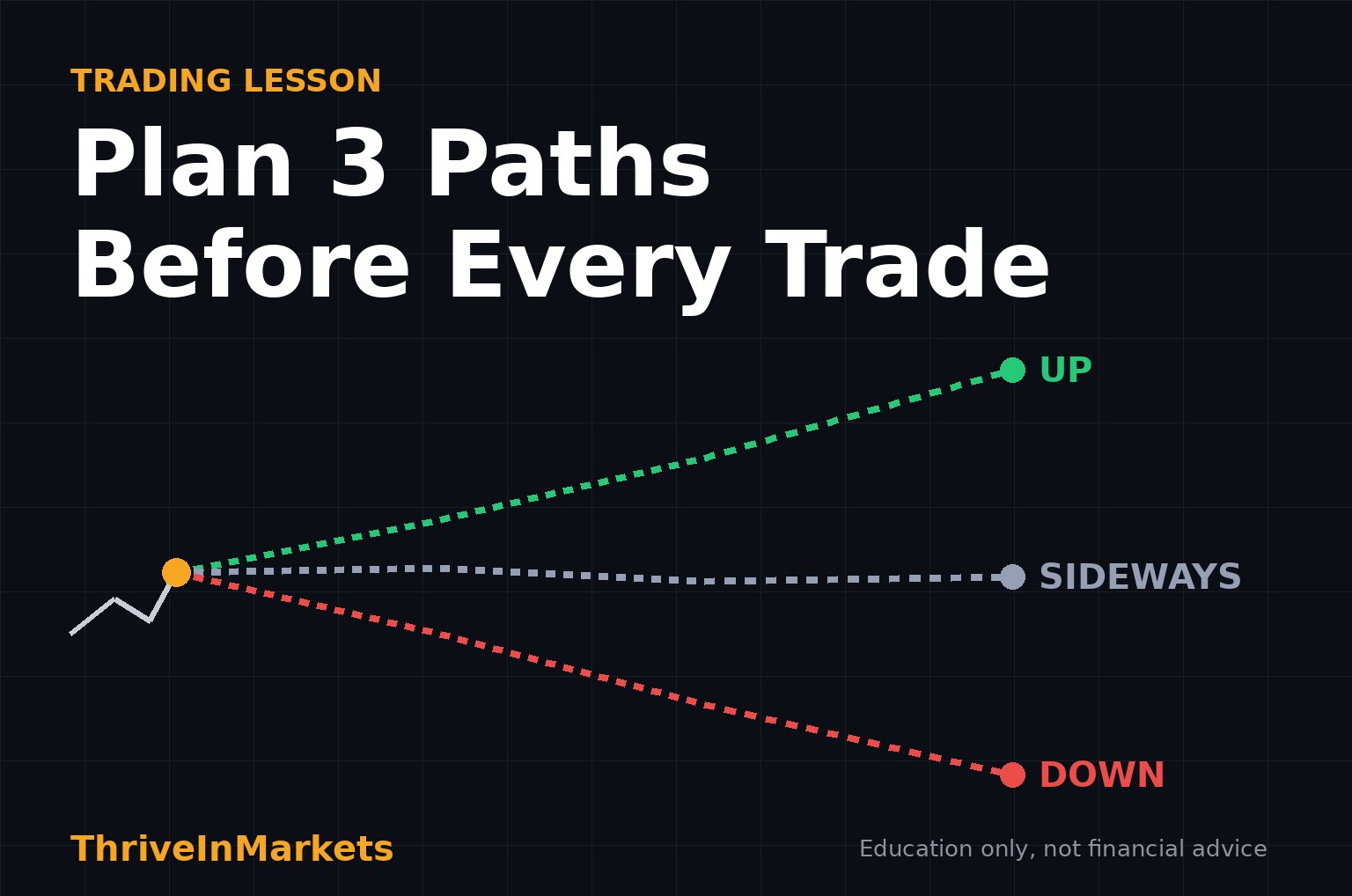
No chart pattern ever blew up a trading account. The trader did. Markets go up, down and sideways every day, and that alone doesn't wipe anyone out. What does is a handful of decisions made in the moment: a stop moved on hope, a position that was far too big, an entry chased after the move had already happened. The good news is that all three are in your control.
Mistake 1: Moving the stop on hope
You set a stop before you entered, for a reason. Then price gets close, and you nudge it a little further away "to give it room". Then a little more. A small, planned loss turns into a big, unplanned one.
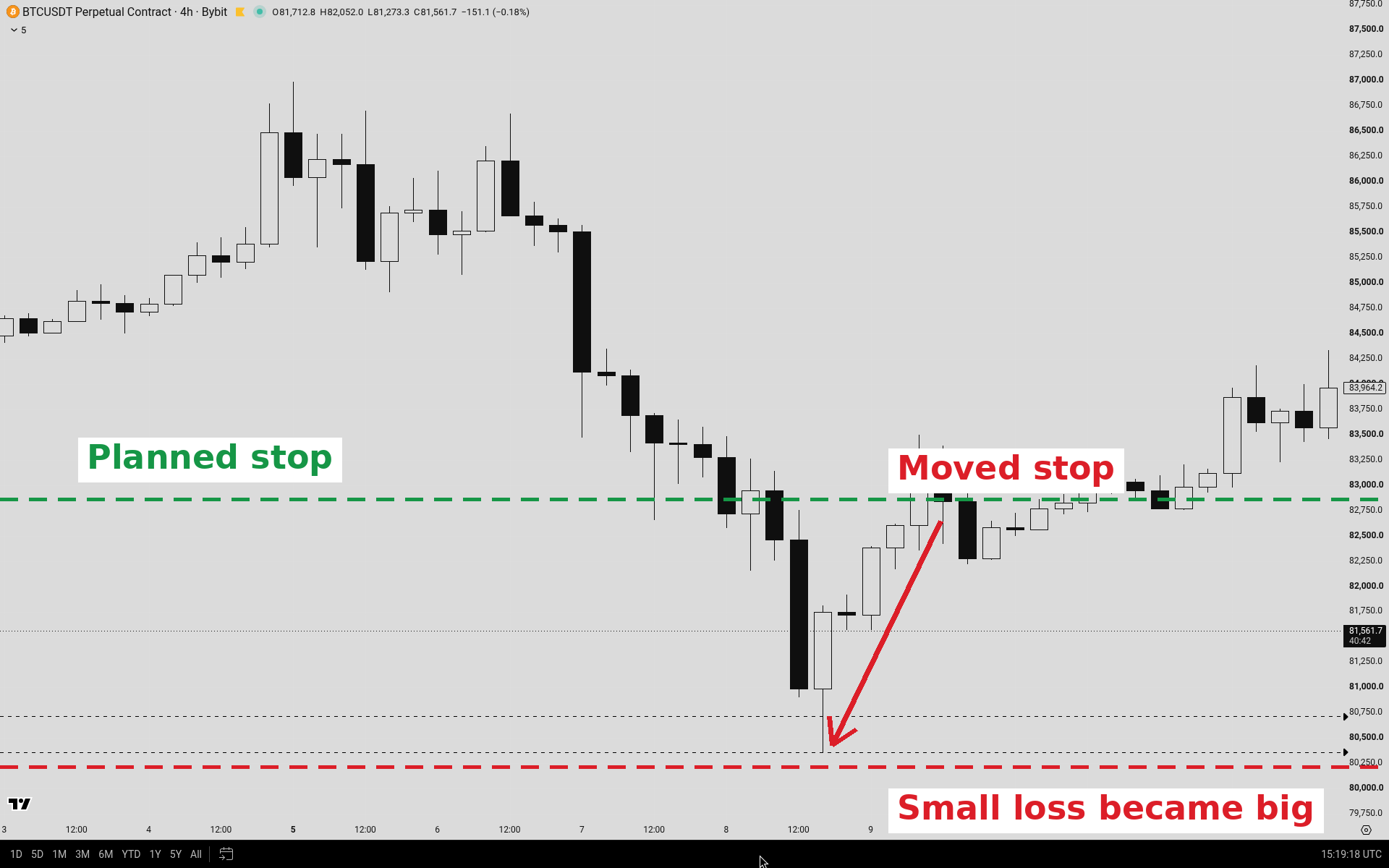
In the example above, price breaks through the stop zone and keeps going. Anyone who moved their stop didn't avoid the loss, they just made it bigger. The rule from yesterday's lesson on planning 3 paths applies here: if price hits your stop, the trade is over. If you're not sure how stop orders work, see our order types cheat sheet.
Mistake 2: Oversizing the "perfect" setup
Every trader has had the setup that looks too good to miss. That's exactly when people double or triple their usual size. But no setup is certain. If the "perfect" trade fails at three times your normal size, one loss can undo weeks of careful trading.
A simple fix: decide in advance the maximum you'll risk on any single trade, as a small, fixed share of your account, and size every trade from your stop distance so the loss stays inside that limit. Many traders start around 1% per trade, and if you're new, go smaller than feels comfortable. Confidence changes how you feel, not how much you risk. Set a daily stop too. Once you've lost one trade's worth of risk in a day, you're done until tomorrow. Bad days stay small, and you never try to win it all back in one go.
Mistake 3: Chasing a candle that already left
A huge candle fires, you feel you're missing out, and you buy near the top of it. Now your stop has to sit far below, or it sits too close and gets hit by the normal pullback that often follows a big move.
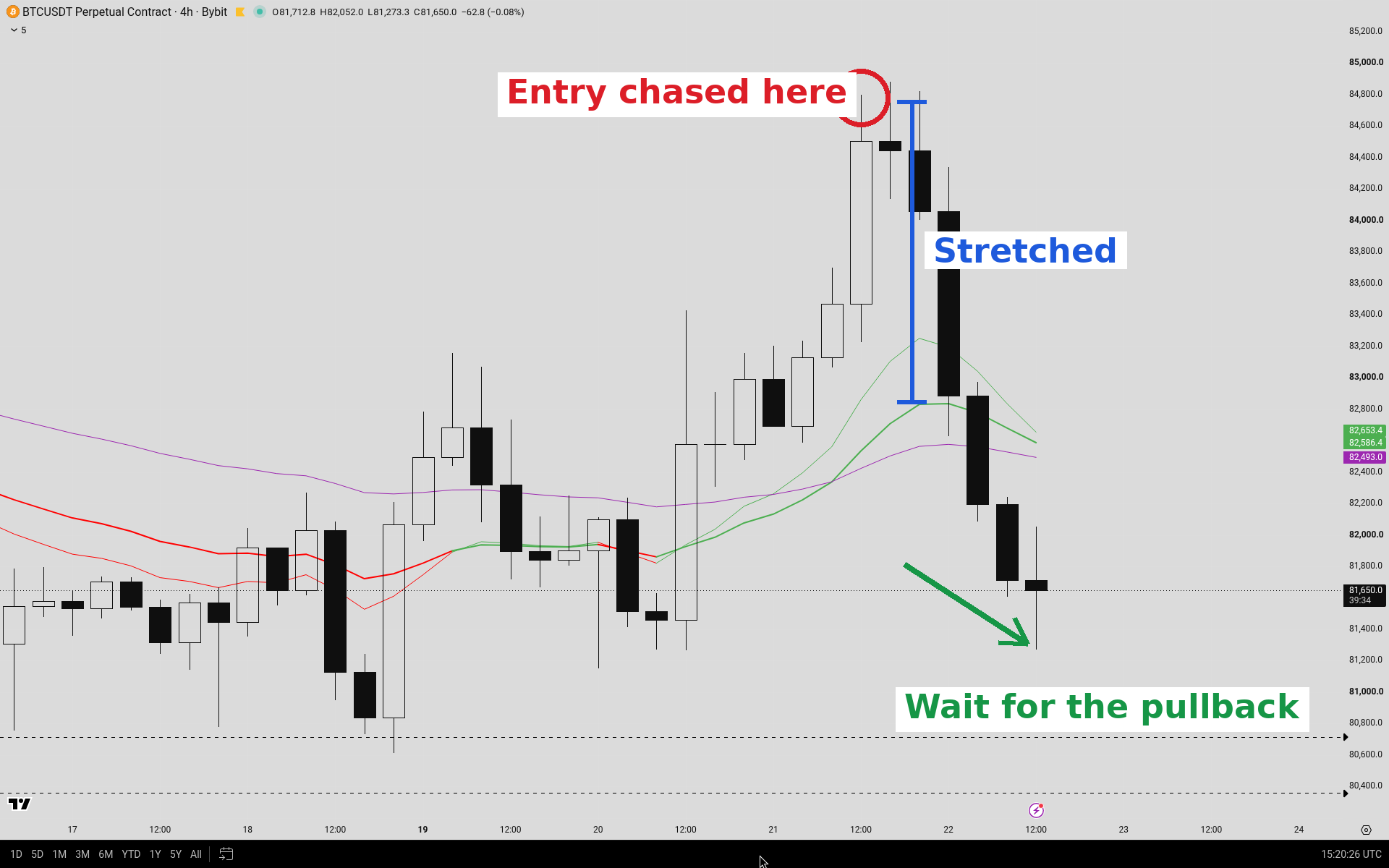
If you missed the move, let it go. Wait for price to pull back and show you it's holding a level, then enter with a stop you planned, or wait for the next setup that fits your plan. There's always another trade; there isn't always another account.
You don't need to win most of your trades
Many traders think they need to be right most of the time. You don't, as long as your winners are bigger than your losers. Here's a simple, purely hypothetical example:
- 10 trades, each risking $100.
- Only 4 win (a 40% win rate), and each winner makes $250.
- 6 lose, and each loser costs $100.
- Result: 4 × $250 = $1,000 won, 6 × $100 = $600 lost, so $400 net before fees. Fees come off every entry and exit, so fewer, better trades keep more of that $400.
Now notice what the three mistakes do to this math. Move one stop and a $100 loss becomes $300. Oversize one trade and a loss becomes $300 too. Chase entries and your winners shrink. Two or three of those and the same 40% win rate turns negative. The strategy didn't change, the trader did.
Practice it without risking money
The best way to break these habits is repetition. Bar replay lets you step through old charts candle by candle and practice placing stops and sizing before you see what happens next, and price alerts mean you don't have to stare at the screen waiting to chase. Both are in TradingView (affiliate link). Our TradingView guide and backtesting guide show how to get started.
Your challenge
For your next 10 trades, practice or real, write down three things before you enter: your stop, your position size, and whether you're chasing. After each trade, check if you stuck to all three, and add a fourth check: Did I stick to my daily loss limit? That checklist protects your account better than any indicator.
This article is for education only and isn't financial advice. Trading involves risk, and you can lose money.