Here's the uncomfortable truth: your first year of trading isn't about making money. It's about not losing it. Every beginner pays for lessons somehow. The only question is whether those lessons cost a few dollars or your whole account.
1. Never test a new idea with real money
A new setup, a new indicator, a new market. Until you've seen it work many times, it's just an idea. Real money is the most expensive place to find out an idea doesn't work.
Open a paper (demo) account instead. On TradingView (affiliate link) you can connect the built-in Paper Trading account and place orders on live charts without risking anything. Practise the boring mechanics until they're automatic:
- Placing your entry at the price you planned, not a random one.
- Setting a stop loss before you enter, every single time.
- Setting a target and leaving it alone.
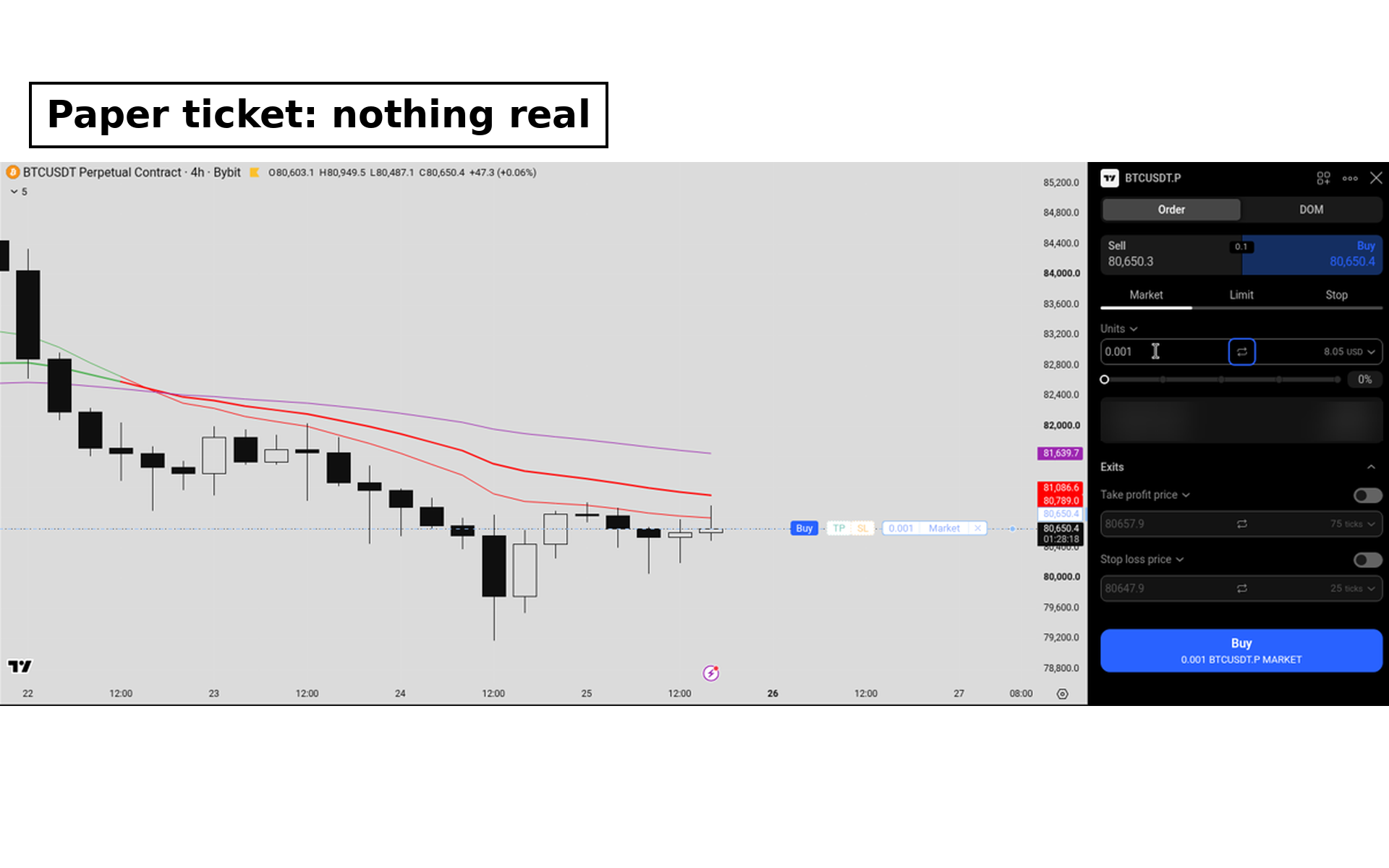
If you can't follow your own plan on paper, where nothing is at stake, you won't follow it with real money on the line.
2. When you go live, go tiny
Paper trading can't teach you how it feels when real money moves. So at some point you go live, but small. Really small. Think around $1 of risk per trade.
That sounds silly, and that's the point. At $1 you're paying for lessons, not chasing profits. You get real fills, real emotions and real mistakes, at a price you can afford hundreds of times.
The Long Position (or Short Position) tool on TradingView makes this easy. Drag it onto the chart, set your entry, stop and target, and type in your account size and risk. It shows you how big your position should be so that hitting your stop only costs what you chose. Our TradingView guide shows where these tools live.
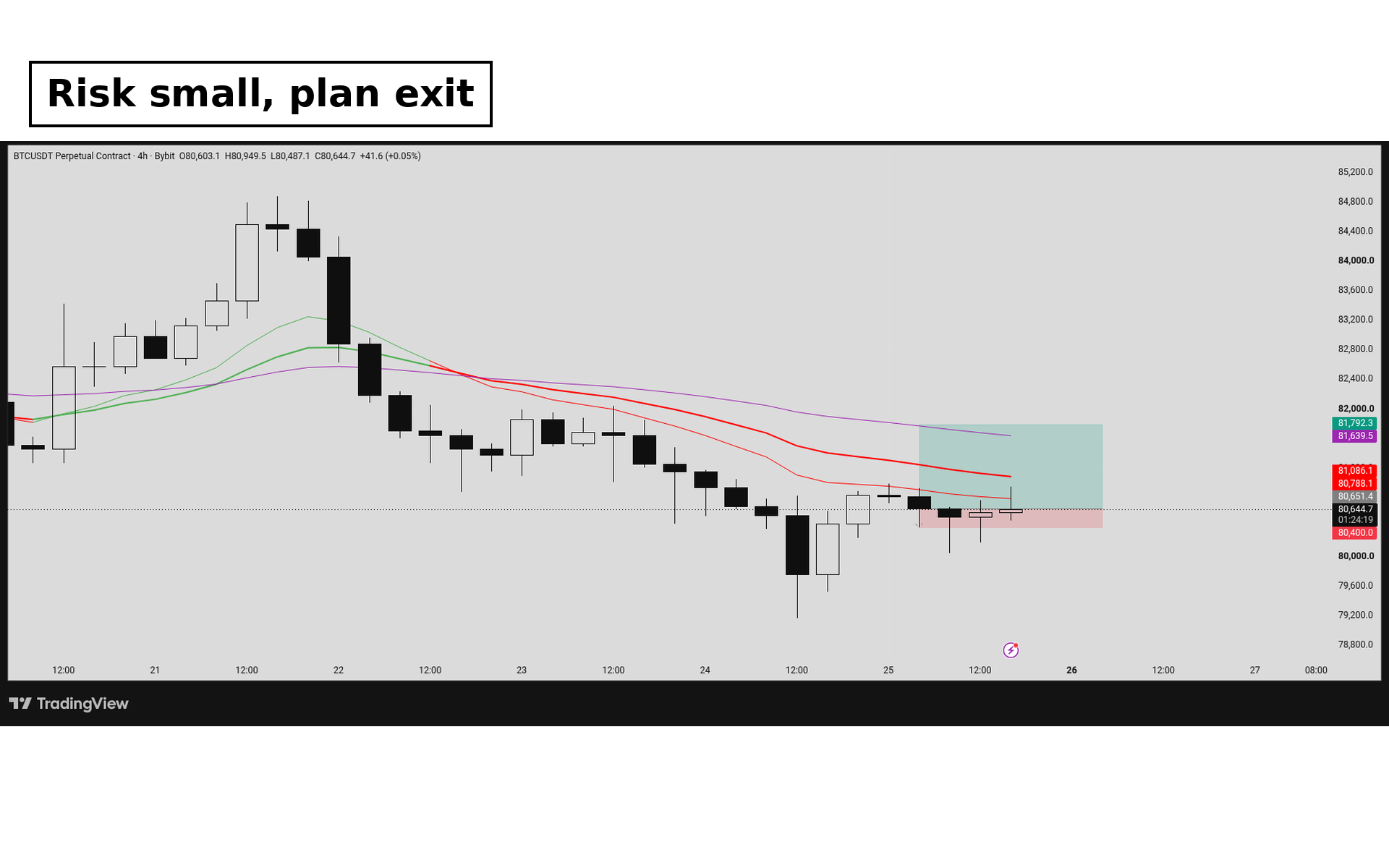
Remember from Reading Your First Chart: the stop goes where your idea is proven wrong on the chart. Then you size the position to fit it, not the other way round.
3. Write every trade down
A trading journal doesn't need to be fancy. A simple sheet is enough. For each trade, note:
- Date, market and timeframe
- Why you took it (which rule)
- Entry, stop and target
- Did you follow your plan? Yes or no
- One thing you learned
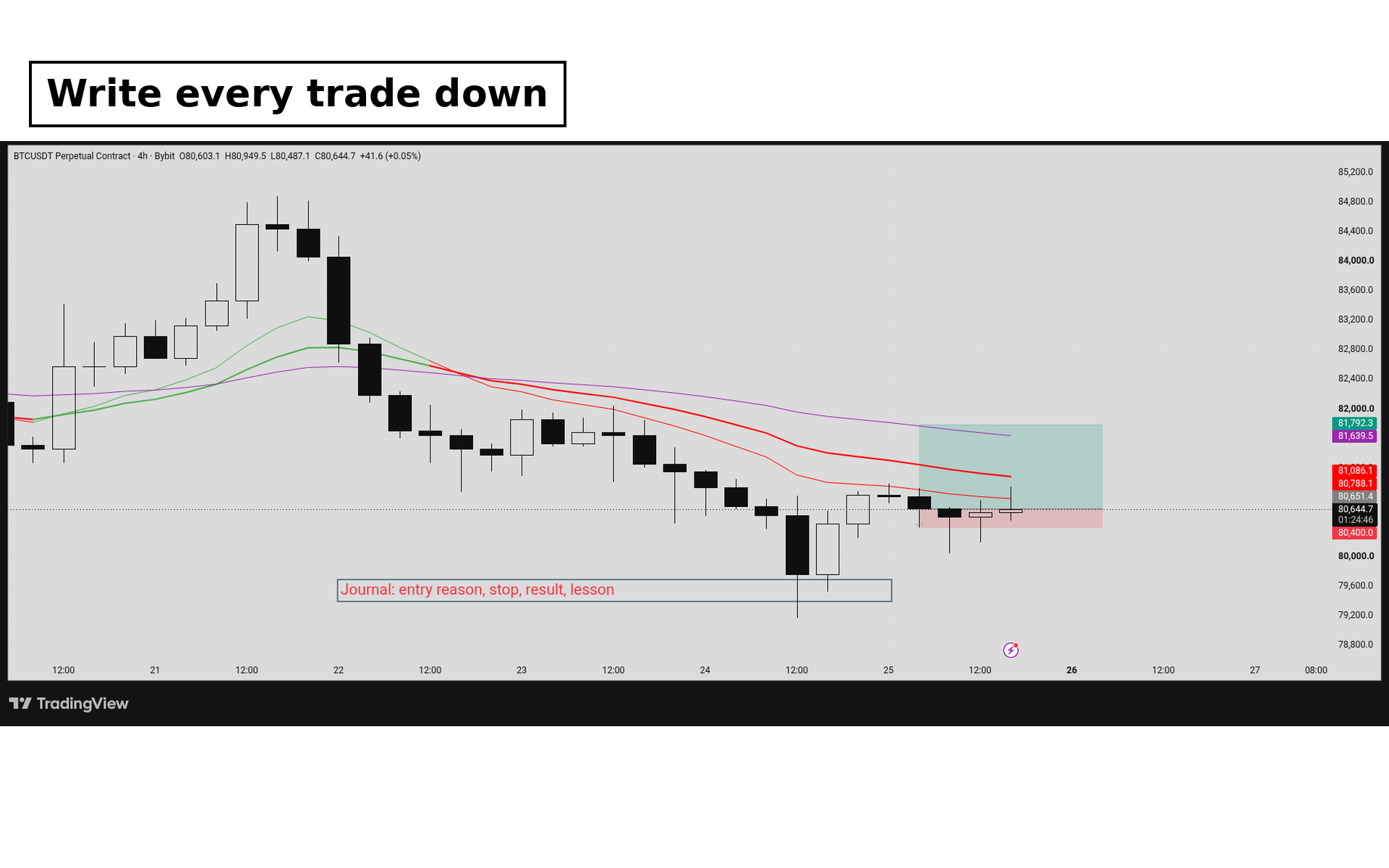
The "did I follow my plan?" column matters most. It tells you whether a loss came from the idea or from you. As we covered in Day 2, most accounts are lost to the trader, not the chart.
4. Size up only with proof
Protect your capital in year one. Only increase your risk once your own journal, over a decent number of trades, shows your rules actually work and that you actually follow them. Not because of one good week, and not because someone online says it's easy.
Each time you change your system or start a new one, drop back to a very small fixed risk (some traders use as little as $1) until your journal shows enough trades to judge it. Only then raise size, one step at a time.
Today's takeaway
Learn cheap first. Size comes later. Paper trade the mechanics, go live with about $1 of risk, journal everything, and let your records decide when you're ready for more.
Educational only, not financial advice. Trading involves risk of loss. No profits are promised. The TradingView link is an affiliate link.
← Previous lesson: Reading Your First Chart · See the full series →