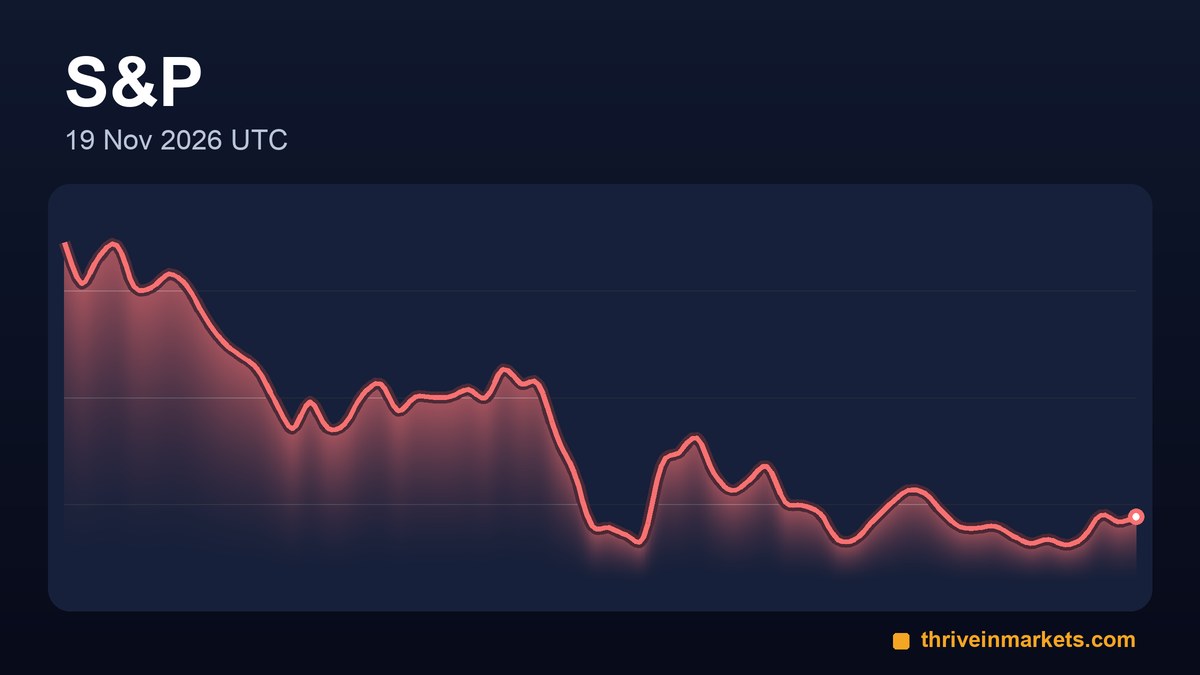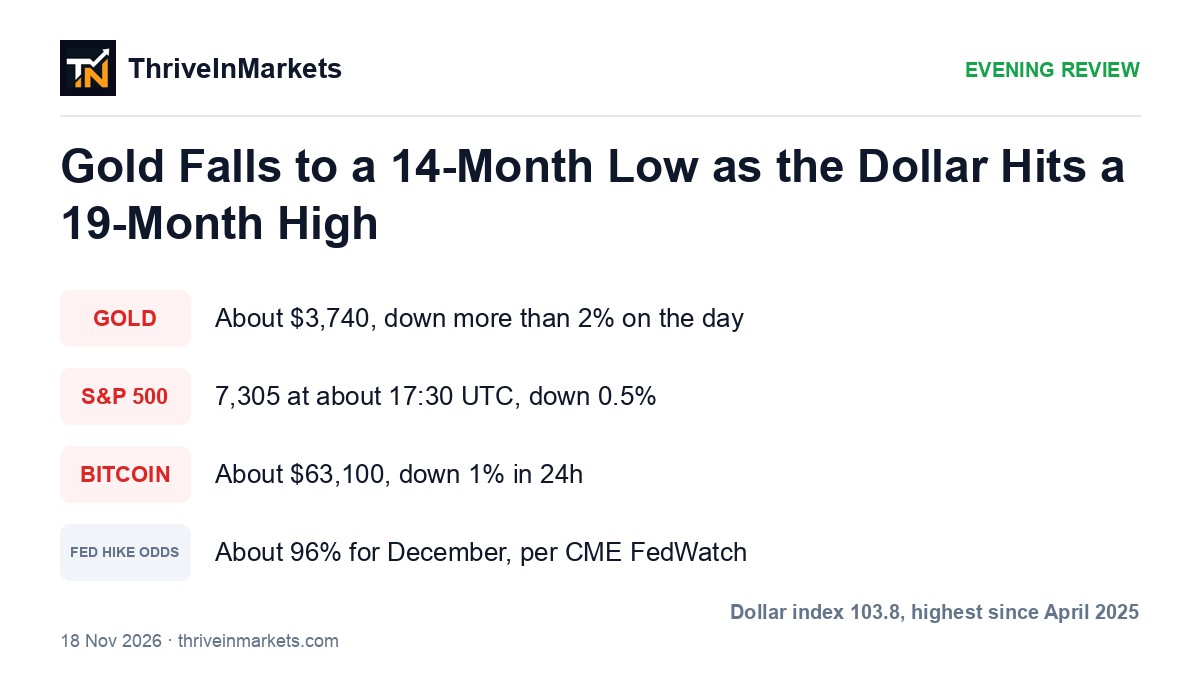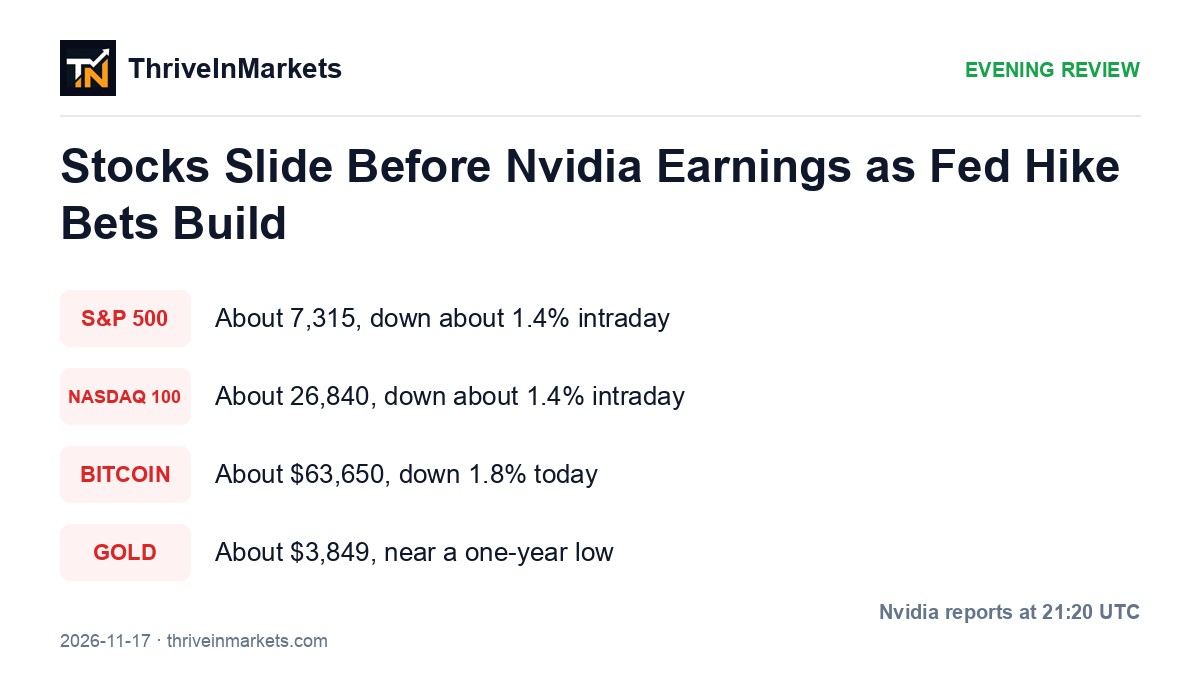
The Nasdaq fell more than the rest of the market on Friday as chip stocks slid after Nvidia's CEO exit, while Bitcoin dropped below $70,000. As flagged in this morning's analysis, producer prices were the key event, and they came in a little cooler than forecast without calming markets.
Prices as of 19:30 UTC. The US cash session is still open at 20:00 UTC, so index moves are intraday and crypto is mid-day too.
- Chip stocks led the market lower, with AMD down about 9% and Nvidia down about 2%, so the Nasdaq lagged the Dow.
- Wholesale inflation rose less than expected in October, but bond yields stayed high because traders still expect Fed rate hikes.
- Bitcoin hit its lowest level since mid-August, after about $1.6 billion of forced liquidations across crypto.
The Session So Far: Tech Takes the Hit
The S&P 500 opened higher after the producer price report, then turned lower and was down roughly 0.5% to 0.9% through the afternoon. The Nasdaq Composite fell about 1.5% at midday, while the Dow was close to flat as defensive sectors such as consumer staples gained.
The selling was concentrated in semiconductors. AMD fell around 9%, Broadcom about 5% and Intel about 3%, a reversal for the Nvidia rivals that had rallied on Thursday. Nvidia itself slipped about 2%, with its earnings due on Tuesday.
Scenarios to watch: a recovery above Thursday's S&P 500 close near 7,592 would show buyers returning, while a close below the 7,550 area would extend the pullback.
- The weakness is a chip story more than a broad selloff.
- Nvidia's earnings on Tuesday are the next big test for the sector.
Story of the Day: Cooler PPI, Same Rate Worries
US producer prices rose 0.3% in October, below the 0.4% economists expected. Yet the yearly rate was still 6.5%, the highest since November 2022, so the report did not change the debate about whether the Fed raises rates in December.
The 10-year Treasury yield held near 5.15%, close to its highest level since October. Fed officials added to the tone, with Chicago Fed President Goolsbee calling inflation broad-based, and Bank of America now expects 75 basis points of tightening between December and March.
Scenarios to watch: a 10-year yield back under 5% would ease pressure on growth stocks, while a push further above 5.2% would keep it building.
- A softer monthly print mattered less than the high yearly rate.
- Higher yields hurt long-duration assets such as tech stocks and crypto.
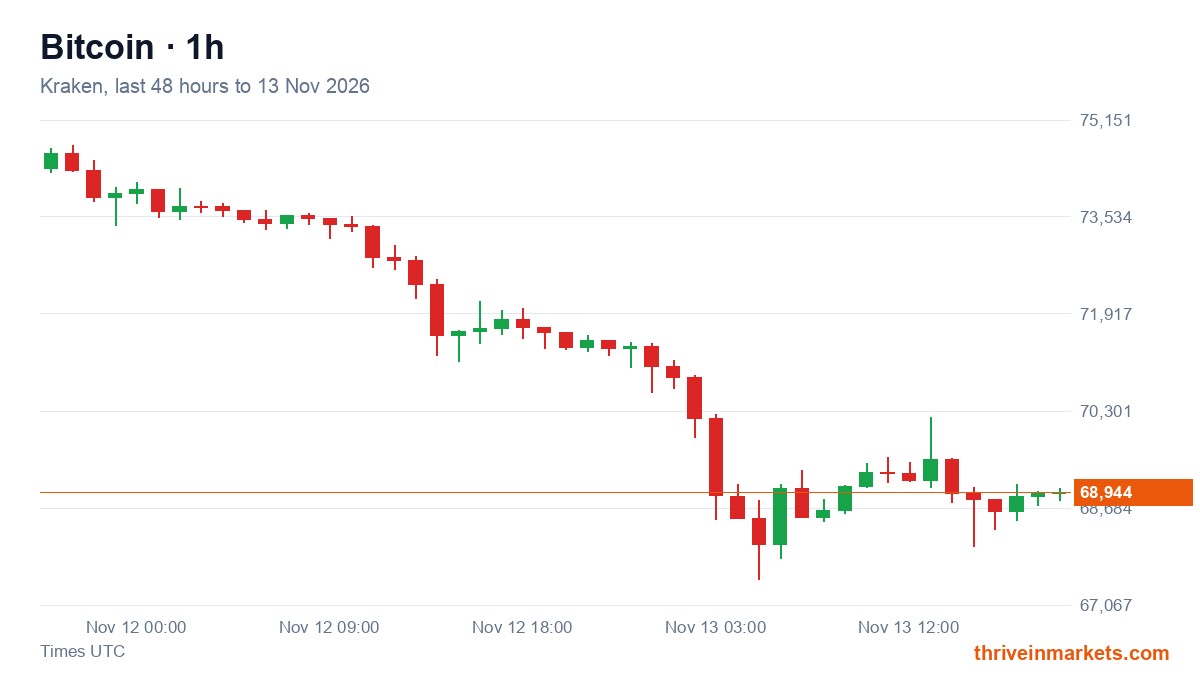
Crypto Check: Bitcoin Breaks Under $70,000
Bitcoin traded near $68,800, down about 3.5% in 24 hours, after touching roughly $67,500, its lowest since mid-August. The drop briefly took it under its 200-week moving average before a bounce.
US spot Bitcoin ETFs have now seen six straight sessions of outflows, with November withdrawals near $1.9 billion. Ether fell about 3% to near $1,949 and is down roughly 13% on the week.
Scenarios to watch: a reclaim of $72,000 would show the selling has eased, while a weekly close under $73,000 would add a third support break for the year.
- Forced selling and ETF outflows are driving the move.
- Crypto is trading with tech stocks and bond yields, not on its own news.
After-Hours and Overnight Watch
Gold is flat near $3,884, stuck close to a one-year low as high yields offset support from oil. WTI crude is steady near $88.70, set for a second weekly decline despite Middle East tension.
Cerebras jumped about 13% on record quarterly revenue and a raised outlook, a reminder that AI demand is still strong outside the biggest names. The weekend leaves Fed speakers and Tuesday's Nvidia report as the next catalysts.
Scenarios to watch: gold needs a close above $4,000 to show buyers returning, and oil back above $90 would revive supply worries.
- Cash index closes come after 21:00 UTC, so Friday's final prints can differ from these intraday moves.
- Crypto trades all weekend, so Bitcoin can move before stocks reopen.
This is market commentary for information only, not investment advice. ThriveInMarkets is based in Cyprus. Markets carry risk of loss.