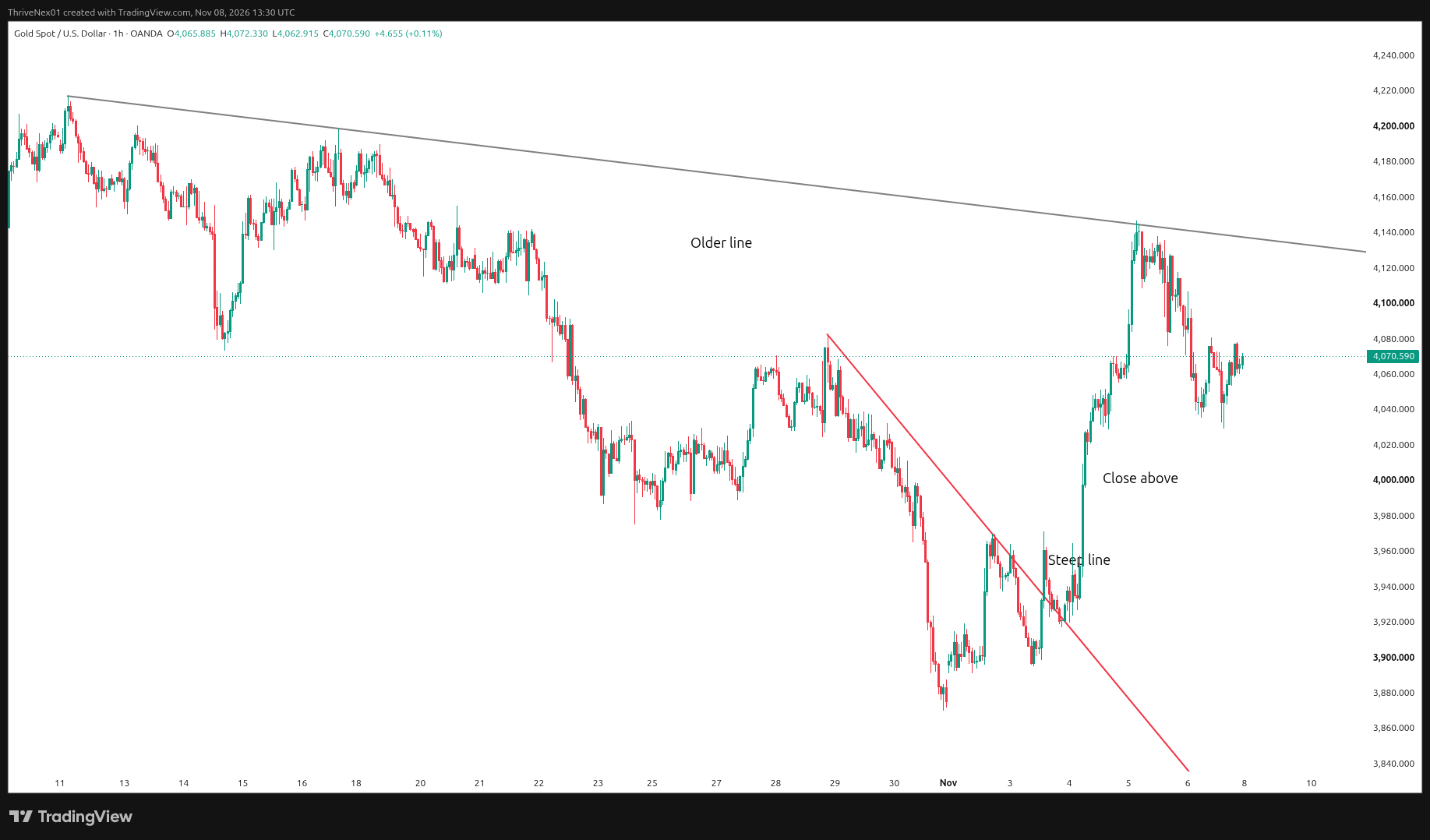
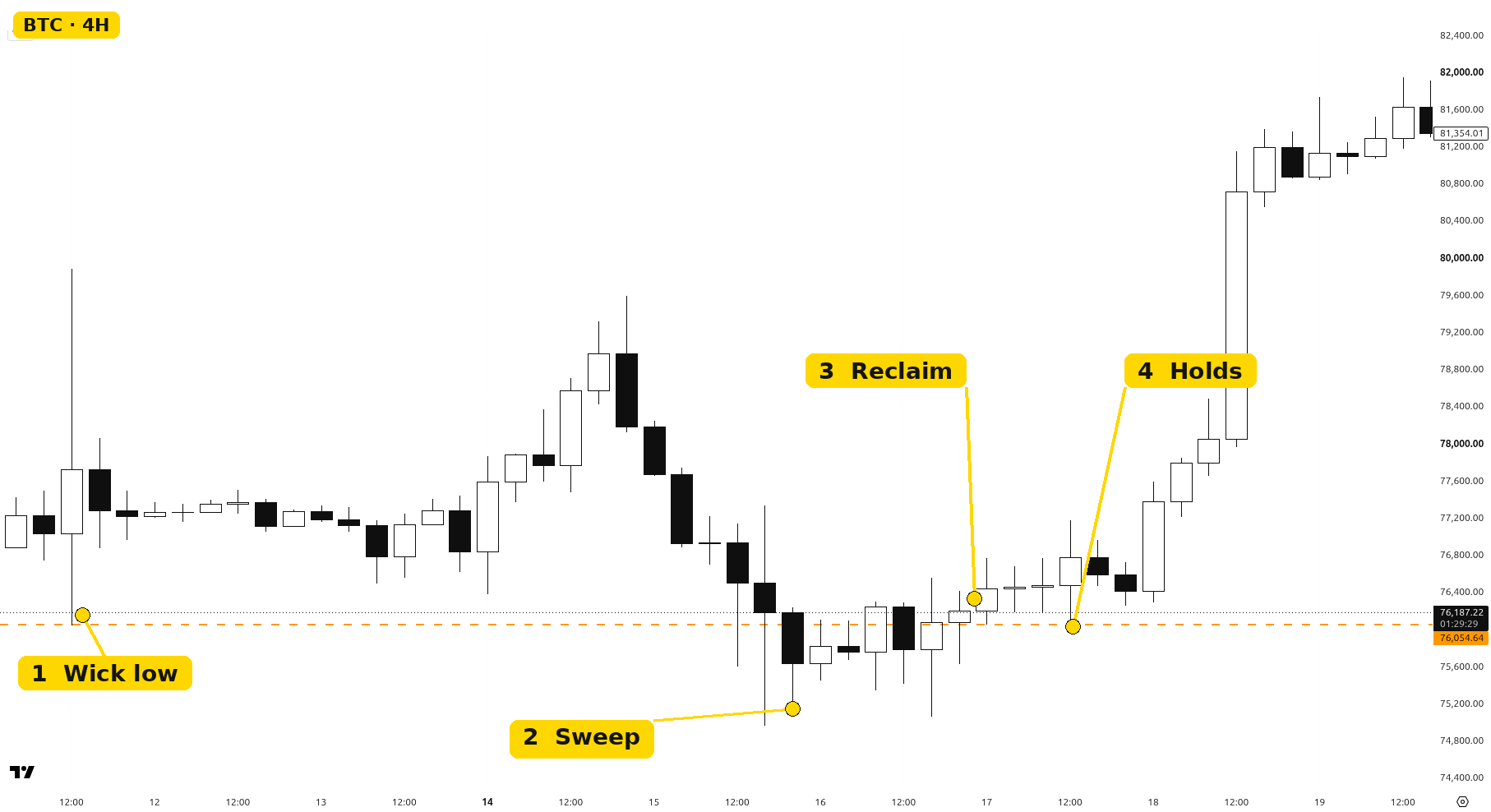
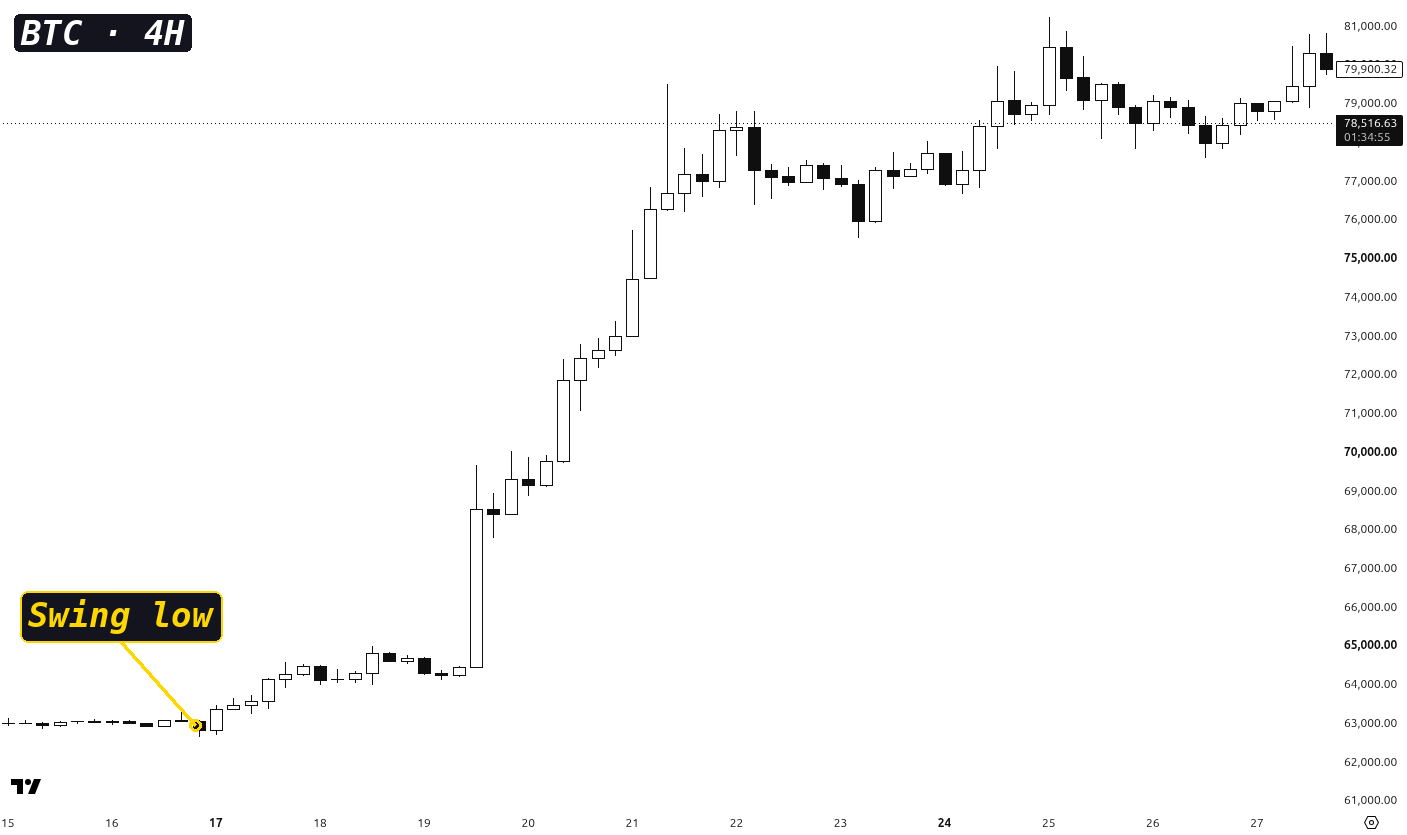
That giant buy wall you're watching? It doesn't pump the price by itself.
1. A buy wall waits; it does not chase
A buy wall is a concentration of resting buy limit orders: bids waiting for sellers to trade into them. Those bids can absorb selling and slow a decline while they remain available. They are not reaching up to buy the offers above them (sell orders waiting at higher prices, also called asks).
A visible wall is not a promise. It can be filled, reduced or cancelled. A large displayed bid is therefore not, by itself, a reason to expect a rally.
2. Aggressive orders meet resting liquidity
In a continuous limit-order book, a matched trade has a passive side waiting in the book and an aggressive side accepting the available price. Aggressive buys consume resting sell offers. If they exhaust the quantity available at one level, further buying may trade at higher offers. Aggressive sells do the reverse, trading into bids.
“Aggressive” describes execution, not just the order label. A market order takes available liquidity, but a marketable limit order can do so too. Not every aggressive order changes the last traded price: there may be enough quantity waiting at the same level.
Quotes also change when orders are added or cancelled, even without a new trade. Keep the last traded price separate from the best bid and offer.
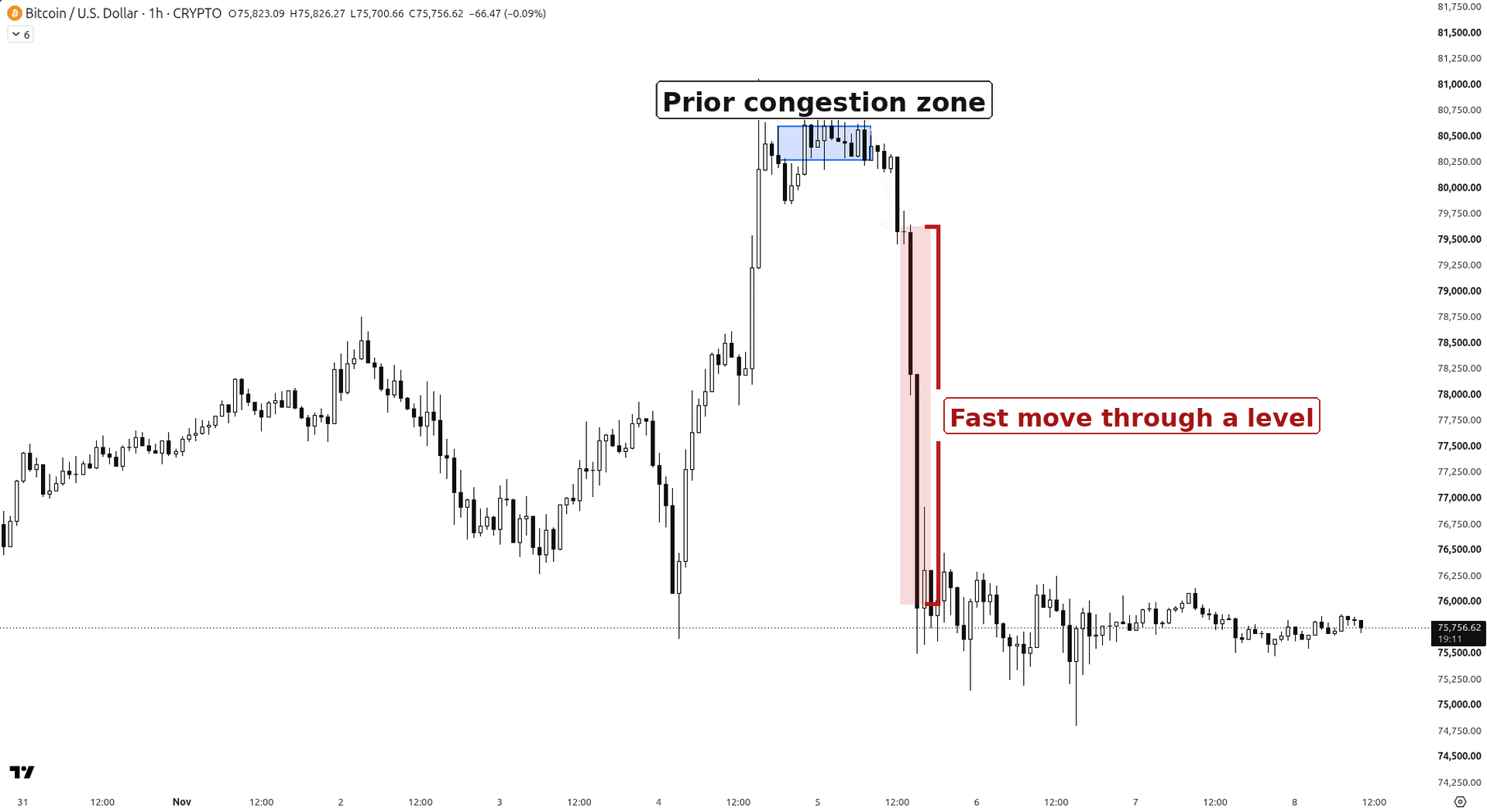
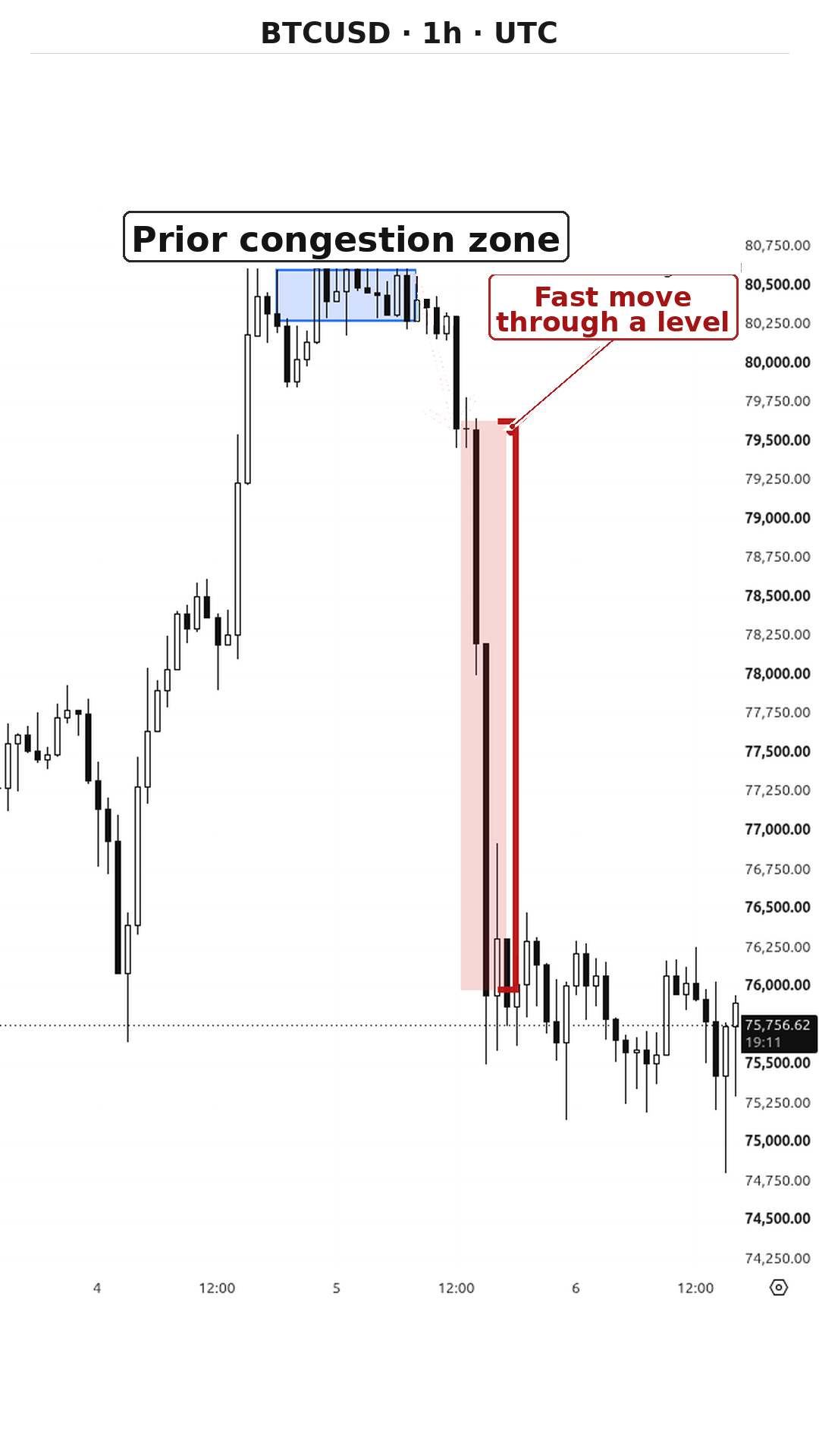
Here price fell fast through a level. Candles alone can't show whether bids were consumed or pulled.
3. Thin books can move on smaller orders
With less available liquidity, smaller orders can cross several price levels. A fast move does not automatically mean a huge order arrived; it can also reflect how little quantity was available to trade against.
Candles alone do not prove that a buy wall existed or that the book was thin. The charts in this lesson are only for illustrating a fast move through a level. Establishing the order-book explanation would require relevant depth and trade data, not just candle shapes.
4. Read the response, not the wall
Ask what is actually being executed: are buyers lifting offers (buying at the asking price), or are sellers hitting bids (selling at the bid)? Is resting liquidity still present, replenishing, being consumed or being cancelled? If you only have candles, describe the price response without inventing an order-book story.
Keep that response in the context of the wider structure. A visible wall is neither a trade instruction nor a guarantee that a level will hold.
Don't celebrate a wall. Watch who is hitting the market.
Continue with: Market Structure Explained Simply · Finding the Level That Actually Matters · Plan 3 Paths Before Every Trade.
← Previous: Day 16: When a steep trendline breaks · Next: Day 18 (coming soon) · Browse all daily lessons
Educational only, not financial advice. Trading involves risk of loss. No profits are promised.