Forget the textbook head and shoulders. Watch this 4-step reclaim.
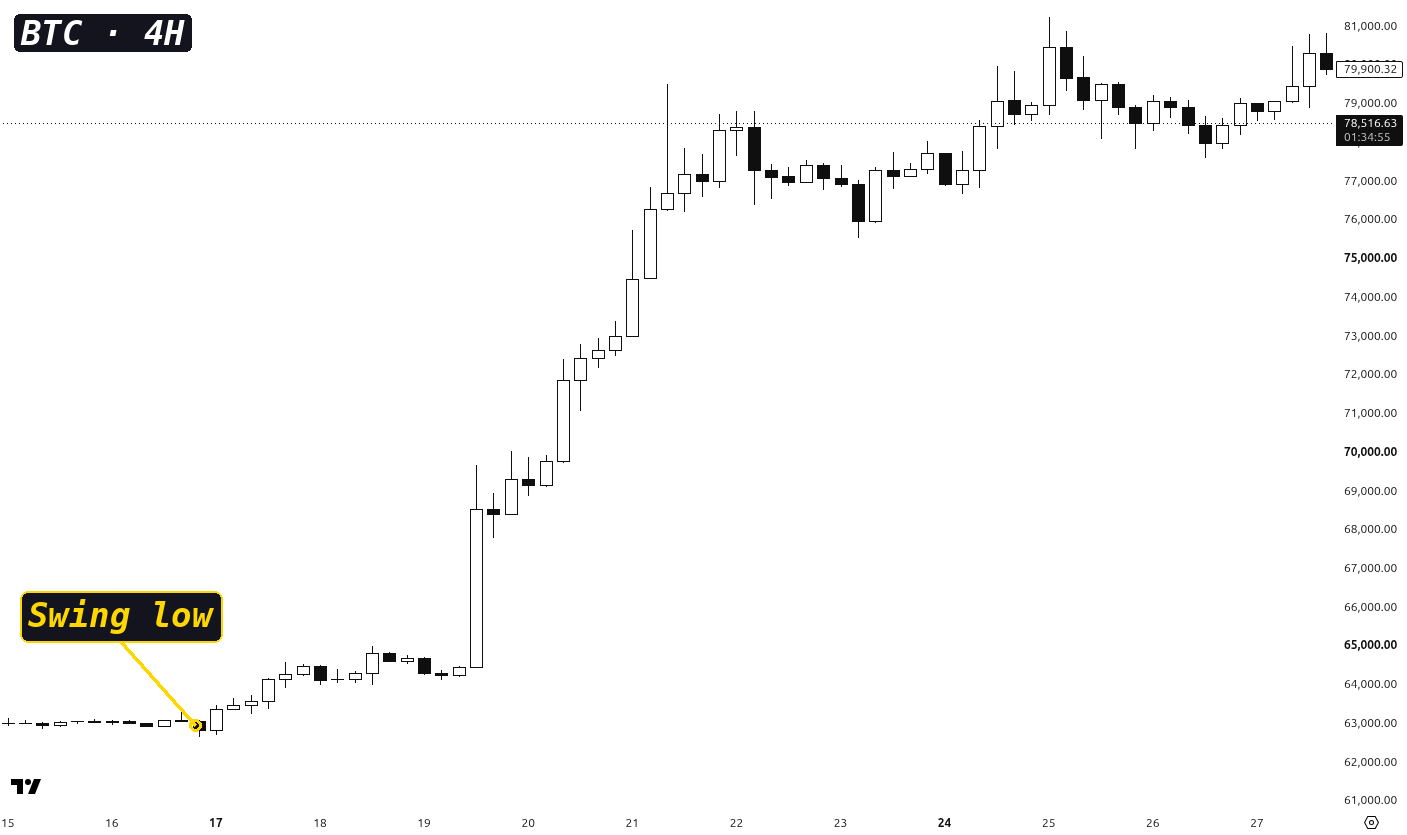
In Day 14 we picked the swing low that actually matters, not every little dip on the chart. Once that low is marked, a lot of traders sit around waiting for a full head-and-shoulders neckline. You do not have to. There is a cleaner sequence: a wick low, a sweep under it, a close back above, then a hold when price comes back to that first low.
1. Wick low: mark the wick, not the close
Start with the low itself. Mark it on the wick — the lowest point the candle actually reached — not on the body close. That wick is where stops sit and where late shorts often lean. If you mark only the close, you will miss the real level price has to beat.
2. Sweep: it can dip under more than once
Next, price dips under that low. That sweep is the trap: it runs the stops under the level and catches traders who sold the break. It is not always a single quick poke that snaps right back. On a real example, price can sweep that low more than once before anything useful happens. Treat those probes as part of the same test, not as a new setup every candle.
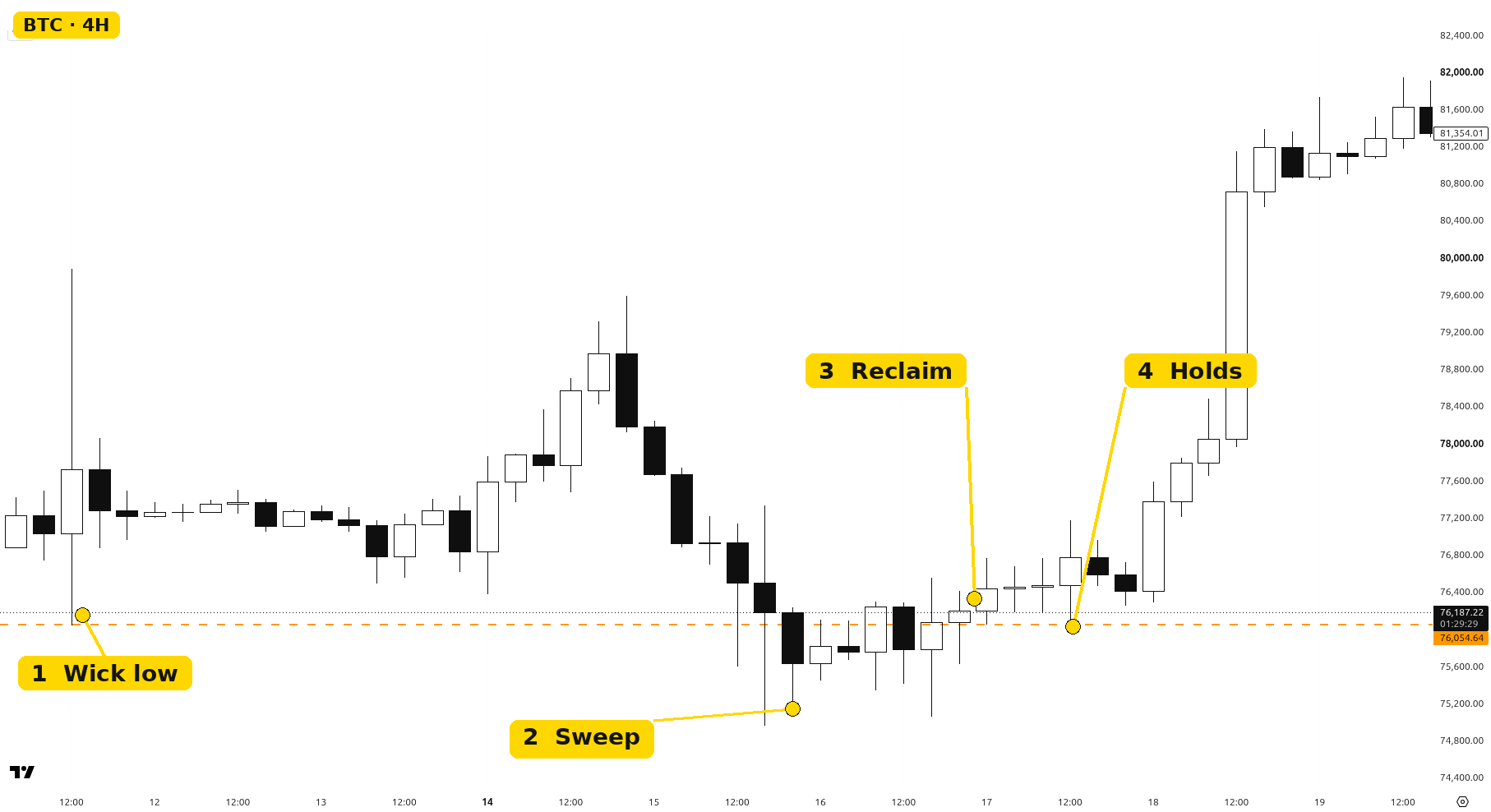
On this Bitcoin 4-hour chart, the orange dashed line is the first wick low. Price swept under that line, then came back to work around it. The labels match the four steps: Wick low, Sweep, Reclaim, and Holds.
3. Reclaim: the close above is the flip
The reversal is not the wick through the level. It is the close back above it. A wick can tag through and fail; a close says buyers held the level through the end of the candle. The reclaim itself can be modest. You are looking for price to get back above the reversal level and stay there on the close, not for a huge breakout candle.
4. Holds: it comes back to the first low and holds
After the reclaim, the last check is simple. Does price come back to that first low and hold? If buyers defend the same level they just recaptured, they have taken control. That hold is the confirmation; the sweep alone was not.
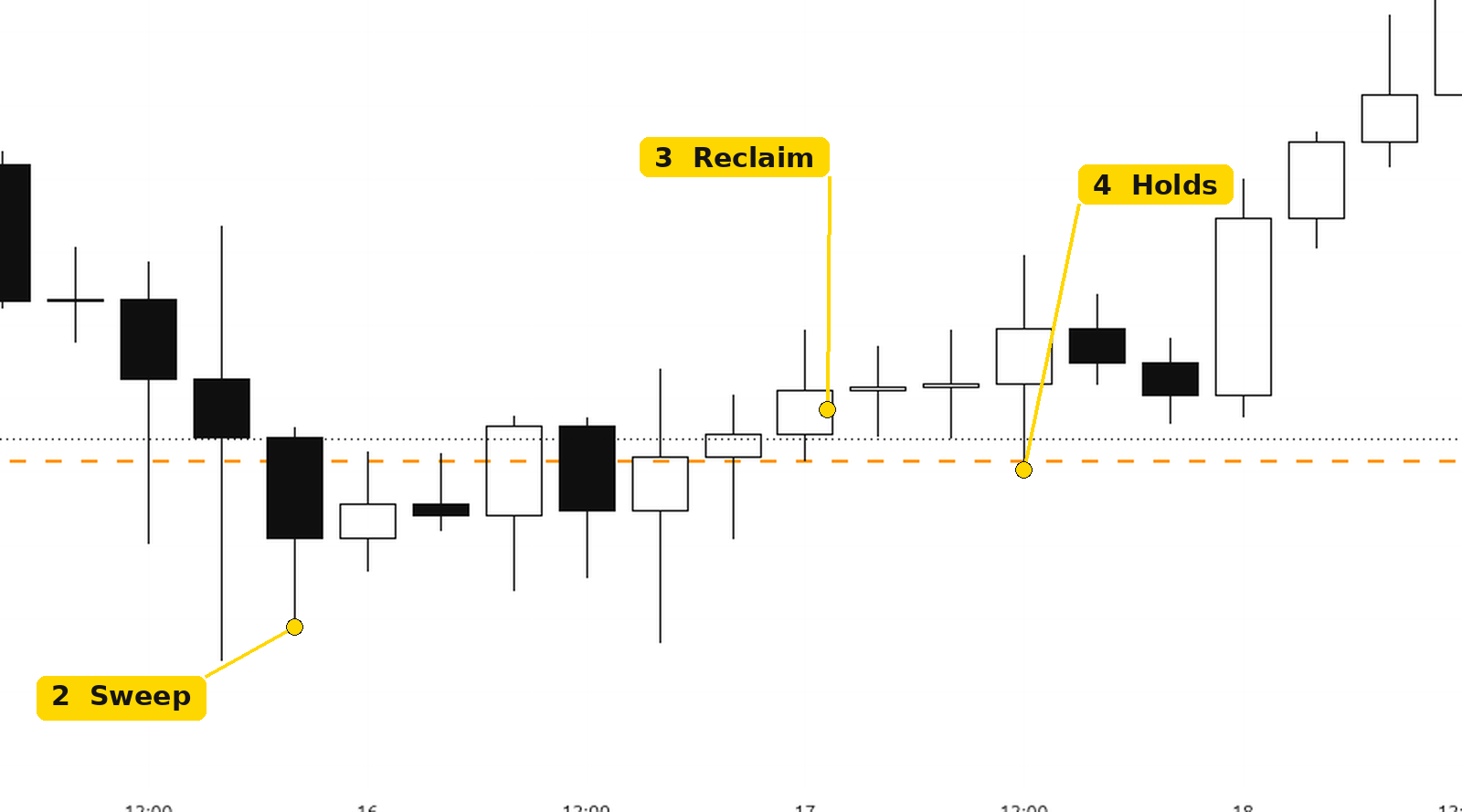
In the close-up, you can see the sweep under the line, a modest close back above it, and then price returning to the first low and holding. That is the four-step sequence without needing a textbook neckline.
The same idea flipped at tops
Flip the whole pattern at a high. Mark the wick high, watch for a sweep above it that traps late longs, wait for a close back below, then see if price comes back to that first high and holds as resistance. Same four steps, mirrored.
How I use it
Before I call this a reversal, I check four things:
- Did I mark the wick low (or high), not just the close?
- Did price sweep that level, even if it took more than one probe?
- Did it close back on the other side, even if the reclaim was modest?
- When it came back to the first low (or high), did it hold?
And like always, plan 3 paths before you act: the reclaim holds and the move continues, the level fails and price goes back through, or it chops around the level like the sideways zone we covered in Day 8.
Quick recap
- Mark the wick low, not the candle close.
- A sweep under that low is the trap, and it can happen more than once.
- The flip is a close back above the level, not a wick through it.
- Confirmation is when price comes back to the first low and holds.
- The same four steps work flipped at tops.
New to the series? Start with Why Price Action Comes First, catch up on Market Structure Explained Simply, or see every lesson on the daily lessons page.
We use TradingView for every chart on this site. If you want the same setup, you can try TradingView here (affiliate link, we may earn a small commission at no extra cost to you).
← Previous: Day 14: Finding the Level That Actually Matters · Next: Day 16 (coming soon)
Educational only, not financial advice. Trading involves risk of loss. No profits are promised.