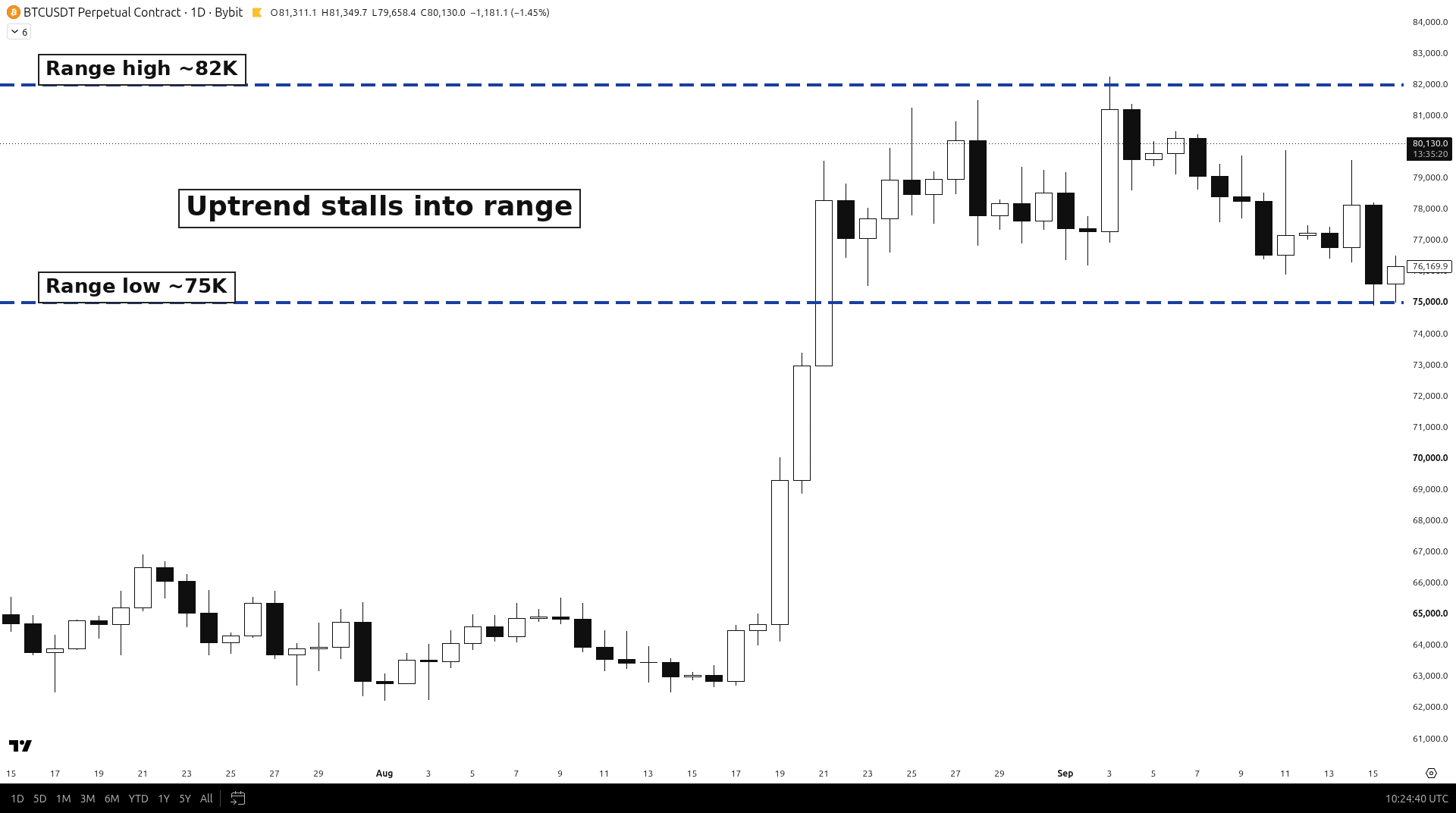
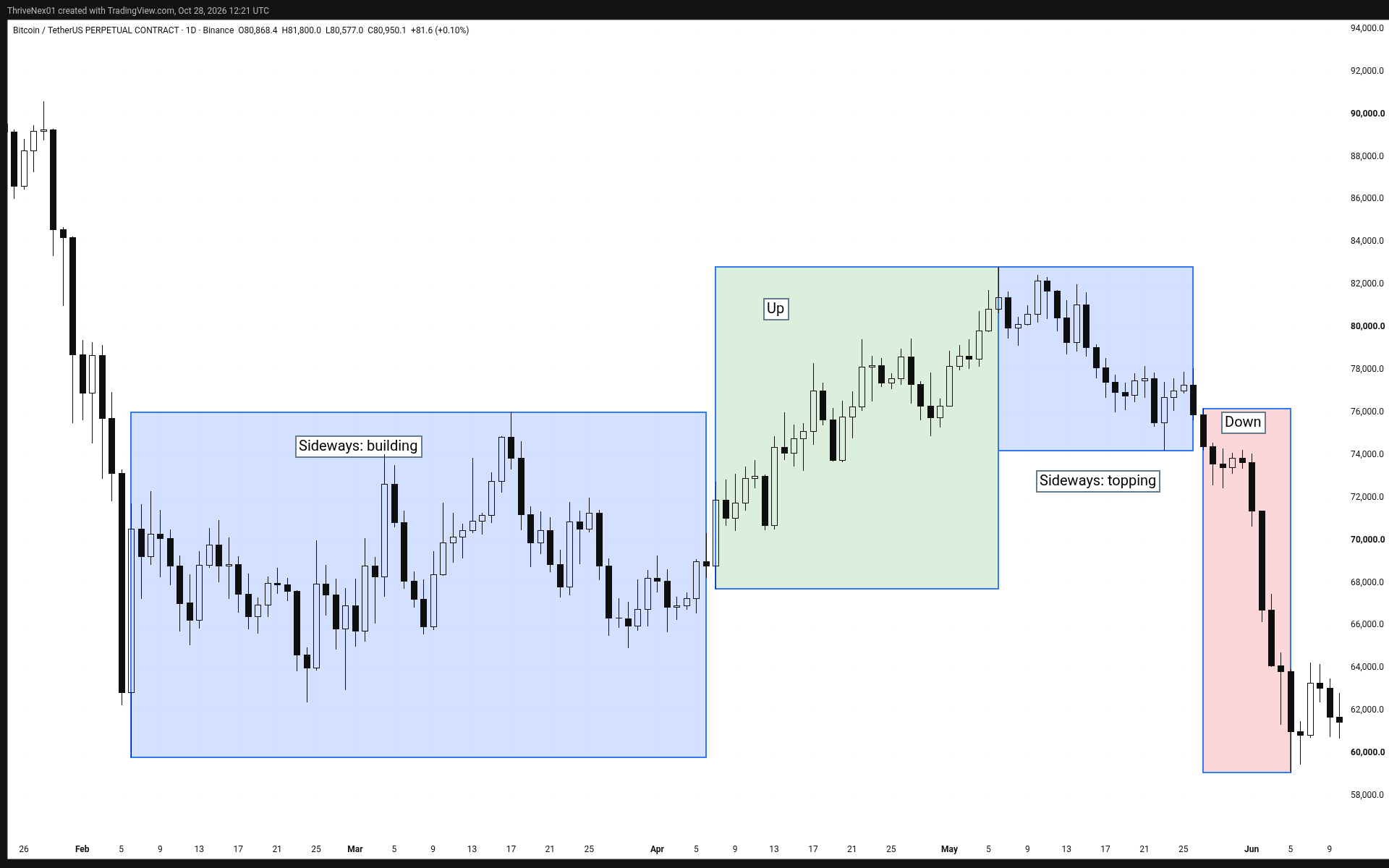
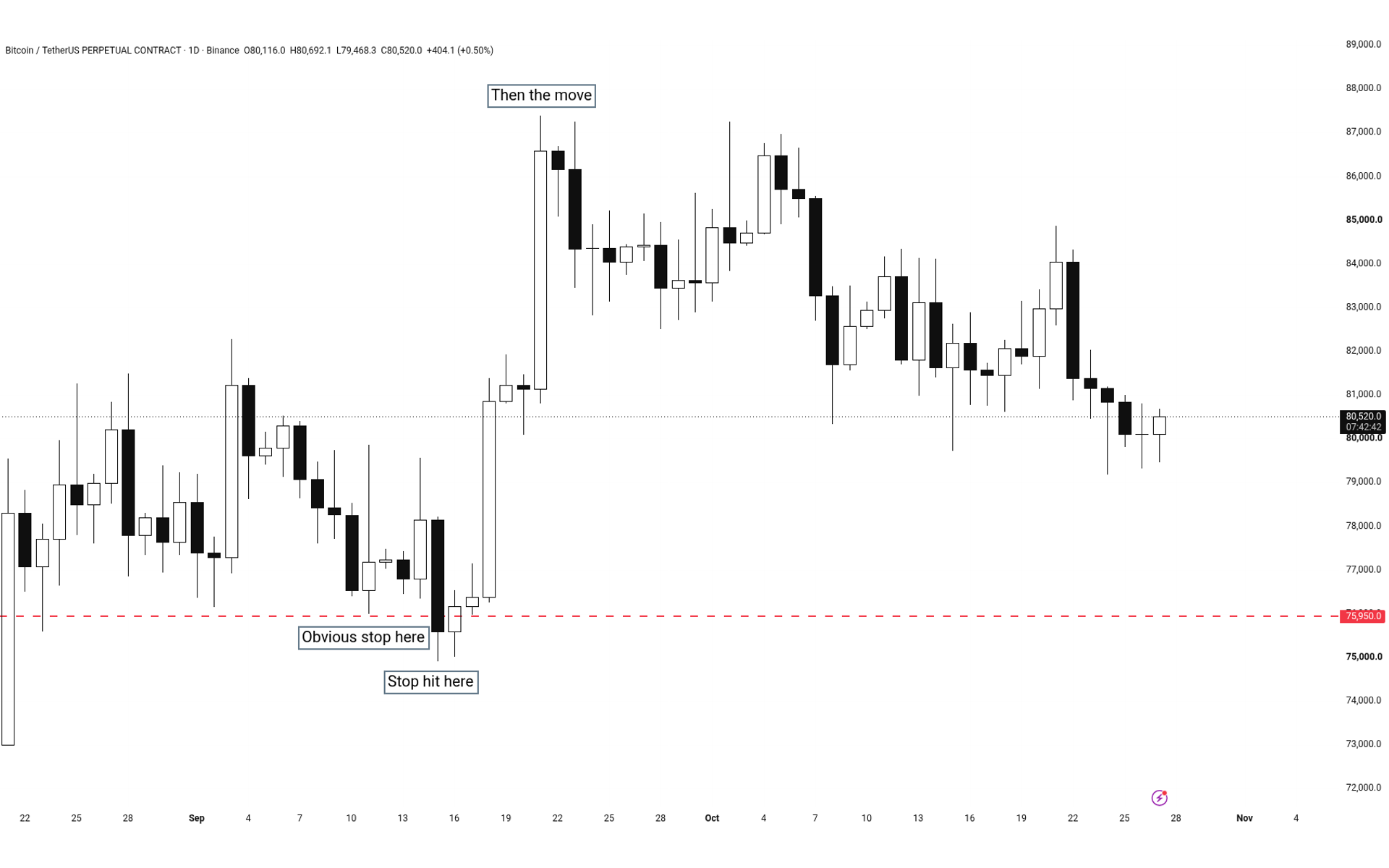
Stop trying to catch the bottom. That's how you get run over.
Price has been falling, it starts to slow down, and the thought kicks in: "this is the turn." So you buy before anything is confirmed. Then price slips a little lower, takes out your stop, and only later starts to climb, without you. This lesson is about a calmer way to trade: let the trend show itself first, then follow it.
Why bottom-picking keeps failing
In Day 7 we covered the four phases: accumulation, markup, distribution and markdown. And in Day 8 we saw that trends rarely flip straight from down to up. They usually pause in a range first.
That's exactly why buying "the bottom" is so hard. While price is still falling, or still chopping inside the range, you don't know yet whether the downtrend is over. An early buy is a guess. And guesses inside a range get stopped out on false moves both ways.
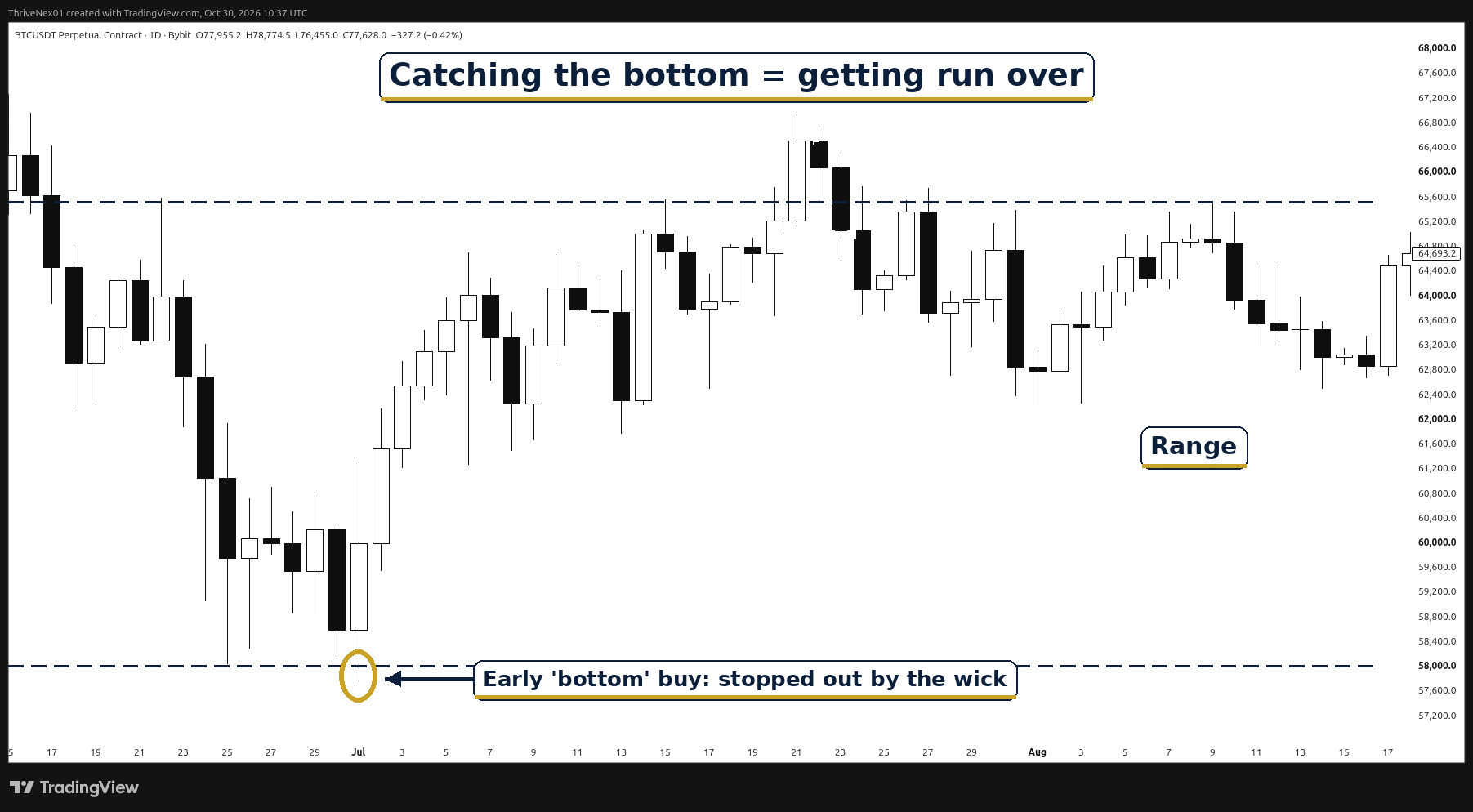
The trend starts at the break
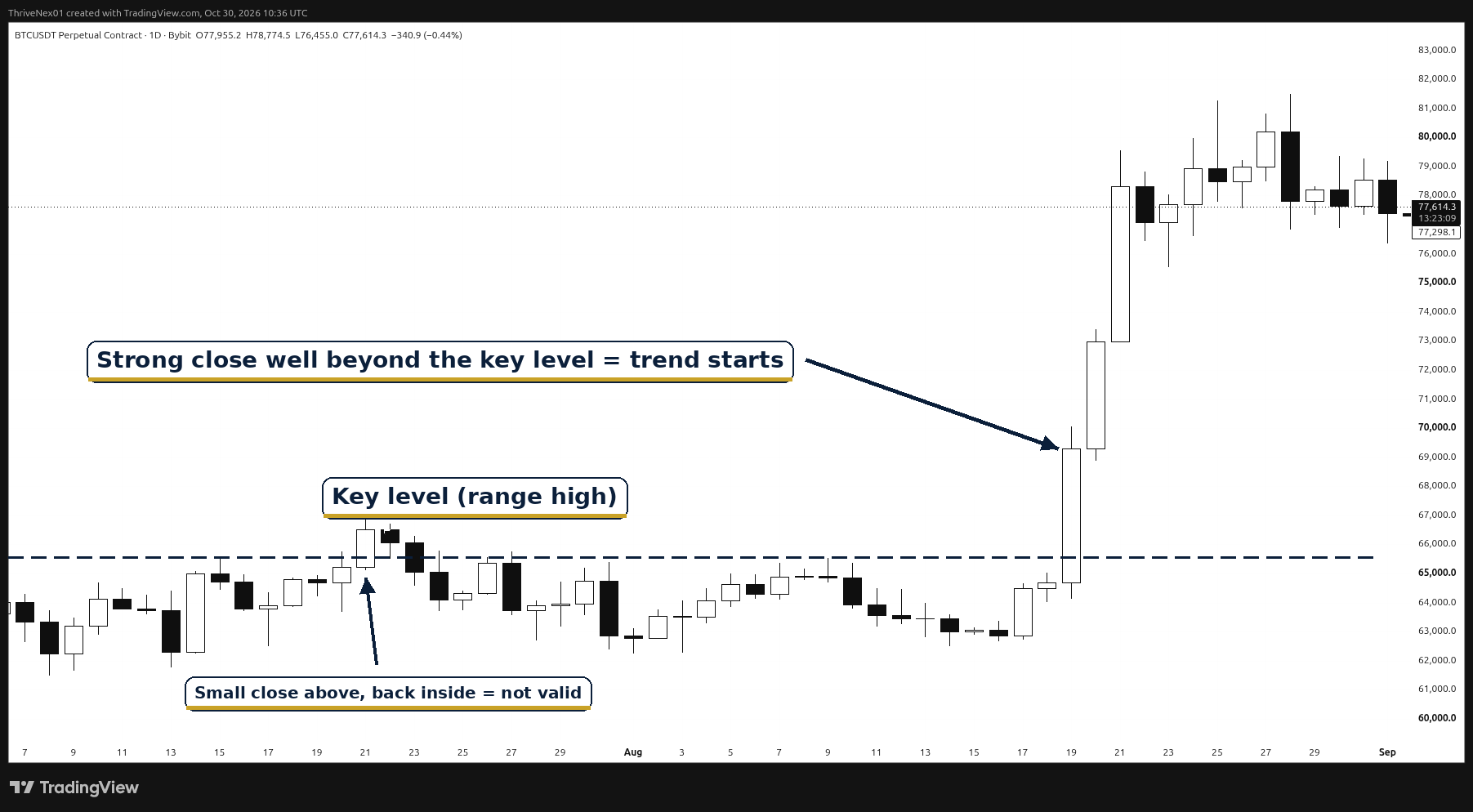
Here's the better way. Mark the range, find its key level (the range high for a new uptrend, the range low for a new downtrend), and wait. A new trend isn't confirmed by a "feeling" that the bottom is in. It's confirmed when price closes beyond that key level.
- Use closes, not wicks. Wicks poking past the level often just grab stops. A candle close beyond it is what counts.
- Look for a strong close. A valid breakout closes outside the range (ideally on strong volume, which you can check on your own volume pane) and travels more than about 20% of the range height. A move that closes back inside is more likely a sweep.
- Don't chase the breakout candle. A calmer entry is the slow, low-volume retest after the break, with your stop beyond that retest.
Follow the trend and catch the middle
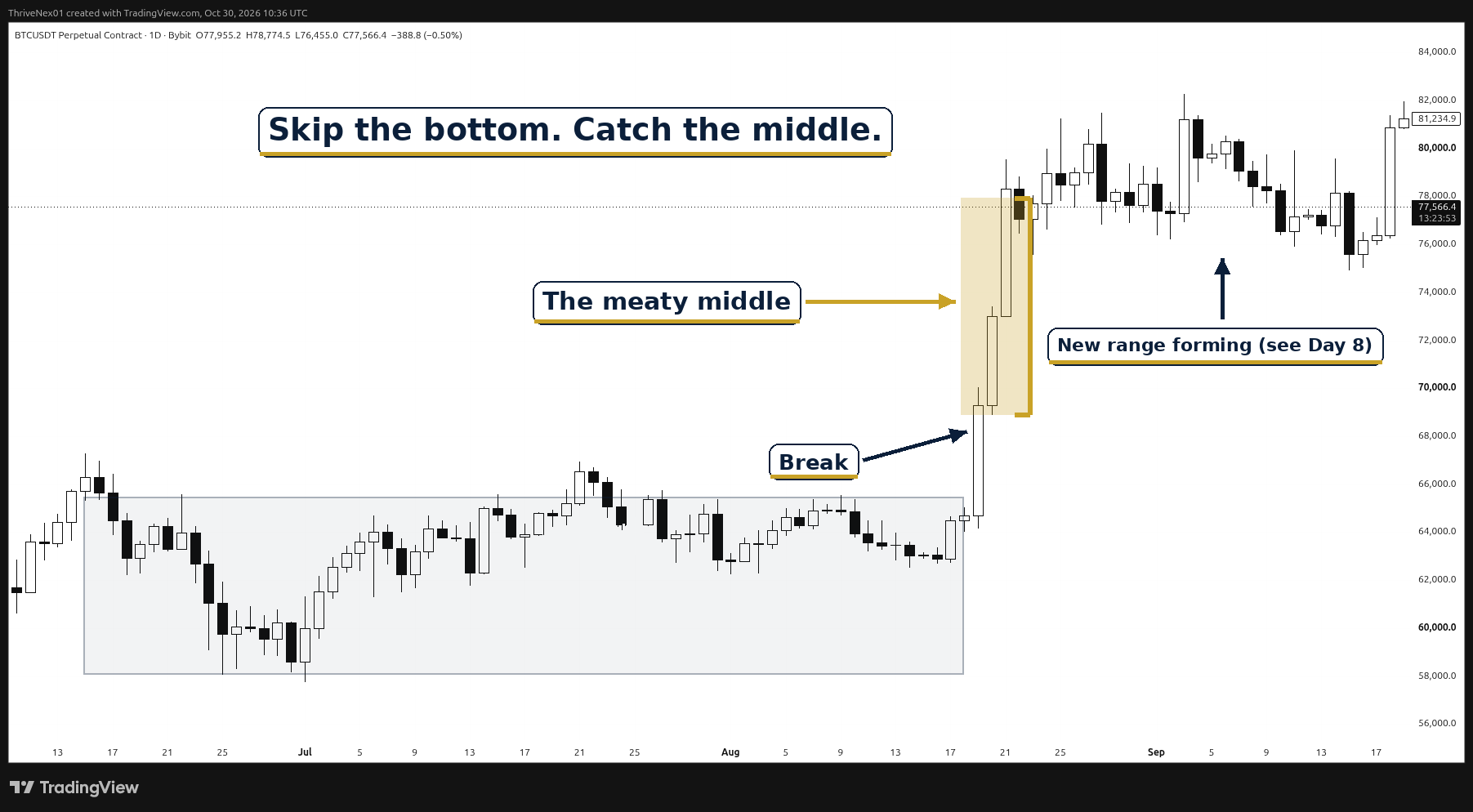
Once the trend is running, the job is simple: go with it. In an uptrend, buy shallow pullbacks. In a downtrend, sell bounces. Each new close beyond the last high (a break of structure) says the trend is still continuing.
A few things to keep in mind:
- Healthy trends have shallow pullbacks. They usually hold at or above the 0.618 retracement, and 0.5 is a common reaction area.
- A very deep pullback is a warning. Around 75% or more suggests a new range is forming, so stop trading it as a trend.
- The bigger the range, the bigger the trend. The longer price builds a range, the bigger the move that tends to follow.
- Know the trade-off. Trend following wins big in trends and bleeds a little in ranges. That's normal, and it's why the range rules from Day 8 matter.
You give up the very bottom and the very top. In exchange, you catch the meaty middle, which is the part of the move trend following aims to capture.
A hypothetical example
Hypothetical numbers, for illustration only. Say price has been ranging between 100 and 120 after a long drop. Trader A buys at 98 because "it's the bottom", and gets stopped out at 95 when price dips again. Trader B waits. Price later closes above 120 on strong volume, pulls back gently to around 121, and Trader B buys there with a stop below the retest. Trader B missed the exact bottom, but entered once the trend was confirmed instead of guessing.
Before you take the trade, plan 3 paths: the break holds and trends, the break fails back into the range, or price keeps ranging. Know your exit for each.
Quick recap
- Buying the exact bottom is a guess, and guesses get stopped out.
- Trends usually pause in a range before turning.
- The new trend starts with a candle close beyond the range's key level.
- Enter on a calm retest, not the breakout candle itself.
- Follow the trend through shallow pullbacks; a very deep one means a range may be forming.
- Skip the first move and catch the middle.
New to the series? Start with Why Price Action Comes First, or see every lesson on the daily lessons page.
You can practise this on any past chart for free on TradingView (affiliate link). Scroll back, find a range that broke, mark the key level, and see where the meaty middle was.
Educational only, not financial advice. Trading involves risk of loss. No profits are promised. Chart levels are approximate, from BTCUSDT perpetual daily candles. The TradingView link is an affiliate link.